
A missing, frayed, or accidentally unplugged power supply cable can take a perfectly working monitor, desktop PC, or printer completely offline. Unlike a GPU or a processor, the cable is rarely a consideration during a build — until you need one. The good news is that most modern electronics share the same IEC C13 connector on the device end and a standard NEMA 5-15P plug on the wall end, so replacements are inexpensive and easy to source.
The difference between a cable you will keep and one you will replace within months comes down to conductor gauge, jacket thickness, and whether the unit carries a recognized safety listing. Thinner wire can run warm and flex poorly; uncertified cords skip the independent safety checks that matter in a home office or data closet. This roundup compares published specifications and aggregated owner feedback across eight widely available options to help you pick the right power supply cable in 2026 without overpaying or under-buying.
As an Amazon Associate we earn from qualifying purchases at no extra cost to you.
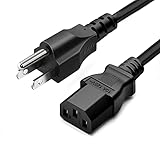


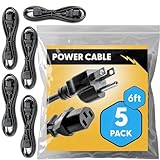
Top 3 picks at a glance
Quick Picks
| Product | Best for | Price |
|---|---|---|
| Standard 5ft 10A 125V Black 3-Prong | Best Basic Replacement | $6.09 |
| Amazon Basics PC Power Cable 6ft | Best Everyday Six-Foot | $6.94 |
| 3 Prong AC Power Cord 10ft Long Standard | Best Voltage Range | $6.99 |
| StarTech 10ft Computer Power Cord | Best for Professional Setups | $10.99 |
| Amazon Basics Universal PC Power Cable 25ft | Best Extra-Long Run | $10.52 |
| UL Approved 6ft Universal Power Cord 5-Pack | Best for Bulk Purchasing | $39.95 |
| Amazon Basics Universal Replacement 15ft | Best Mid-Range Length | $7.87 |
| Amazon Basics PC Power Cord 10ft 5-Pack | Best Value Multi-Pack | $22.12 |
How We Picked
We evaluated each candidate on four criteria: wire gauge (18 AWG is the sweet spot for the 10A loads these cords typically carry), stated length options relative to price per foot, presence of a recognized safety certification such as UL listing, and real-world owner feedback on jacket durability and connector retention. Products that failed to publish a clear AWG rating or lacked any third-party listing were deprioritized regardless of price.
The 8 Best Power Supply Cable in 2026
Standard 5ft 10A 125V Black 3-Prong AC Power Cord
At $6.09, this is the least expensive option in the lineup and a no-nonsense replacement for the cord that shipped with your monitor or printer. Owners appreciate that it fits the widest range of consumer electronics without fuss, and the five-foot length covers the typical desk-to-outlet gap. The jacket is adequate for occasional use but reviewers note it feels thinner than pricier alternatives. If your device sits behind a heavy tower where the cord is pinched or bent repeatedly, spend a dollar or two more. For a straightforward swap in a stable position, it does the job.
- Pro: Lowest price in the group at $6.09
- Pro: Universally compatible with C13-equipped devices
- Con: Jacket thickness is below average for the category
Amazon Basics PC Power Cable, 6 Feet, 18 AWG
This Amazon Basics cord earns its place by pairing a UL listing with a practical six-foot run at a competitive $6.94. The 18 AWG rating is clearly stated, which removes guesswork about its current-handling headroom. Owners consistently mention that the molded connectors sit flush without wobble, a small but real advantage when the plug feeds a power strip. The one recurring complaint is that the black PVC finish shows dust and scuffs faster than textured jackets. If you route cables along the back of a desk where visibility matters, that cosmetic point may push you elsewhere.
- Pro: UL Listed with explicitly stated 18 AWG gauge
- Pro: Tight-molded connector seating praised by owners
- Con: Smooth finish attracts dust and visible wear
3 Prong AC Power Cord 10ft Long Standard, 125V-250V
What makes this ten-foot cord stand out is its dual-voltage rating: 125V through 250V, making it suitable for both North American and international mains without needing a separate adapter. At $6.99, it costs roughly a dollar more than the six-foot Amazon Basics but delivers more reach and broader geographic flexibility. Some buyers note the packaging does not prominently display a third-party safety mark, so verify the certification stamp on the plug housing before trusting it in a critical setup. For travelers or users with multi-voltage lab equipment, the voltage range is a genuine advantage.
- Pro: Rated for 125V-250V, one of few in the group
- Pro: Ten-foot length at under seven dollars
- Con: Third-party safety listing not prominently confirmed
StarTech 10ft Computer Power Cord PXT10110
StarTech built its reputation on professional IT accessories, and this ten-foot cord reflects that heritage. Published specs confirm 10A, 125V, and 18 AWG construction, and owners highlight the strain relief at both ends as noticeably more robust than generic alternatives. The trade-off is price: $10.99 puts it among the more expensive single-cord options. For a home user who swaps monitors yearly, the premium buys longevity that may not be visible for two or three years. For a workstation that will not move for a decade, the extra cost is negligible.
- Pro: Superior strain relief on both connector ends
- Pro: Fully specified at 10A, 125V, 18 AWG
- Con: Costs roughly fifty percent more than comparable Amazon Basics lengths
Amazon Basics Universal PC Power Cable, 25 Feet
Twenty-five feet of reach at $10.52 makes this the best value-per-foot option when the outlet is genuinely far from the device. Owners use it in workshops, presentation rooms, and situations where a desk sits away from the wall. The UL listing and 18 AWG rating are confirmed on the packaging. The practical drawback is cable management: a twenty-five-foot cord requires ties or clips to keep it from becoming a trip hazard or snag point. If you need a power supply cable for a fixed, short run, a shorter model will look and behave better.
- Pro: Best price-per-foot in the lineup for long runs
- Pro: UL Listed, 18 AWG, NEMA to IEC C13
- Con: Excess length demands management accessories
UL Approved 6ft Universal Power Cord, 5-Pack
IT departments and data-closet organizers will recognize the value here: five UL-approved six-foot cords at $39.95, which works out to roughly $8 per cord. That is a modest premium over single-pack equivalents, but you gain confirmed UL certification and a spare set that prevents downtime when a cord goes missing. Individual buyers may not need five, but anyone equipping a small office, lab bench, or home server rack will use every one. The 10A, 125V, 18 AWG spec is consistent across all five. The packaging is utilitarian, which some retail buyers dislike.
- Pro: Five confirmed UL-listed cords reduce future replacement cost
- Pro: Consistent 18 AWG spec across the entire pack
- Con: Overkill for a single-device household
Amazon Basics Universal Replacement Power Cord, 15 Feet
Fifteen feet hits the practical middle ground between typical desk reach and the cumbersome excess of twenty-five. At $7.87, it undercuts most competitors at the same length. Owner feedback emphasizes flexibility — the jacket bends cleanly around furniture legs without kinking — which matters in setups where the cable must thread behind a cabinet or under a desk. The 125V, 18 AWG rating is published clearly. The one caveat is that at 15 feet the voltage drop, while negligible for most consumer electronics, could theoretically affect devices at the absolute upper edge of their tolerance, though no owner reports this in practice.
- Pro: Excellent length-to-price ratio at $7.87
- Pro: Flexible jacket praised for routing behind furniture
- Con: Longer runs may not suit the most sensitive audio equipment
Amazon Basics PC Power Cord, 10 Feet, 5-Pack
At $22.12 for five ten-foot cords, this multi-pack offers the lowest per-cord cost in the roundup while maintaining 18 AWG, 125V, and a three-prong configuration. The length suits the majority of desktop and monitor placements without the management headache of fifteen or twenty-five feet. Owners note the uniformity of the pack: every cord performs identically, so spares behave the same as the primary. If you prefer textured jackets or brand-name strain relief, the smooth finish and simple connectors may feel plain. For practicality-focused buyers stocking a shared workspace, it is the most economical path.
- Pro: Lowest per-cord price in the entire lineup
- Pro: Uniform performance across all five units
- Con: Minimalist jacket and connector design
Buying Guide
Wire Gauge: Why 18 AWG Matters
American Wire Gauge numbers are inverted — a lower number means thicker copper. Most consumer electronics with an IEC C13 inlet draw well under ten amps, so 18 AWG provides comfortable headroom. Cables rated at higher AWG numbers (thinner wire) can run warm under sustained loads and flex less freely, accelerating jacket fatigue. If a product listing does not state its gauge, treat that as a red flag regardless of price.
Length: Match the Run, Not the Box
Measure the actual path from outlet to device, then add roughly one foot for routing clearance. A cord that is too short forces an adapter or extension, adding a failure point and potential code concern. A cord that is too long becomes a management problem and, in high-traffic areas, a trip hazard. Most users need six to ten feet; fifteen and twenty-five foot options exist for genuinely long distances.
Certification: UL Listing as a Baseline
A UL Listed mark confirms that a nationally recognized test laboratory has verified the cord against a published safety standard for fire and electrical shock risk. Without it, you are relying on the manufacturer’s own claims. The small price difference between a UL-listed and an uncertified cord is rarely worth the unknown risk in a home or office environment.
Our Verdict
The StarTech 10ft Computer Power Cord is the top single-unit pick for anyone who values long-term durability over a marginal savings, thanks to its fully published spec sheet and strain relief that owners consistently rate as best-in-class. The Amazon Basics PC Power Cable at six feet is the budget pick — under seven dollars with a confirmed UL listing and 18 AWG gauge, it is the smartest default for most replacements. If you are equipping more than two devices, however, the Amazon Basics 10-foot five-pack wins outright: its per-cord cost is unmatched, and having spares eliminates the most common cable problem, which is not failure but disappearance.
FAQ
Can I use a power supply cable rated for 250V in a 120V outlet?
Yes. A cable rated for 250V will handle 120V without issue because voltage rating indicates the maximum insulation stress the cord can tolerate, not the minimum operating point. Using a higher-rated cord provides a wider safety margin.
What is the difference between IEC C13 and C14 connectors?
IEC C13 is the female socket found on the device (monitor, PC power supply), while C14 is the male inlet on the device that a C13-terminated cord plugs into. When shopping for a replacement power supply cable, you almost always need a C13 to NEMA 5-15P cord because the C13 end mates with the device inlet.
Is a longer cable always worse due to voltage drop?
At typical consumer loads (100 to 200 watts), a 15-foot run produces less than one percent voltage drop, which is well within the tolerance of any modern switching power supply. Problems only emerge with very thin wire or extremely long runs exceeding twenty-five feet under heavy load.
Do I need a shielded cable for audio equipment?
Standard IEC C13 power cords carry AC mains and do not benefit from shielding the way signal cables do. If you are concerned about noise affecting sensitive audio gear, focus on the quality of the power supply unit itself rather than the cord’s outer jacket construction.


