
Choosing the right amount of DDR5 memory is less about buying the biggest number and more about matching capacity to your workload. For a new desktop, 32GB is the most comfortable starting point for many buyers. A 16GB kit can handle everyday computing and many games, while 64GB makes sense for demanding creative work, virtual machines, heavy multitasking, and high-end gaming with background applications.
Top 3 picks at a glance
The Short Answer
For most people, 32GB of DDR5 RAM is the best all-around choice in 2026. It typically means a matched kit of two 16GB modules, allowing a compatible desktop motherboard to use dual-channel memory.
As an Amazon Associate we earn from qualifying purchases at no extra cost to you.


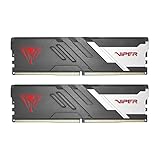
- 16GB: Suitable for web browsing, office software, streaming, schoolwork, and budget gaming.
- 32GB: Recommended for modern gaming, photo editing, multitasking, and general-purpose desktop use.
- 64GB: Ideal for 4K video editing, large photo libraries, software development, virtual machines, and enthusiast gaming setups.
- 96GB to 128GB or more: Best for professional 3D work, large datasets, advanced content creation, and workstation applications.
Capacity is measured in gigabytes (GB), while speed is listed in MT/s, such as 5600MT/s or 6000MT/s. More speed does not compensate for insufficient capacity. If your computer runs out of available memory, adding capacity usually makes a more noticeable difference than choosing a slightly faster kit.
Standard Sizes
DDR5 desktop memory is generally sold as one module or, preferably, as a matched two-module kit. A 2 x 16GB kit contains 32GB total, not 16GB. Check the total capacity before comparing prices. Current example kits in this category range from approximately $237 to $506, depending on capacity, speed, timings, RGB lighting, and retailer pricing.
| Total Capacity | Typical Kit | Desktop Module Dimensions | Laptop Module Dimensions | Best For |
|---|---|---|---|---|
| 8GB | 1 x 8GB or 2 x 4GB | 5.25 x 1.23 in (13.34 x 3.13 cm) |
2.74 x 1.18 in (6.96 x 3.00 cm) |
Basic office use and older systems |
| 16GB | 2 x 8GB | 5.25 x 1.23 in (13.34 x 3.13 cm) |
2.74 x 1.18 in (6.96 x 3.00 cm) |
Everyday computing and budget gaming |
| 32GB | 2 x 16GB | 5.25 x 1.23 in (13.34 x 3.13 cm) |
2.74 x 1.18 in (6.96 x 3.00 cm) |
Gaming, multitasking, and editing |
| 64GB | 2 x 32GB or 4 x 16GB | 5.25 x 1.23 in (13.34 x 3.13 cm) |
2.74 x 1.18 in (6.96 x 3.00 cm) |
Professional and enthusiast workloads |
| 96GB to 128GB | 2 x 48GB, 2 x 64GB, or 4 x 32GB | 5.25 x 1.23 in (13.34 x 3.13 cm) |
2.74 x 1.18 in (6.96 x 3.00 cm) |
Workstations and intensive creation |
The dimensions above describe the standard circuit-board size. Heat spreaders can increase the desktop module’s height to roughly 1.6 to 2.0 inches (4.1 to 5.1 cm). Measure this clearance if a large CPU air cooler sits above the memory slots. Laptop DDR5 uses shorter SO-DIMM modules and is not interchangeable with desktop UDIMMs.
How to Measure Your Space
- Measure the case clearance. Remove the side panel and measure from the motherboard’s memory slot upward to the nearest obstruction. Allow at least 0.2 inches (0.5 cm) of extra space beyond the module’s listed height.
- Locate the memory slots. Most consumer desktop boards have two or four slots. The motherboard manual identifies the preferred slots for a two-module kit, often the second and fourth slots from the processor.
- Check the cooler overhang. A tower-style CPU cooler may extend over one or more RAM slots. Low-profile DDR5 modules are safer when the cooler fan sits directly above the memory area.
- Confirm the form factor. Desktop systems require UDIMM memory, while most upgradeable laptops use SO-DIMM memory. All-in-one computers and compact PCs may use a less common format or have memory soldered to the board.
- Check the motherboard maximum. Confirm the supported capacity per slot and the maximum total capacity. A board may support 128GB overall but accept only 32GB or 48GB in each slot.
- Plan for expansion. If you may upgrade later, decide whether to leave slots open. Starting with 2 x 16GB in a four-slot board leaves two slots available, although replacing the kit later can sometimes be more stable than mixing different kits.
By Room or Use Case
Home Office, School, and General Use
Choose 16GB for email, documents, video calls, streaming, online research, and light photo editing. A 2 x 8GB kit is generally preferable to a single 16GB module because it can provide dual-channel operation on a compatible system. Choose 32GB if you regularly keep dozens of browser tabs open while running spreadsheets, communication apps, and other programs.
Gaming Room
For a new gaming desktop, 32GB is the sensible target. It provides headroom for current games, launchers, voice chat, browsers, recording software, and operating-system background tasks. A 16GB kit remains reasonable for a budget build, especially when paired with a midrange graphics card, but it may require more careful background-app management.
Move to 64GB if you play heavily modded games, stream while gaming, create gameplay videos, or want to keep the computer useful for several upgrade cycles. DDR5 kits around 5600MT/s to 6000MT/s are common choices, but the motherboard and processor must support the selected settings.
Creative Work and Photography
Photo editing with ordinary JPEG files can work well with 16GB, but 32GB is more comfortable for layered projects, RAW files, and multiple applications. Choose 64GB when working with large panoramas, hundreds of high-resolution images, extensive batch processing, or simultaneous editing and exporting.
Video Editing and 3D Design
Use 32GB as a practical floor for serious 1080p or moderate 4K editing. Choose 64GB for multiple 4K streams, large effects projects, motion graphics, 3D scenes, and professional applications that cache substantial data. Workstation users handling complex simulations, 8K footage, or large scenes may benefit from 96GB or 128GB, provided the platform supports it.
Programming and Virtual Machines
Developers running a code editor, browser, local database, containers, and a test environment should consider 32GB. Choose 64GB if you regularly run several virtual machines, emulators, local language models, or large development environments. Memory capacity can matter more than a small difference in rated speed for these workloads.
Common Sizing Mistakes
- Confusing total capacity with module capacity: “2 x 16GB” means 32GB total.
- Buying one module unnecessarily: A single stick may reduce memory bandwidth compared with a properly matched two-module kit.
- Ignoring physical height: RGB lighting and tall heat spreaders can interfere with a CPU cooler.
- Mixing kits: Two separate kits with identical specifications are not guaranteed to operate at their advertised settings together.
- Choosing speed before capacity: A 16GB high-speed kit is not automatically better for your workload than a 32GB kit with a slightly lower rating.
- Forgetting voltage and profiles: Performance settings such as AMD EXPO or Intel XMP may need to be enabled in the firmware, and the processor and board must support them.
- Assuming DDR4 and DDR5 are interchangeable: The notch position differs, and a DDR5 module cannot be installed in a DDR4 slot.
FAQ
Is 16GB of DDR5 RAM enough?
Yes, for everyday work, school tasks, web browsing, streaming, and many games. Choose 32GB if you multitask heavily, use creative software, or want more headroom for demanding games.
Is 32GB of DDR5 RAM overkill?
For basic office use, it may be more than necessary. For a new gaming or general-purpose desktop, however, 32GB is a balanced choice that can reduce the need for an early upgrade.
Do I need 64GB for gaming?
Most games do not require 64GB. It is useful for heavily modded titles, streaming, recording, running browsers and other applications in the background, or keeping a high-end system ready for future software.
Should I buy two 16GB sticks or four 8GB sticks?
Two 16GB sticks are usually the simpler choice for a 32GB system. They leave more slots open, place less stress on the memory controller, and make future expansion easier. Always verify the motherboard’s recommended configuration before installing the kit.


