When you are designing the ultimate home office or setting up a compact workstation, every detail matters. From the ergonomic curve of your chair to the physical footprint of your computer, balance is key. But when you dive into the technical specifications of your system—especially if you are building or buying an AMD Ryzen-powered machine—you will inevitably run into a highly debated question: do i need high speed ram for ryzen processors?
As home computing has evolved, our expectations for speed and seamless multitasking have skyrocketed. Whether you are running complex spreadsheets, editing family videos, or squeezing in some casual gaming at your desk, the relationship between your Ryzen CPU and your system memory (RAM) is one of the most critical factors dictating your daily user experience.
As an Amazon Associate we earn from qualifying purchases at no extra cost to you.

The Short Answer
Yes, but it depends on whether you are using integrated graphics or a dedicated graphics card. If you are using a Ryzen processor with integrated Radeon graphics (often called an APU), high-speed, dual-channel RAM is absolutely essential because your graphics chip shares your system memory. If you are using a dedicated graphics card, high-speed RAM still provides a noticeable performance boost, but standard-speed memory will not cripple your system’s basic functionality.
What You Actually Get
To understand why Ryzen processors care so much about RAM speed, we have to look under the hood of your home computer. AMD’s Ryzen architecture relies on an internal interconnect technology called the “Infinity Fabric.” This fabric binds the various components of the processor together, allowing them to communicate. Crucially, the speed of the Infinity Fabric is directly tied to the physical clock speed of your system RAM.
When you install slow memory—such as standard DDR4 running at 2133MHz or 2400MHz—the internal communication speed of your processor slows down in tandem. This creates a bottleneck, resulting in micro-stutters, slower file loading times, and lower frame rates in games. Conversely, upgrading to the DDR4 “sweet spot” of 3200MHz or 3600MHz (or 6000MHz for newer DDR5 platforms) allows the processor to run at its optimal internal frequency.
This architectural quirk has a massive real-world impact on budget-friendly, compact home office setups. Consider ultra-compact systems like the GMKtec Mini PC, which runs an AMD Ryzen 5 3500U processor. Measuring just 4.9 x 4.4 x 1.6 inches and weighing under 1 pound, this tiny machine relies entirely on its integrated Radeon Vega 8 graphics. Because it lacks dedicated video memory (VRAM), it carves out a portion of your system RAM to handle visual processing. If that RAM is slow or running in single-channel mode, your graphics performance can drop by up to 30% to 40%. Feeding that 15-watt processor fast, dual-channel memory is the difference between choppy video playback and a buttery-smooth desktop experience.
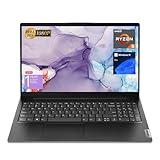
The same logic applies to portable home office setups, such as the Lenovo V15 Laptop. Powered by a Ryzen 5 5500U processor, this 3.7-pound machine is designed for productivity. With a 15.6-inch Full HD display and a power envelope of 15W to 25W, it is optimized for efficiency. Outfitting a laptop like this with 16GB of properly optimized dual-channel RAM ensures that the six-core processor can stretch its legs, allowing you to breeze through dozens of browser tabs, high-resolution PDFs, and video calls simultaneously without the machine heating up your lap or kicking its internal fans into overdrive.
Pros
- Unlocks Integrated GPU Performance: If your home PC does not have a chunky, power-hungry dedicated graphics card, fast RAM serves as fast VRAM, vastly improving casual gaming, 3D rendering, and video streaming.
- Smoother Multitasking: High-speed RAM reduces system latency, making window transitions, file compression, and app launches feel instantaneous.
- Better System Longevity: Equipping your machine with optimal memory speeds ensures it remains highly capable and snappy well into 2026 without needing a full system replacement.
- Maximizes CPU Investment: Why pay for a six-core or eight-core Ryzen processor only to leave 10% to 15% of its potential performance on the table due to a memory bottleneck?
Cons
- Increased Cost: High-speed RAM kits (especially those with low latency, measured as “CL”) carry a price premium of $15 to $50 over basic, standard-spec memory modules.
- Configuration Required: High-speed RAM does not run at its advertised speed out of the box. You must enter your motherboard’s BIOS and enable a profile called XMP (Extreme Memory Profile) or EXPO (Extended Profiles for Overclocking) to achieve those speeds.
- Slightly Higher Power and Heat: High-speed memory modules often require higher voltages (typically 1.35V to 1.45V compared to the standard 1.2V for DDR4). In ultra-compact mini PCs or fanless home office builds, this can slightly increase internal ambient temperatures.
- Diminishing Returns: Pushing past the recommended sweet spots (e.g., buying 4000MHz+ DDR4 or 7000MHz+ DDR5) yields tiny performance gains while risking system instability.
Who Should Buy It
You should prioritize high-speed RAM if you are a home creator, remote worker, or casual gamer using a Ryzen-based system. If your daily workflow involves photo editing, light video production, or heavy multitasking across multiple virtual desktops, the reduced latency of fast memory will save you valuable time. It is also an absolute must-buy for anyone using a mini PC or thin-and-light laptop with integrated Radeon graphics, as it directly impacts your visual performance and system responsiveness.
Who Should Skip It
You can safely skip premium high-speed RAM if your home computer is used primarily for basic tasks like word processing, checking emails, managing household budgets, and streaming Netflix. If you are buying a budget machine solely to act as a dedicated media server or a smart-home hub, standard-spec memory (like 2400MHz or 2666MHz DDR4) will run cooler, draw less power, and save you money that is better spent on storage or a more comfortable office chair.
Cheaper Alternatives
If you want to optimize your Ryzen system without spending a fortune on enthusiast-grade memory kits, there are several practical routes you can take to balance cost and performance in your home setup.
| Option | Cost | Trade-off |
|---|---|---|
| Standard 3200MHz CL22 RAM (JEDEC Spec) | $30 – $45 (16GB Kit) | Slightly looser timings mean minor performance losses in gaming, but it runs at 1.2V, keeping your system cool and stable without BIOS tweaking. |
| Pre-Configured Ryzen Mini PCs (e.g., GMKtec) | $250 – $300 (Complete System) | Uses slightly older Zen+ or Zen 2 architectures with capped memory speeds, but offers an incredibly cheap, whisper-quiet, space-saving desktop solution. |
| Value-Focused Ryzen Laptops (e.g., Lenovo V15) | $550 – $650 (Complete System) | You cannot easily upgrade or overclock the RAM, but the manufacturer has already balanced the memory speed and power draw for optimal battery life. |
FAQ
Does Ryzen absolutely require dual-channel RAM?
Yes. Regardless of the speed, running your memory in a dual-channel configuration (using two identical sticks of RAM instead of one single stick) is critical for Ryzen processors. Dual-channel memory doubles the bandwidth available to the CPU, which is vital for both general processing and integrated graphics performance.
What is the absolute sweet spot RAM speed for Ryzen?
For DDR4-based systems (Ryzen 1000 through 5000 series), the sweet spot is 3200MHz to 3600MHz with a latency of CL16 or CL18. For newer DDR5-based systems (Ryzen 7000 series and newer), the sweet spot is 6000MHz with CL30 latency. Going higher than these speeds often results in stability issues without noticeable performance gains.
Will installing high-speed RAM void my Ryzen CPU warranty?
Technically, running your memory at speeds higher than the official AMD specification (which is usually 3200MHz for DDR4 and 5200MHz for DDR5) is considered overclocking. While enabling XMP or EXPO profiles in your BIOS is highly stable and universally practiced, AMD’s official stance is that damage caused by overclocking is not covered under warranty. However, actual CPU failures caused by standard memory profiles are incredibly rare.
Why is my high-speed RAM only running at 2133MHz?
When you first install high-speed RAM, it defaults to standard baseline speeds (usually 2133MHz or 2400MHz for DDR4) to ensure the system can boot safely. To get the speed you paid for, you must restart your computer, press the Delete or F2 key to enter the BIOS menu, locate the memory settings, and enable the XMP (on Intel/some AMD boards) or EXPO/DOCP profile. Save and exit, and your system will boot at the fully advertised speed.