Our Short List of 3
- Best for: Runners and lifters who want the most trusted chest strap reading during hard intervals.
- Bluetooth, ANT+, and 5 kHz connectivity
- Waterproof heart rate sensor
- CR2025 button cell battery with 400 hours of use
- Internal memory for one training session

- Best for: Garmin owners who want reliable live heart rate and HRV without extra metrics.
- Real-time heart rate and HRV data
- 3ATM water figure
- User-replaceable CR2032 battery with up to 1 year of life
- Machine-washable adjustable strap

- Best for: Swimmers, gym goers, and anyone who wants accurate tracking without a chest strap.
- Optical heart rate sensor
- ANT+ and dual Bluetooth connectivity
- Rechargeable lithium-ion battery with 30 hours of use
- Swimming goggle clip included
All 5 Picks at a Glance
| Product | Specs | Action |
|---|---|---|
| Polar H10 |
| Check price on Amazon |
| Garmin HRM 200 |
| Check price on Amazon |
| Polar Verity Sense |
| Check price on Amazon |
 Garmin HRM 600 |
| Check price on Amazon |
 COOSPO H6 |
| Check price on Amazon |
A heart rate monitor decides whether your training zones mean anything at all, because a watch that guesses during intervals leaves you steering by feel alone. Chest straps read the electrical signal of each beat, while optical sensors on the arm or wrist track blood flow, and the gap between those two approaches shows up exactly when effort spikes. Picking the wrong form factor means living with dropouts, lagging readings, or a strap that slides the moment you start sweating.
This guide covers runners, cyclists, gym goers, and swimmers who want dependable heart rate data without medical claims attached. Every product below is a dedicated heart rate monitor, either a chest strap or an optical armband, chosen from the name and specifications stated on its Amazon listing. No wristwatch with a built-in sensor made the cut, because the brief here is the monitor itself.
Our Top Picks
Top 3 picks at a glance
Quick Picks
As an Amazon Associate we earn from qualifying purchases
| Product | Best for | Key spec from title |
|---|---|---|
| Polar H10 | Maximum accuracy in intervals | ANT+ and Bluetooth chest strap |
| Garmin HRM 200 | Garmin watch owners on a simpler strap | Real-time heart rate and HRV data |
| Polar Verity Sense | Training without a chest strap | Optical armband with ANT+ and dual Bluetooth |
| Garmin HRM 600 | Data-heavy Garmin runners | Rechargeable strap with running dynamics |
| COOSPO H6 | A low-cost dual-band chest strap | Bluetooth 4.0 and ANT+ chest sensor |
How to Choose
Chest strap or optical armband
Chest straps measure the heart’s electrical signal, which is why coaches and validation studies keep returning to them for interval work and heart rate variability tracking. Optical armbands shine light through the skin instead, and they read best on the forearm or upper arm where blood flow is steadier than at the wrist. If your sessions involve short bursts, sprinting, or heavy lifting, a chest strap holds its reading while an optical sensor can lag behind the effort. If a strap around your chest feels distracting, an armband trades a little responsiveness for comfort you forget about mid-workout.
Connectivity that matches your gear
A monitor is only useful if it talks to the devices you already own, so check Bluetooth and ANT+ support before anything else. Dual-band straps pair with a phone app and a watch or bike computer at the same time, while single-protocol sensors force you to choose one destination. Gym equipment often listens on an older 5 kHz signal, which only a few straps still broadcast. Think about where the numbers need to land: a training app, a watch, a bike computer, or a treadmill console, and buy the monitor that reaches all of them.
Battery style and upkeep
Coin-cell straps run for hundreds of hours and ask for a battery swap a few times a year, which suits people who dislike another charging cable. Rechargeable straps remove the coin cell entirely but add a charging routine, and their stated life is usually measured in weeks rather than months of training hours. Washable straps matter more than they sound, because sweat residue degrades electrodes and causes the dropouts people blame on the sensor. Detachable modules make washing simple, while sealed designs need a careful wipe after every session.
Fit, sizing, and water use
A chest strap must sit snugly just below the chest muscles, with the electrodes dampened before you start, or the first minutes of every workout will read low or erratic. Sizes run in bands, so measure your chest and match the listed range instead of guessing from clothing size. Swimmers need a strap that stores heart rate during the swim and forwards it afterward, since Bluetooth does not travel through water. Optical armbands avoid the chest entirely, yet they still need a firm fit, and a loose band sliding down the arm is the most common reason for noisy readings.
The 5 Best Options
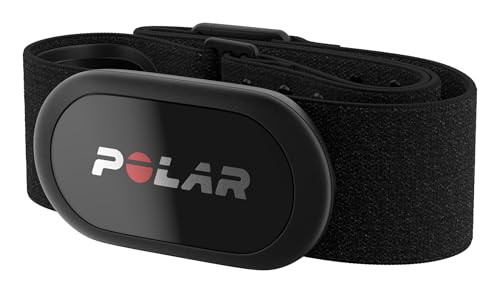
Polar H10
- Best for: Runners and lifters who want the most trusted chest strap reading during hard intervals.
- Bluetooth, ANT+, and 5 kHz connectivity
- Waterproof heart rate sensor
- CR2025 button cell battery with 400 hours of use
- Internal memory for one training session
Runners and lifters who want the most trusted chest strap reading during hard intervals.
Confirm it is still sold before buying, and check the strap size range, since the listed variant covers M-XXL only.
The Polar H10 remains the reference point other straps are judged against, thanks to its electrical measurement and broad compatibility with watches, gym equipment, and training apps. It pairs over Bluetooth, ANT+, and a 5 kHz signal, so it connects to almost anything that accepts a heart rate feed, including older gym machines. Internal memory stores one training session without a paired device, which helps when you would rather leave the phone behind. Its soft textile strap uses silicone dots to hold position, and the sensor itself is fully waterproof.
Watch out for: Confirm it is still sold before buying, and check the strap size range, since the listed variant covers M-XXL only.
Garmin HRM 200
- Best for: Garmin owners who want reliable live heart rate and HRV without extra metrics.
- Real-time heart rate and HRV data
- 3ATM water figure
- User-replaceable CR2032 battery with up to 1 year of life
- Machine-washable adjustable strap
Garmin owners who want reliable live heart rate and HRV without extra metrics.
Confirm it is still sold before buying, and note the strap has no running dynamics or watch-free recording.
The Garmin HRM 200 is the straightforward chest strap for people already training inside the Garmin ecosystem, sending live heart rate and heart rate variability data to compatible watches, cycling computers, and apps. Its replaceable coin-cell battery runs for a long stretch before needing attention, and the detachable module lets the strap go through the wash. A 3ATM water figure covers sweat and rain, though swimmers chasing stored swim data should look at a higher model instead. Setup stays simple, with no running dynamics or onboard recording to configure.
Watch out for: Confirm it is still sold before buying, and note the strap has no running dynamics or watch-free recording.
Polar Verity Sense
- Best for: Swimmers, gym goers, and anyone who wants accurate tracking without a chest strap.
- Optical heart rate sensor
- ANT+ and dual Bluetooth connectivity
- Rechargeable lithium-ion battery with 30 hours of use
- Swimming goggle clip included
Swimmers, gym goers, and anyone who wants accurate tracking without a chest strap.
Confirm it is still sold before buying, and wear the band firmly on the upper arm, since a loose fit causes noisy optical readings.
The Polar Verity Sense moves the sensor off the chest and onto the arm, using an optical sensor that suits anyone who finds chest straps uncomfortable or distracting. It broadcasts over ANT+ and dual Bluetooth, so it pairs with watches, phones, and training apps, and a swimming goggle clip lets it ride along in the pool. The package includes a pouch and charging unit alongside the armband, and the sensor weighs very little on the upper arm. Its rechargeable battery keeps the routine simple, with a charge replacing the coin-cell swaps chest straps require.
Watch out for: Confirm it is still sold before buying, and wear the band firmly on the upper arm, since a loose fit causes noisy optical readings.
Garmin HRM 600
- Best for: Serious Garmin runners and triathletes who train by running dynamics and HRV.
- Rechargeable battery with up to 2 months of use at 1 hour a day
- Running dynamics including stride length, vertical oscillation, ground contact time balance, and step speed loss
- Watch-free activity recording with sync to Garmin Connect
- Swim heart rate storage for compatible watches
Serious Garmin runners and triathletes who train by running dynamics and HRV.
Confirm it is still sold before buying, and note most of the extra metrics only unlock with a compatible Garmin watch.
The Garmin HRM 600 is the premium strap for Garmin runners who want more than a live pulse number, adding running dynamics and watch-free recording to the chest strap form. It captures stride length, vertical oscillation, ground contact time balance, and step speed loss on supported watches, turning a heart rate strap into a form-feedback tool. A rechargeable battery replaces coin cells, and onboard memory records a workout when wearing a watch is impractical, syncing afterward to Garmin Connect. Swim heart rate storage covers pool sessions, and the detachable module makes the strap easy to wash.
Watch out for: Confirm it is still sold before buying, and note most of the extra metrics only unlock with a compatible Garmin watch.
COOSPO H6
- Best for: Beginners and budget-minded athletes who need a simple dual-band strap for apps and watches.
- Bluetooth 4.0 and ANT+ dual-mode connectivity
- IP67 water resistance
- Battery life of 300 hours
- Adjustable chest strap
Beginners and budget-minded athletes who need a simple dual-band strap for apps and watches.
Confirm it is still sold before buying, and check the strap length fits your chest before ordering.
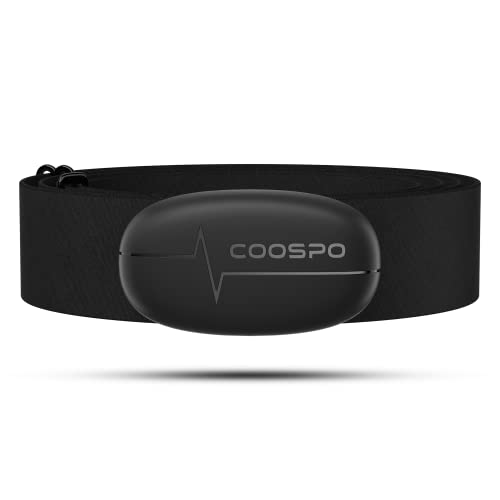
The COOSPO H6 covers the essentials of a dual-band chest strap at the entry end of the lineup, pairing over Bluetooth 4.0 and ANT+ with phones, watches, bike computers, and gym equipment. It works with popular training apps such as Zwift, Peloton, Strava, Polar Beat, and Wahoo Fitness, so one strap feeds whichever platform you already use. An IP67 figure handles sweat and rain, and the adjustable strap fits a wide range of chest sizes. Its coin-cell battery lasts for hundreds of hours, which keeps maintenance to an occasional swap rather than a charging habit.
Watch out for: Confirm it is still sold before buying, and check the strap length fits your chest before ordering.
Which One Fits Your Situation
You train intervals and trust one number above all
Choose the Polar H10, because its electrical chest measurement stays steady through sprints and heavy sets where optical sensors lag behind the effort. Its triple connectivity also covers gym machines that other straps cannot reach, so the same strap serves outdoor runs, indoor classes, and treadmill sessions without a second device. The long coin-cell battery life means you rarely think about charging it either.
You live inside the Garmin ecosystem
Pick the Garmin HRM 200 for live heart rate and HRV at the simpler end, or step up to the Garmin HRM 600 when running dynamics, swim storage, and watch-free recording matter to your training. Both feed Garmin watches and cycling computers directly, while the HRM 600 adds the metrics that make a Garmin training plan genuinely useful.
You hate chest straps or you swim
Take the Polar Verity Sense, which reads from the upper arm and clips to swim goggles for pool work. It avoids the chest entirely, pairs over ANT+ and dual Bluetooth with most apps and watches, and its rechargeable design removes coin-cell chores from your routine. The armband format also suits lifters whose bar path crosses a chest strap.
You want the cheapest workable strap
Go with the COOSPO H6, which delivers dual-band Bluetooth and ANT+ plus app compatibility for the core job of tracking heart rate. It skips running dynamics and onboard recording, yet for steady runs, rides, and gym sessions it supplies the number your training plan actually needs. The long battery life and simple setup make it an easy first strap.
Common Mistakes
- Buying a strap in the wrong size, then blaming the sensor for dropouts caused by electrodes losing contact
- Starting a workout with dry electrodes, which makes the first minutes of every session read low or erratic
- Choosing a monitor that lacks the protocol your watch, app, or gym machine listens on
- Expecting swim heart rate to stream live, when most straps store it and forward the data after the swim
- Treating a heart rate monitor as a medical device instead of a training tool, and acting on its numbers without professional advice
Frequently Asked Questions
Are chest strap HR monitors more accurate than optical armbands?
Chest straps read the heart’s electrical signal directly, which keeps them steady during intervals, sprinting, and lifting, while optical sensors track blood flow and can lag when effort changes quickly. Armbands worn firmly on the forearm or upper arm come close during steady effort, yet the chest strap remains the reference for heart rate variability work and short bursts.
Do I need ANT+ as well as Bluetooth?
Bluetooth covers phones and most apps, while ANT+ connects to bike computers, older watches, and gym equipment that never adopted Bluetooth. A dual-band monitor pairs with two destinations at once, such as a watch and an app, without forcing you to choose. If your setup is phone-only, Bluetooth alone works, but ANT+ adds flexibility for future gear.
How do I stop a chest strap from dropping out mid-workout?
Dampen the electrodes with water before putting the strap on, tighten it so it sits snugly below the chest muscles, and wash the strap regularly to clear sweat residue. A strap that slides during movement loses electrode contact, which shows up as sudden dips in the reading. Replace a worn strap when washing no longer restores a stable signal.
Can a heart rate monitor replace a sports watch?
A monitor supplies the heart rate signal, yet it does not record pace, distance, or navigation on its own unless it has onboard memory. Most straps pair with a watch, phone, or bike computer that logs the session, while models with internal recording can capture a workout alone and sync it later. Choose a strap with recording if you train in settings where wearing a watch is impractical.
Related guides
More from Amazon
Programs that pair well with the guide above. Offers and eligibility are set by Amazon and may change.
A free business account with business pricing and bulk-buying tools for work, shop or home office.
Create a business accountFree shipping on eligible items, Prime Video and more. Eligible new members can start with a free trial.
Start a Prime free trialAudiobooks and podcasts to listen to on the go. Eligible new members can start with a free trial.
Try Audible freeAd-free music streaming. Eligible new subscribers can start with a free trial.
Try Music Unlimited freeAs an Amazon Associate we earn from qualifying purchases.