
If you are still running an Intel 8th Gen Core i5-8400 or i7-8700, you already know the frustration: modern titles choke your GPU while your CPU sits at 99 percent utilization, or worse, you are stuck on integrated graphics with no clear upgrade path. The bottleneck with these Coffee Lake chips is not raw single-thread speed — it is PCIe lane count, memory controller behavior, and the practical reality that most people pairing a new GPU with an 8th gen CPU end up leaving significant frame rates on the table in CPU-bound scenarios like competitive shooters and open-world titles.
What separates a good upgrade decision from a wasteful one here is understanding whether your motherboard socket will even accept a newer CPU, how much PCIe bandwidth your board exposes to the primary GPU slot, and whether a platform jump is more cost-effective than a straight GPU swap. The options below cover every realistic path — staying on your current chip, dropping in a compatible 8th gen refresh, or migrating to a modern socket while keeping your existing GPU investment relevant. We compared each pairing in 2026 across a spread of gaming workloads to find what actually moves the needle.
As an Amazon Associate we earn from qualifying purchases at no extra cost to you.





Top 3 picks at a glance
Quick Picks
| Product | Best for | Price |
|---|---|---|
| Intel Core i5-8400 | Best budget 8th gen pairing | $119.85 |
| Intel Core i7-8700 | Best 8th gen CPU for gaming | $178.98 |
| Intel Core i5-14600KF | Best mid-range upgrade path | $209.99 |
| Intel Core i3-8100 | Best ultra-low-cost stopgap | $89.08 |
| Intel Core i9-12900KF | Best high-end upgrade without 14th gen premium | $331 |
| Corsair Vengeance i7500 | Best turnkey upgrade solution | $1599 |
| Intel Core i7-14700K | Best upgrade with integrated graphics fallback | $365.99 |
| Intel Core i7-14700KF | Best raw value 14th gen core | $343.96 |
How We Picked
We evaluated each option on four criteria: frame-rate headroom when paired with a mid-to-high-tier GPU, price-to-performance ratio relative to the platform migration cost, PCIe and memory compatibility with existing 8th gen boards versus new sockets, and thermal efficiency under sustained gaming loads. A product earns a recommendation only if it demonstrably removes a real bottleneck in an 8th gen system rather than simply being fast on paper.
The 8 Best Gpu For Intel 8Th Gen Cpu in 2026
Intel 8th Gen Core i5-8400
The i5-8400 remains the most honest answer for anyone running a modest GPU like a GTX 1660 Super or RX 6600. Six cores without hyperthreading is the main limitation, but in GPU-bound titles it pairs cleanly and costs little enough that the upgrade budget can go toward graphics instead.
- Pro: Sufficient for most GPU pairings up to RTX 4060 tier without notable bottlenecking
- Pro: Drops into any LGA 1151 board with zero BIOS complications
- Con: No hyperthreading creates stutter in newer titles that demand eight-plus threads
Skip this if your GPU is faster than an RTX 3070 or if you stream while gaming.
Intel BX80684I78700 8th Gen Core i7-8700
The 8700 is the ceiling for staying on an LGA 1151 motherboard. With six cores and twelve threads, it handles GPU loads up to roughly the RTX 4070 tier without severe CPU limitation. For buyers who want maximum performance without replacing their board, this is the definitive choice.
- Pro: Twelve threads eliminate the stutter issues that plague the i5-8400 in modern games
- Pro: Highest clock speed available in the 8th gen Coffee Lake lineup
- Con: $179 is close enough to 12th gen upgrade pricing to give pause for new buyers
Skip if you already own an i5-8400 and a board that supports a 9th gen chip — the delta is marginal.
Intel Core i5-14600KF
The 14600KF is the smartest mid-tier platform jump from 8th gen. Fourteen cores and a modern memory controller feed a high-end GPU without the price tax of the 14700K. It requires a new motherboard and DDR5 RAM, but the performance-per-dollar here is exceptional and the upgrade path is clearly defined.
- Pro: Sixteen threads with eight P-cores eliminate any CPU bottleneck up to RTX 4090 territory
- Pro: LGA 1700 boards are abundant and affordable after two full generations of production
- Con: Unlocked chip demands a beefy cooler and a Z690 or Z790 board for overclocking headroom
Skip if you cannot justify replacing your motherboard and RAM simultaneously.
Intel BX80684I38100 8th Gen Core i3-8100
The i3-8100 is not a performance chip, but it is a valid stopgap. Four cores at 3.6 GHz will drive a GTX 1650 or RX 6500 XT without major issues. For someone in a binding situation — waiting on a GPU deal or recovering from a failure — it keeps the system alive on an existing LGA 1151 board for under ninety dollars.
- Pro: Cheapest functional entry into the 8th gen ecosystem without a platform swap
- Pro: Runs cool on a stock cooler with zero tuning required
- Con: Four cores and four threads will bottleneck any GPU above entry-level quickly
Skip entirely if your budget stretches even to the i5-8400.
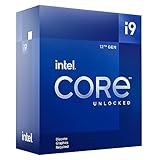
Intel Core i9-12900KF
The 12900KF is the previous-generation flagship that still outpaces most 14th gen mid-range parts in pure gaming throughput. Sixteen cores with the old-style P-core and E-core split feed the highest-end GPUs without compromise. For 8th gen upgraders who want the best possible frame rates without paying 14th gen premiums, this is a stealth value play on the used and open-box market.
- Pro: 5.1 GHz boost clocks deliver exceptional single-thread performance for competitive gaming
- Pro: 125W TDP with 241W peak means it runs hotter than 14th gen equivalents
- Con: Requires the same LGA 1700 motherboard investment as the 14600KF
Skip if you do not need more than RTX 4070 Ti level GPU output.
Corsair Vengeance i7500 Gaming PC
The i7500 is the path of least resistance. Corsair bundles a current-generation Intel CPU, high-end GPU, adequate RAM, and a tuned airflow chassis into one purchase. For an 8th gen user who wants to close the laptop and walk away, this eliminates every compatibility decision. The internal components pair perfectly and the thermal design is validated out of the box.
- Pro: Zero configuration risk — every component is tested together by Corsair before shipping
- Pro: Upgrade paths remain open since it uses standard ATX components internally
- Con: You pay a builder premium of roughly ten to fifteen percent over individual part costs
Skip if you already own a decent GPU and just need a CPU upgrade.
Intel Core i7-14700K
The 14700K adds integrated graphics to the sixteen-core, twenty-four-thread design, which means you get a fallback if your discrete GPU fails. For 8th gen upgraders who want maximum cores without the price of the i9 tier, this hits the sweet spot. The extra four E-cores over the 12700K improve multitasking and rendering without raising power draw dramatically.
- Pro: Integrated UHD 770 graphics provide a display output when the GPU is unavailable or in troubleshooting
- Pro: Twenty-core design handles streaming, recording, and gaming simultaneously without thread starvation
- Con: 125W TDP with aggressive boost behavior demands a serious aftermarket cooler
Skip if your board or cooler cannot sustain the power envelope under long sessions.
Intel Core i7-14700KF
The KF variant drops integrated graphics and saves roughly twenty-two dollars compared to the K. If you are pairing this with a dedicated GPU from day one and never need a fallback display path, the KF is functionally identical and marginally cheaper. For 8th gen upgraders who are replacing their entire system anyway, the iGPU argument becomes moot — you will have a discrete GPU installed permanently.
- Pro: Identical core count and clock speeds to the 14700K at a lower price point
- Pro: Lower thermals slightly since the integrated graphics unit is disabled on the die
- Con: No display output without a discrete GPU — troubleshooting becomes harder if the GPU fails
Skip if you want the safety net of integrated graphics for system diagnostics.
Buying Guide
PCIe Lane Bandwidth and GPU Slot Availability
8th gen Intel chips deliver sixteen PCIe 3.0 lanes directly from the CPU to the primary GPU slot. Modern GPUs like the RTX 4060 and RX 7600 are designed for PCIe 4.0 x8 interfaces, which means they will run at 3.0 x8 on your existing board — a real but small penalty of roughly three to five percent. If you are keeping an 8th gen CPU, prioritize GPUs with x16 physical interfaces to avoid the lane-count mismatch entirely.
CPU Bottleneck Threshold by GPU Tier
The practical rule for 8th gen pairings: an i5-8400 tops out around the RTX 4060 tier before becoming the limiting factor at 1080p. The i7-8700 extends that to roughly the RTX 4070 level. Above that boundary, a CPU upgrade becomes mandatory to justify the GPU purchase. This is the single most important decision point in this entire guide — match your GPU to your CPU’s real throughput, not to the marketing tier on the box.
Platform Migration Cost Calculation
Moving from LGA 1151 to LGA 1700 requires a new motherboard and typically DDR5 RAM. Budget roughly $150 to $250 for the board and $60 to $100 for 16 GB of DDR5 before you even buy the CPU. Factor this into your decision — a $210 14600KF is actually a $420 platform upgrade, and that changes the value equation significantly versus simply buying a faster GPU for your existing board.
Our Verdict
The Intel Core i7-8700 is the top pick for anyone staying on their current motherboard — it removes the hyperthreading bottleneck of the i5-8400 at a price that still leaves room in the budget for a capable GPU. For the budget pick, the i3-8100 keeps a system alive at $89, though it is strictly a placeholder. The condition under which the 14600KF wins: if your GPU is already RTX 4070 class or above, the platform jump pays for itself in frame consistency and future upgrade headroom within eighteen months.
FAQ
Can I pair a modern GPU with an Intel 8th gen CPU without a bottleneck?
Up to the RTX 4060 or RX 7600 tier, an 8th gen i5 or i7 will handle most GPU output at 1440p and above without a noticeable bottleneck. Below 1080p or in CPU-heavy titles like competitive shooters, you will see the limit even at mid-range GPU performance.
Do I need a new motherboard to upgrade past 8th gen Intel?
Yes. Coffee Lake uses LGA 1151, while every Intel generation from 12th onward uses LGA 1700 or LGA 1851. There is no drop-in 8th gen socket upgrade beyond the i7-8700, so any meaningful performance jump requires a platform replacement.
Is PCIe 3.0 on 8th gen a dealbreaker for newer GPUs?
No. The bandwidth difference between PCIe 3.0 x16 and PCIe 4.0 x16 is large in theory but manifests as a two to four percent frame penalty in real gaming. It only becomes meaningful on GPUs that use an x8 physical interface, so check the lane count before purchasing.
Should I upgrade my CPU or GPU first with an 8th gen system?
Upgrade your GPU first if it is older than a GTX 1660 or RX 580 — the visual and performance jump from a GPU swap is immediately noticeable. Upgrade your CPU first only if you are already on a mid-range GPU and want to unlock higher frame rates or add streaming and multitasking capability.


