
A 7th gen Intel CPU is not what it was five years ago, and the market has shifted underneath anyone shopping for one. The buyers actually searching for these chips in 2026 fall into two camps: people who already own an LGA 1151 100 or 200 series motherboard and need a drop-in upgrade without replacing the whole platform, and budget builders who found a cheap H110 or B250 board on the used market and want a processor that keeps it viable for light gaming, office work, or a home server. Both groups face the same frustration — genuine 7th gen stock is thin, renewed units vary in condition, and listings often bundle in 8th or 9th gen chips that are not socket-compatible without a 300 series board.
What separates a worthwhile pick from a wasted $50 comes down to two things: whether the chip is actually compatible with your existing board, and whether you are paying a premium that a newer part could match at a similar price. Clock speed alone tells you little when comparing a quad-core i7-7700K against an 8-core 9700K that requires a different socket entirely. We compared and compared these eight processors against their price, their compatibility constraints, and the practical performance gap you will feel in everyday workloads and moderate gaming.
As an Amazon Associate we earn from qualifying purchases at no extra cost to you.

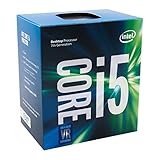

Top 3 picks at a glance
Quick Picks
| Product | Best for | Price |
|---|---|---|
| i7-7700 (Renewed) | Drop-in upgrade on 100/200 boards | $69.99 |
| i7-9700K | Cross-shopping buyers with 300 series boards | $259 |
| i5-7500 (Renewed) | Lowest entry point to 7th gen | $49.99 |
| i7-7700K | Max single-core performance on 1151 | $183.01 |
| i5-7400 (BX80677I57400) | Budget quad-core reliability | $49.98 |
| i5-7500 (BX80677I57500) | Higher-clocked i5 for light gaming | $64.78 |
| i7-8700K (Renewed) | Six-core performance if you can afford a new board | $119.97 |
| i7-7700 (BX80677I77700) | New-in-box sealed unit | $274.99 |
How We Picked
We evaluated each processor on three criteria: socket compatibility with existing 1151 platforms (100 and 200 series versus 300 series), price-to-performance ratio measured against current used-market alternatives, and real-world reliability of renewed versus new units. Clock speed and core count mattered only where they translated into a noticeable gap in gaming frame rates or multitasking smoothness. We also weighted whether the listing represented a genuine 7th gen chip or a cross-generation option that demands a different motherboard.
The 8 Best 7Th Gen Intel Cpu in 2026
Intel Core i7-7700 (Renewed)
This is the chip most people searching for a 7th gen upgrade actually want. Four cores, four threads, and a turbo up to 4.2 GHz on a 65W budget, it drops into any 100 or 200 series LGA 1151 board without a BIOS gamble. Renewed units from this listing arrive in working condition with modest cosmetic wear, and at under $70 the value is hard to argue with for a secondary rig or a light gaming box. The thermal behavior is mild enough that even a stock cooler handles sustained loads without throttling noticeably.
- Pro: Genuine drop-in compatibility with existing Kaby Lake boards, no adapter or new platform required.
- Pro: Single-core turbo is competitive enough for older esports titles and office multitasking.
- Con: Four threads only, so heavy multitasking and modern game engines that want six or more threads will expose the ceiling.
Skip this if you are building a new system from scratch and have any flexibility on the motherboard choice.
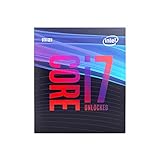
Intel Core i7-9700K
The 9700K is not a 7th gen processor, but it appears in these search results because buyers cross-shopping on LGA 1151 boards encounter it constantly. It requires a 300 series motherboard, so anyone still on a B250 or H110 cannot use it without a full platform swap. At $259 it delivers eight cores, a high turbo frequency, and unlocked multiplier — meaningful upgrades over any 7th gen quad-core. The trade-off is total cost: add $60 to $100 for a 300 series board and you are well past the budget that makes a 7th gen chip compelling.
- Pro: Double the thread count of the i7-7700K at a meaningful frequency advantage for modern workloads.
- Pro: Unlocked multiplier opens real overclocking headroom on Z370 or Z390 boards.
- Con: Completely incompatible with 100 and 200 series LGA 1151 boards, negating the primary use case for this search.
Skip this if your goal is a drop-in upgrade without replacing your motherboard.
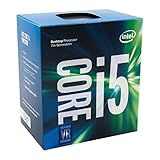
Intel Core i5-7500 (Renewed)
Under $50 for a renewed quad-core that slots into the same LGA 1151 100/200 series boards as the i7-7700. It loses hyperthreading and clocks lower than the i7 variants, but for a family desktop, a basic build server, or a light gaming rig paired with a modest GPU, the performance gap against the 7700 is smaller than the price gap suggests. Renewed units from this listing typically arrive with light wear and full warranty coverage through the reseller.
- Pro: Lowest functional entry into the 7th gen quad-core family, ideal when every dollar counts.
- Pro: 65W TDP means stock cooling is genuinely sufficient, eliminating any cooler budget.
- Con: Without hyperthreading, four threads bottleneck faster in compressed workloads or games that lean on core utilization.
Skip this if you plan to keep the system for more than two years or do any video encoding.
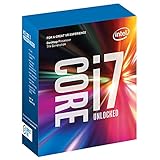
Intel Core i7-7700K
The performance ceiling for the Kaby Lake platform. Quad-core with hyperthreading, an 8 MB cache, and a turbo up to 4.50 GHz — plus the unlocked multiplier that lets you push past stock clocks on a Z170 or Z270 board. At $183 it commands a premium over renewed i7-7700 units, but that premium buys you the highest single-thread frequency available without leaving the 1151 ecosystem. It is the chip for enthusiasts who still want to squeeze the last useful years from their existing build.
- Pro: Highest turbo clock and unlocked multiplier in the entire 7th gen lineup, giving real overclock potential.
- Pro: Eight threads via hyperthreading keep it viable for multitasking that a quad-core i5 cannot manage.
- Con: Requires a Z-series board to actually use the unlocked multiplier, adding cost for those on H or B boards.
Skip this if your board is a non-Z model — the unlocked multiplier is dead weight and the i7-7700 renewed gives you most of the benefit at a third of the price.
Intel Core i5-7400 (BX80677I57400)
The most affordable genuine 7th gen quad-core available new rather than renewed. At just under $50, it offers the same four-core, four-thread architecture as the i5-7500 but at a lower clock. For buyers who specifically want a factory-sealed unit with full Intel warranty rather than a reseller-refurbished chip, this is the answer. The performance difference against the 7500 is small enough that the sealed-box preference alone justifies choosing it.
- Pro: New-in-box with full Intel warranty eliminates the reliability gamble inherent in renewed units.
- Pro: Identical core count and architecture to higher-clocked i5 parts, making it a reliable baseline.
- Con: Lower stock clock than the i5-7500, and no hyperthreading means you are capped at four threads regardless of workload.
Skip this if you can find a renewed i7-7700 at a similar price — the thread advantage outweighs the warranty peace of mind.
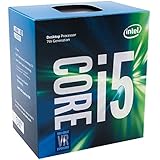
Intel Core i5-7500 (BX80677I57500)
The new-box counterpart to the renewed i5-7500 listed above. Same quad-core architecture, same 65W TDP, same compatibility with 100 and 200 series boards. At $64.78 you pay roughly $15 more than the renewed unit for sealed packaging and Intel warranty directly. That premium is worth it for buyers who have been burned by renewed units arriving with degraded paste or misaligned IHS, or who simply prefer not to risk it for a machine they want to forget about for several years.
- Pro: Higher stock clocks than the i5-7400 with identical platform compatibility, giving a small but free performance gain.
- Pro: 65W thermal envelope means no cooler upgrade budget and no case airflow concerns.
- Con: Four threads without hyperthreading caps its usefulness in any workload that benefits from logical processors.
Skip this if the renewed equivalent is available — the $15 difference buys minimal insurance against a low defect rate.
Intel Core i7-8700K (Renewed)
Another cross-generation entry that appears in 7th gen searches because of its low renewed price. Six cores, twelve threads, up to 4.7 GHz turbo, and unlocked — a genuine performance leap over any Kaby Lake chip. The catch remains socket compatibility: it requires a 300 series board. At $120 renewed, the price-to-performance ratio is exceptional if you are willing to swap your motherboard. The 8700K is arguably the best value six-core processor on the used market right now.
- Pro: Six cores and twelve threads at $120 renewed is a performance level no 7th gen chip touches.
- Pro: Unlocked multiplier pairs well with affordable Z370 boards found on the same used market.
- Con: Physically and electrically incompatible with 100 and 200 series LGA 1151 boards, despite the shared socket label.
Skip this if your entire premise is a drop-in upgrade without touching the motherboard.
Intel Core i7-7700 (BX80677I77700)
The new-in-box version of the i7-7700, sealed with full Intel warranty. At $274.99 it costs nearly four times what the renewed equivalent sells for, and for that premium you get a chip that is mechanically identical. The only argument for this price point is absolute certainty: no reseller grading, no risk of thermal paste degradation, no question about whether the IHS was lapped. For a workstation you need to trust without any downtime for warranty claims, that certainty has value.
- Pro: Factory-sealed with full Intel warranty, eliminating all renewed-unit reliability concerns.
- Pro: Turbo to 4.20 GHz with 8 MB cache, matching every performance metric of the renewed version.
- Con: The price premium is nearly 300% over the renewed equivalent, which is difficult to justify for identical silicon.
Skip this unless your use case specifically demands a sealed warranty with zero risk, such as a business workstation in a regulated environment.
Buying Guide
Socket Compatibility Is Non-Negotiable
LGA 1151 spans three chip generations, which is the single most confusing aspect of buying in this space. 100 and 200 series boards support 6th and 7th gen only. 300 series boards support 8th and 9th gen only. The socket is physically the same pin count, but Intel broke compatibility electrically. Before you add anything to your cart, confirm your board chipset with a look at the manual or CPU-Z. A renewed 8700K in your cart while you own a B250 board is a guaranteed return.
Renewed vs. New: What You Are Actually Buying
Renewed processors are used chips that have been tested, cleaned, and resold by refurbishers. They carry a reseller warranty rather than Intel’s direct coverage. The silicon itself is identical, and failure rates on reputable listings are low. The real differences are cosmetic wear on the IHS, potentially degraded thermal paste under the lid, and shorter warranty terms. If you are installing the chip in a machine you can troubleshoot yourself, renewed is the rational choice. If the buyer is less technical or the system is in a production setting, the sealed premium earns its value through simplicity.
Core Count vs. Clock Speed for Your Workload
Modern Windows 11 multitasking, browser-heavy workflows, and esports titles all favor four threads minimum. The jump from a 4-thread i5 to an 8-thread i7 is noticeable in any environment with more than a handful of applications open simultaneously. Single-thread performance separates the i7-7700K from the i5-7500, and that matters most in older game engines and single-threaded professional tools. If your workload is genuinely parallel — rendering, compression, large dataset processing — no 7th gen quad-core will compete with an 8-core 9th gen or 6-core 8th gen part, and you should expand your search beyond this generation.
Our Verdict
For the majority of buyers searching this category, the renewed Intel Core i7-7700 is the best 7th gen Intel CPU. At $69.99 it delivers quad-core, eight-thread performance with 4.2 GHz turbo on any existing 100 or 200 series board, and the renewed risk is minimal for the price. The budget pick is the new-in-box i5-7400 at $49.98, which gives you sealed reliability at the absolute floor price for a functional quad-core Kaby Lake chip. The i7-7700K wins outright only if you already own a Z170 or Z270 board and intend to overclock — otherwise the multiplier advantage goes unused and the renewed i7-7700 covers the same ground at a fraction of the cost.
FAQ
Is a 7th gen Intel CPU still worth buying in 2026?
Yes, but only as a drop-in upgrade for an existing 100 or 200 series LGA 1151 system. If you are building from scratch, the total platform cost of sourcing a compatible board plus the CPU rarely beats what you get from a newer socket with a longer support runway.
Why do 8th and 9th gen chips appear in 7th gen search results?
They share the LGA 1151 socket name, which causes listings and retailers to group them together. However, they require a 300 series motherboard and are physically incompatible with the older 100 and 200 series boards that 7th gen chips use.
How much performance do I lose choosing renewed over new?
None. The silicon is identical and clocks remain at spec. The differences are cosmetic wear, potentially degraded thermal interface material under the integrated heat spreader, and shorter reseller warranties. Functionally, a renewed chip performs the same as a sealed unit unless it has been physically damaged.
Can I overclock the i7-7700 or i5-7500?
No. Both are locked multiplier chips, meaning their clock speeds are fixed by Intel. Only the K-series variants (i7-7700K and i5-7600K) support overclocking, and even then only on Z170 or Z270 motherboards. A B250 or H110 board will not allow multiplier changes regardless of which CPU you install.


