
The RX 6900 XT is the better card for most buyers: it is roughly 35-45% faster in traditional rasterized games at 1440p and 4K, has 16 GB of VRAM instead of 11 GB, and is two years newer, while the RTX 2080 Ti only makes sense if you specifically want DLSS image quality or if you find one for far less money. Ray tracing narrows the gap considerably, and in some heavily ray-traced games the two land close together, but the Radeon is still the stronger all-rounder.
As an Amazon Associate we earn from qualifying purchases at no extra cost to you.

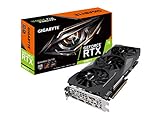

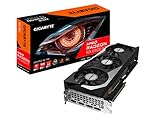
Our Top Picks
Top 3 picks at a glance
Two Former Flagships, Two Different Eras
Both cards launched at $999. The RTX 2080 Ti arrived in September 2018 as NVIDIA’s first consumer card with dedicated ray tracing and tensor cores. The RX 6900 XT followed in late 2020 as AMD’s RDNA 2 flagship, built on a smaller 7 nm process with a large on-die cache to make up for its narrower memory bus. Buying either one in 2026 means buying used, so the question is really which older high-end card gives you more for the money today.
Specifications Compared
| Spec | RTX 2080 Ti | RX 6900 XT |
|---|---|---|
| Architecture | Turing | RDNA 2.0 |
| Release date | 20 September 2018 | 28 October 2020 |
| Launch MSRP | $999 | $999 |
| Shaders | 4,352 CUDA cores | 5,120 stream processors |
| Boost clock | 1,545 MHz | 2,250 MHz |
| Process | 12 nm | 7 nm |
| Board power | 250 W | 300 W |
| Memory | 11 GB GDDR6 | 16 GB GDDR6 |
| Memory bus | 352-bit | 256-bit |
| Bandwidth | 616.0 GB/s | 512.0 GB/s |
| Cache | 5.5 MB L2 | 4 MB L2 + 128 MB L3 (Infinity Cache) |
| Interface | PCIe 3.0 x16 | PCIe 4.0 x16 |
| Power connectors | 2x 8-pin | 2x 8-pin |
| Length / width | 267 mm, 2-slot | 267 mm, 3-slot |
| Outputs | 1x HDMI 2.0, 3x DP 1.4a, 1x USB-C | 1x HDMI 2.1, 2x DP 1.4a, 1x USB-C |
The 2080 Ti actually has more raw memory bandwidth, but the 6900 XT’s 128 MB Infinity Cache catches a large share of memory requests on-chip, which is why it outperforms the NVIDIA card despite the narrower bus. The 6900 XT also has HDMI 2.1, useful for 4K 120 Hz TVs, which the 2080 Ti lacks.
Rasterized Gaming: A Clear Win for the Radeon
Major reviews placed the RX 6800 XT, the 6900 XT’s slightly cut-down sibling, about 25% ahead of the RTX 2080 Ti in non-ray-traced games, according to TechPowerUp’s RX 6800 XT review data. The 6900 XT adds a further high-single-digit margin on top of that, which puts it roughly 35-45% ahead of the 2080 Ti on average at 1440p and 4K. Game-by-game numbers published across comparison databases cluster in the same range, with individual titles from about +25% to +45%.
- 1080p: the gap shrinks because both cards are often limited by the CPU, especially with an older processor. Expect differences closer to 20-30% in many games.
- 1440p: the sweet spot for both. A game running around 100 fps on the 2080 Ti will often sit somewhere around 135-145 fps on the 6900 XT, varying with settings, CPU and patches.
- 4K: the 6900 XT keeps a similar lead. The Infinity Cache hit rate drops at 4K, but the 2080 Ti’s older shader design limits it more.
Ray Tracing Narrows the Gap
RDNA 2 was AMD’s first generation with hardware ray tracing, and its performance loss when ray tracing is enabled is larger than on NVIDIA cards. TechPowerUp described RX 6800 XT ray tracing as landing roughly around RTX 2080 Ti levels, with big differences depending on the title. The 6900 XT, being a bit faster, tends to stay level with or slightly ahead of the 2080 Ti in light-to-moderate ray tracing, such as reflections or shadows only.
In heavy ray tracing and path tracing, such as Cyberpunk 2077’s RT Overdrive mode or Alan Wake 2 with full ray tracing, neither card is a good experience. The 2080 Ti’s advantage there is less about raw ray tracing speed and more about DLSS, which lets it render at a lower internal resolution with good image quality.
Upscaling and Frame Generation in 2026
| Feature | RTX 2080 Ti | RX 6900 XT |
|---|---|---|
| Native upscaler | DLSS 4 transformer model (DLSS 4.5 runs, with a larger fps cost on RTX 20) | FSR 2 / FSR 3.1; FSR 4.1 announced for RX 6000 in early 2027 |
| Frame generation | No DLSS frame generation; FSR 3 frame generation works in supported games | FSR 3 frame generation plus AMD Fluid Motion Frames at driver level |
| Driver status | Still on NVIDIA’s Game Ready branch | RX 6000 moved to a separate driver branch in late 2025 focused on fixes, with new-game optimization focused on newer Radeons |
Image quality is the 2080 Ti’s best argument. DLSS with the transformer model looks noticeably cleaner than FSR 2 or FSR 3.1 at the same internal resolution, especially at 1440p Balanced or Performance modes. AMD brought FSR 4.1 to RX 7000 cards in June 2026 and has announced it for RX 6000 in early 2027; until that arrives, the 6900 XT relies on older FSR versions. Note that NVIDIA’s newer DLSS 4.5 model costs RTX 20 and 30 cards noticeably more performance because they lack FP8 support, so many owners stay with the DLSS 4 preset.
The practical result: in a ray-traced game with DLSS available, the 2080 Ti at DLSS Quality can look better and run close to a 6900 XT using FSR. In everything else, the 6900 XT simply has more horsepower.
VRAM: 11 GB vs 16 GB
Eleven gigabytes was generous in 2018 and is still workable at 1440p, but several 2025-2026 games at 4K with high-resolution textures and ray tracing go past 11 GB. The 6900 XT’s 16 GB gives comfortable headroom at both 1440p and 4K and is a big part of why it has aged better. A rough guide: 8-10 GB for 1080p high settings, 10-12 GB for 1440p, 12-16 GB for 4K. The 2080 Ti sits right on the edge at 4K, while the 6900 XT clears it.
Worked Example: PSU Sizing
A reasonable formula is GPU board power plus CPU power plus about 150 W of headroom for transients and the rest of the system:
- RTX 2080 Ti: 250 W + 125 W (typical gaming CPU) + 150 W = about 525 W, so a quality 600-650 W unit is comfortable.
- RX 6900 XT: 300 W + 125 W + 150 W = about 575 W, so aim for a 650-750 W unit. RDNA 2 high-end cards can spike above rated power briefly, and AMD itself suggested 850 W for some configurations.
Both cards use two standard 8-pin PCIe connectors in the reference design. Run two separate cables rather than one split cable for the 6900 XT.
Case Fit and Platform Notes
Both reference cards are 267 mm long, which fits nearly any mid-tower. The difference is thickness: the 6900 XT reference cooler is listed as 3-slot against the 2080 Ti’s 2-slot, so check clearance below the card if you use another expansion card. Partner models of both vary widely in length.
The 6900 XT uses PCIe 4.0 but runs fine on PCIe 3.0 boards with only a minor loss. On a Ryzen 5000 or newer system with a compatible motherboard you can also enable Smart Access Memory (Resizable BAR), which adds a few percent in some games. The 2080 Ti does not support Resizable BAR.
Value on the Used Market
Since both launched at $999, value now depends on used prices. In late 2026, a used RTX 2080 Ti typically sells somewhere around $220-$300, while a used RX 6900 XT usually sits around $300-$400. Using the midpoints and indexing the 2080 Ti at 100 points of performance with the 6900 XT at about 140:
- RTX 2080 Ti: roughly $260 / 100 = about $2.60 per performance point
- RX 6900 XT: roughly $350 / 140 = about $2.50 per performance point
The cost per frame is close, so the decision comes down to features: more speed and VRAM on the Radeon, better upscaling on the GeForce. Watch for ex-mining cards on both sides, and check fan noise, temperatures and any signs of artifacts before paying.
Who Should Pick Which
| Scenario | Pick |
|---|---|
| 1440p high refresh in mostly non-ray-traced games | RX 6900 XT |
| 4K gaming on a TV with HDMI 2.1 | RX 6900 XT |
| Ray-traced single-player games where DLSS is available | RTX 2080 Ti (if cheaper) |
| CUDA-based creative or AI software | RTX 2080 Ti |
| Power supply around 600 W | RTX 2080 Ti |
| Longest useful life ahead | RX 6900 XT, thanks to 16 GB and the announced FSR 4.1 support |
If your budget can stretch, current mid-range cards like the RX 9060 XT 16 GB or the RTX 5060 Ti 16 GB deliver performance in a similar class with much lower power draw and full warranty coverage, which is worth weighing against a used flagship.
Frequently Asked Questions
How much faster is the RX 6900 XT than the RTX 2080 Ti?
In rasterized games, roughly 35-45% faster at 1440p and 4K based on launch review data and later comparisons. The gap is smaller at 1080p where the CPU limits both cards. With ray tracing turned on, they land much closer together.
Is the RTX 2080 Ti better for ray tracing than the RX 6900 XT?
Raw ray tracing speed is similar, with results that vary heavily by game. The 2080 Ti’s real advantage is DLSS, which offers better image quality than FSR 3 when upscaling. That combination can make ray-traced games look and run better on the NVIDIA card in some titles.
Will the RX 6900 XT get FSR 4?
AMD released FSR 4.1 for RX 7000 cards in June 2026 and has announced support for RX 6000 cards in early 2027. Until then, the 6900 XT uses FSR 3.1 and older versions. Image quality should improve once the update arrives.
Can the RTX 2080 Ti use frame generation?
Not NVIDIA’s DLSS frame generation, which is limited to RTX 40 and RTX 50 cards. It can use AMD’s FSR 3 frame generation in games that include it. Frame generation works best when the base frame rate is already around 60 fps.
Is 11 GB of VRAM enough in 2026?
At 1080p and 1440p it is usually fine with high settings. At 4K, some recent games exceed 11 GB when ultra textures and ray tracing are enabled. Dropping texture quality one step is normally enough to avoid stutter.

