
The Arc B580 is the better buy for almost anyone choosing today: it is roughly 15-30% faster than the RX 5700 in modern games, carries 12 GB instead of 8 GB of VRAM, supports hardware ray tracing and XeSS 2, and launched at a lower $249 price. The RX 5700 only stays relevant as a cheap used card for older PCs, especially systems without Resizable BAR or with older CPUs, where the B580 loses part of its advantage.
For RX 5700 owners, this comparison is really an upgrade question. For new builders, it is a choice between a 2019 used card and a current-generation budget card, and the newer Intel part wins on nearly every axis except platform compatibility.
As an Amazon Associate we earn from qualifying purchases at no extra cost to you.
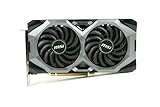
RX 5700 and Arc B580 Specifications
| Spec | RX 5700 | Arc B580 |
|---|---|---|
| Architecture | RDNA 1.0 | Xe2 (Battlemage) |
| Release date | 7 July 2019 | 13 December 2024 |
| Launch MSRP | $349 | $249 |
| Shading units | 2304 | 2560 |
| Boost clock | 1725 MHz | 2670 MHz |
| Process | 7 nm | 5 nm |
| TDP | 180 W | 190 W |
| Memory | 8 GB GDDR6 | 12 GB GDDR6 |
| Bus width | 256-bit | 192-bit |
| Bandwidth | 448.0 GB/s | 456.0 GB/s |
| L2 cache | 4 MB | 18 MB |
| Interface | PCIe 4.0 x16 | PCIe 4.0 x8 |
| Power connectors | 1x 6-pin + 1x 8-pin | 1x 8-pin |
| Size | 268 mm, 2-slot | 272 mm, 2-slot |
| Outputs | 1x HDMI 2.0b, 3x DP 1.4a | 1x HDMI 2.1a, 3x DP 2.1 |
Bandwidth is almost the same, but the B580 brings 50% more memory, a much larger 18 MB L2 cache, and a modern display engine with DisplayPort 2.1 and HDMI 2.1a. Both cards are about the same physical size, and power ratings are within 10 W of each other.
Performance Gap in Current Games
TechPowerUp’s Arc B580 reviews placed the card about 5% ahead of the RTX 4060 and around 15% ahead of the RX 7600 on average. The RX 5700 sits clearly below that class in TechPowerUp’s charts, at roughly RX 6600 level. Combining those placements, the B580 lands roughly 15-30% ahead of the RX 5700 in rasterized games, with the larger margins at 1440p and in newer titles. Aggregator sites report a smaller average gap in some suites, which reflects how much results depend on game selection and CPU.
As a broad orientation, a modern AAA game running around 50-60 FPS on an RX 5700 at 1440p medium-to-high settings will often run around 60-75 FPS on the B580. Those ranges vary with settings, CPU and game patches.
The CPU overhead caveat
Hardware Unboxed found in early 2025 that the B580 lost a lot of performance when paired with older processors such as the Ryzen 5 2600, falling well behind an RTX 4060 that it beat on a fast CPU. Later Intel drivers fixed most of this on Ryzen 5000-class CPUs, but TechSpot’s follow-up testing still showed significant losses in several games on the Ryzen 5 2600. If your RX 5700 sits in a system with a Ryzen 2000-series or Intel 8th/9th Gen CPU, expect a smaller real-world uplift than reviews on fast CPUs show.
Ray Tracing, Upscaling and Required-RT Games
The RX 5700 is RDNA 1, which has no ray tracing hardware and no DirectX 12 Ultimate support. That is now a hard limit, not just a missing setting: recent games such as Indiana Jones and the Great Circle and Doom: The Dark Ages require ray tracing hardware and will not run on the RX 5700.
The B580’s second-generation Intel RT units are competitive for its class, and reviews show it handling light-to-moderate ray tracing at 1080p well relative to similarly priced cards. On upscaling:
- Arc B580: XeSS 2 with XMX-accelerated super resolution, XeSS frame generation and Xe Low Latency in supported games.
- RX 5700: FSR 2 and FSR 3.x upscaling and FSR frame generation. AMD’s ML-based FSR 4.1 is limited to RX 7000 and newer, with RX 6000 support planned, so RDNA 1 is left out.
VRAM: 8 GB vs 12 GB
| Resolution | Typical modern AAA need (high textures) | RX 5700 (8 GB) | Arc B580 (12 GB) |
|---|---|---|---|
| 1080p | about 6-9 GB | Mostly fine, some trimming | Comfortable |
| 1440p | about 8-11 GB | Often needs medium textures | Comfortable in most games |
| 1440p + RT + frame generation | about 10-12 GB | Not supported (no RT) | Borderline to fine |
The extra 4 GB is one reason reviewers called the B580 a realistic entry point for 1440p on a budget, something the RX 5700 can only manage by cutting texture quality in newer releases.
Platform Checks Before Upgrading
- Resizable BAR: Intel Arc needs it for good performance. Many older boards lack the option or need a BIOS update.
- PCIe link: the B580 uses PCIe 4.0 x8. On a PCIe 3.0 board it runs at x8 3.0, which costs a few percent on average and more when VRAM overflows; the 12 GB buffer makes overflow less likely.
- CPU: a Ryzen 5 5600 or Intel 12th Gen or newer avoids most of the overhead issue.
Power Supply and Connectors
Rule of thumb: GPU TDP + CPU power + about 150 W.
- RX 5700 + 105 W CPU: 180 + 105 + 150 = about 435 W
- Arc B580 + 105 W CPU: 190 + 105 + 150 = about 445 W
A quality 500-550 W PSU covers both. The B580 needs only one 8-pin connector, while the RX 5700 uses a 6-pin plus an 8-pin, so cabling is simpler on the Intel card. At 272 mm vs 268 mm and 2 slots each, a case that fits the RX 5700 will almost always fit a B580, though partner versions vary in length.
Value Calculation
Index the RX 5700 at 100 and the B580 at roughly 122 (middle of the review-based range):
- RX 5700: $349 / 100 = about $3.49 per performance point at launch
- Arc B580: $249 / 122 = about $2.04 per performance point at launch
The B580 offers far more per dollar at launch pricing. Used RX 5700 cards usually sell around $100-$150, which is cheap enough to make sense for a stopgap 1080p build, but the gap to a new B580 is often small enough that the newer card is the better long-term spend.
Which Card Fits Which Buyer
| Situation | Pick |
|---|---|
| New build, modern CPU, 1080p or 1440p | Arc B580 |
| Wants games that require ray tracing | Arc B580 |
| Old platform without Resizable BAR | RX 5700 (or an AMD/Nvidia upgrade instead of Arc) |
| Ryzen 2000 or Intel 8th/9th Gen CPU | B580 still helps, but consider a CPU upgrade too |
| Very tight budget, esports at 1080p | Used RX 5700 |
| Streaming with AV1 | Arc B580 |
Is Upgrading From an RX 5700 to a B580 Worth It?
For an RX 5700 owner on a modern platform, the B580 is a meaningful but not dramatic step: roughly a fifth to a quarter more performance on average, plus the features and VRAM the RX 5700 lacks. The strongest argument is compatibility, since more new releases expect ray tracing hardware. Owners hoping for a doubling of performance should look higher, toward an RX 9060 XT 16 GB, RTX 5060 Ti or above.
Driver Outlook for Both Cards
AMD moved the RX 5000 and RX 6000 series to a separate maintenance driver branch in late 2025, then confirmed that day-one game support and optimizations would continue there. New features go to RX 7000 and RX 9000 first. The B580 is Intel’s current mainstream card, so it sits at the center of Intel’s driver work, and Intel has been steadily improving performance and CPU overhead behavior through 2025 and 2026.
Frequently Asked Questions
How much faster is the Arc B580 than the RX 5700?
Roughly 15-30% in modern rasterized games, based on how TechPowerUp’s reviews position both cards. The lead is larger at 1440p and in newer titles. On older CPUs the real-world gain can be smaller because of Arc driver overhead.
Can the RX 5700 run ray tracing games?
No. RDNA 1 has no ray tracing hardware, so RT settings are unavailable. Games that require ray tracing, such as Indiana Jones and the Great Circle, will not launch on the RX 5700.
Does the Arc B580 work well with older CPUs?
It works, but it loses more performance on older CPUs than AMD or Nvidia cards do. Driver updates fixed most of the problem on Ryzen 5000-class chips. With a Ryzen 2000 or similarly old CPU, some games still run noticeably slower.
Do I need a new power supply to go from an RX 5700 to a B580?
Usually not. Both cards draw about 180-190 W, and any quality 500 W unit that ran the RX 5700 should handle the B580. The B580 needs only one 8-pin connector.
Is 12 GB on the B580 enough for 1440p?
For most current games at 1440p high settings, yes. Very demanding titles with ray tracing and frame generation can approach the limit. It is a clear improvement over the RX 5700’s 8 GB.

