
For gaming value the RX 6800 XT is the smarter buy: the RTX 3090 is faster, by roughly 5-12% at 1440p and about 15% at 4K in traditional rendering, but on the used market it usually costs about twice as much. Choose the RTX 3090 only if you play heavily ray-traced games at high resolution, rely on DLSS 4, or need its 24 GB of VRAM for AI, rendering or other professional work.
As an Amazon Associate we earn from qualifying purchases at no extra cost to you.

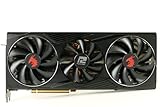


Our Top Picks

Top 3 picks at a glance
Flagship Price Versus Upper-Mid-Range Value
NVIDIA launched the RTX 3090 in September 2020 at $1,499 as its halo product, with 10496 CUDA cores, 24 GB of GDDR6X on a 384-bit bus and 936.2 GB/s of bandwidth. AMD answered in October 2020 with the RX 6800 XT at $649, using 4608 stream processors, 16 GB of GDDR6 on a 256-bit bus and a 128 MB Infinity Cache that compensates for lower raw bandwidth. The RTX 3090 cost more than twice as much for a relatively small gaming advantage, and that ratio has largely persisted on the used market.
| Specification | RX 6800 XT | RTX 3090 |
|---|---|---|
| Architecture | RDNA 2.0 | Ampere |
| Release date | 28 October 2020 | 1 September 2020 |
| Launch MSRP | $649 | $1,499 |
| Shaders | 4608 stream processors | 10496 CUDA cores |
| Boost clock | 2250 MHz | 1695 MHz |
| Process | 7 nm | 8 nm |
| TDP | 300 W | 350 W |
| VRAM | 16 GB GDDR6 | 24 GB GDDR6X |
| Memory bus | 256-bit | 384-bit |
| Bandwidth | 512.0 GB/s | 936.2 GB/s |
| Cache | 4 MB L2 + 128 MB L3 (Infinity Cache) | 6 MB L2 |
| Interface | PCIe 4.0 x16 | PCIe 4.0 x16 |
| Power connectors | 2x 8-pin | 1x 12-pin (Founders Edition) |
| Length (reference) | 267 mm | 336 mm |
| Width | 2-slot | 3-slot |
| Outputs | 1x HDMI, 2x DisplayPort, 1x USB Type-C | 1x HDMI, 3x DisplayPort |
Rasterized Performance at 1080p, 1440p and 4K
According to TechPowerUp’s RX 6800 XT launch review, the RTX 3090 was about 16% faster at 4K. Hardware Unboxed/TechSpot found the 6800 XT matching the RTX 3080 at 1440p, losing some ground to the 3090 at 4K, and occasionally even beating the 3090 in individual titles. Tom’s Hardware’s later testing also showed the 6800 XT close behind NVIDIA’s top cards at 1440p.
Taken together, the RTX 3090’s lead is roughly 5-12% at 1440p and roughly 12-18% at 4K. At 1080p, both cards are frequently limited by the CPU, and the RX 6800 XT’s Infinity Cache helps it stay very close or even ahead in some games. As a rough illustration, a game averaging 70 fps on the RX 6800 XT at 4K would typically run around 80 fps on the RTX 3090. Results vary with settings, CPU, patches and drivers.
Ray Tracing: A Decisive Win for the RTX 3090
Ray tracing is where the RTX 3090 earns its price. In its RX 6800 XT review, Tom’s Hardware measured the RTX 3080 about 25-30% ahead of the 6800 XT with ray tracing enabled, growing with resolution. The RTX 3090 is faster still, and Tom’s Hardware’s RX 6900 XT testing found the 3090 roughly 35-50% ahead of AMD’s top RDNA 2 card in ray tracing. Against the slightly slower RX 6800 XT, the 3090’s ray tracing lead is commonly 40% or more, and it widens further in path-traced or heavily ray-traced titles, where the 6800 XT is not a practical option.
Both cards have hardware ray tracing and can launch games that require it. The difference is how much image quality and frame rate remain with those effects enabled.
Upscaling and Frame Generation
The RTX 3090 supports DLSS 4 Super Resolution with the transformer model and DLSS Ray Reconstruction, which deliver strong image quality at 4K even in Performance mode. It does not support DLSS Frame Generation, which requires an RTX 40 or RTX 50 card, but it can use FSR 3 frame generation in supported games.
The RX 6800 XT uses FSR 2 and FSR 3 upscaling, FSR 3 frame generation and AMD Fluid Motion Frames. AMD brought FSR 4.1 machine-learning upscaling to the RX 7000 series in June 2026 and has announced it for the RX 6000 series in early 2027. Until it arrives, the 3090 holds a clear upscaling image-quality advantage, which matters most at 4K where both cards lean on upscaling in demanding new releases.
VRAM: 16 GB Is Plenty for Games, 24 GB Is for Work
For gaming, 16 GB on the RX 6800 XT is comfortable at 1440p and 4K in nearly every current title. The RTX 3090’s 24 GB rarely produces a measurable gaming benefit outside extreme texture mods. Rough guidance:
- 1440p ultra: 10-12 GB typically needed; both cards have ample headroom.
- 4K ultra with ray tracing: 12-16 GB in the heaviest games; both are covered.
- Local AI models, GPU rendering, large video projects: 24 GB is a major advantage, and NVIDIA’s CUDA support is far broader in these applications.
That workstation appeal is why used RTX 3090 prices remain high despite the card’s age.
Power, PSU and Case Clearance
Using GPU TDP + CPU power + about 150 W headroom with a 125 W gaming CPU:
- RX 6800 XT: 300 + 125 + 150 = 575 W, so a quality 750 W unit is the sensible target.
- RTX 3090: 350 + 125 + 150 = 625 W, so a quality 750 W unit is the minimum, and 850 W is sensible with a high-power CPU. GamersNexus and other outlets documented brief power spikes on high-end Ampere cards that can trip marginal power supplies.
The RX 6800 XT uses two 8-pin connectors. The 1x 12-pin listed for the RTX 3090 applies to the Founders Edition, which includes an adapter for two 8-pin cables; most partner 3090 cards use two or three 8-pin connectors. Size is a major difference: the 3090 reference design is 336 mm long and three slots thick, and many partner models are similarly massive. The 6800 XT reference is 267 mm and two slots. Mid-size and compact cases often cannot fit a 3090, and its rear-mounted GDDR6X memory modules benefit from strong case airflow.
Cost per Performance
At launch MSRPs, using 4K raster with the RX 6800 XT indexed at 100 and the RTX 3090 at about 114:
- RX 6800 XT: $649 / 100 = about $6.49 per performance point.
- RTX 3090: $1,499 / 114 = about $13.15 per performance point.
The RTX 3090 cost about twice as much per unit of gaming performance. In the 2026 used market, an RX 6800 XT typically sells for roughly $280-$360, while an RTX 3090 typically sells for roughly $600-$800 because of AI demand. For pure gaming, the 6800 XT remains the far better value. Both cards were widely used for mining, so check fans, memory temperatures and stability before buying.
Decision Table by Resolution and Budget
| Scenario | Better pick |
|---|---|
| 1440p high refresh, value focused | RX 6800 XT |
| 4K raster with upscaling, budget under about $400 | RX 6800 XT |
| 4K with heavy ray tracing | RTX 3090 |
| Local AI, Blender, CUDA workloads | RTX 3090 |
| Mid-size case or 750 W power supply | RX 6800 XT |
| Best upscaling image quality today | RTX 3090 (DLSS 4) |
| Linux gaming | RX 6800 XT |
For pure gamers spending RTX 3090 money, current cards such as the RTX 5070 Ti or Radeon RX 9070 XT offer modern upscaling and frame generation with a warranty, and are worth comparing against used prices.
Frequently Asked Questions
How much faster is the RTX 3090 than the RX 6800 XT?
In traditional rendering, the RTX 3090 is roughly 5-12% faster at 1440p and about 15% faster at 4K, with TechPowerUp measuring 16% at 4K. With ray tracing enabled, the gap is much larger, commonly 40% or more.
Is the RTX 3090 worth it over the RX 6800 XT for gaming?
For most gamers, no. The RTX 3090 typically costs about twice as much used for a modest raster advantage. It makes sense mainly for 4K ray tracing enthusiasts or buyers who also need 24 GB for professional or AI work.
Is 16 GB of VRAM enough for 4K gaming?
Yes, for virtually all current games. The RX 6800 XT’s 16 GB handles 4K ultra textures comfortably. The RTX 3090’s 24 GB mainly benefits non-gaming workloads.
What PSU does the RTX 3090 need?
A quality 750 W power supply is the practical minimum, and 850 W is sensible alongside a high-power CPU. High-end Ampere cards can produce brief power spikes, so build quality matters as much as wattage.
Will the RX 6800 XT get FSR 4?
AMD has announced FSR 4.1 support for the RX 6000 series in early 2027, after releasing it for the RX 7000 series in June 2026. Until then, the RX 6800 XT relies on FSR 2 and FSR 3.

