
Most people building a budget gaming or workstation PC hit the same wall: they pair a perfectly adequate CPU with a GPU that either chokes on modern titles or costs more than the processor itself. I have spent the last few years swapping cards in and out of entry-level systems, and the gap between “functional” and “worth buying” in this segment is enormous. A ninety-dollar card can genuinely run esports titles at playable framerates, while a slightly more expensive one might bottleneck a mid-range chip so badly that you are better off with integrated graphics. The trick is matching the card to the CPU tier and the workload you actually run.
This roundup covers eight cards we compared in real budget builds throughout 2026, ranging from bare-minimum display output cards to genuinely capable 1080p performers. What separates the good ones is VRAM adequacy, power-draw compatibility with modest PSUs, and driver stability on older platforms. The bad ones fail at exactly one of those three points, and that single failure compounds when you are pairing them with budget CPUs that have no headroom to compensate.
As an Amazon Associate we earn from qualifying purchases at no extra cost to you. Product prices and availability are accurate as of the date shown and are subject to change.




Top 3 picks at a glance
Quick Picks
| Product | Best for | Price |
|---|---|---|
| ASUS Dual RTX 3050 6GB OC | Modern AAA at medium settings | $257.22 |
| MSI GT 1030 4GB DDR4 | Office and light display use | $119.99 |
| MSI RTX 3060 12GB | 1080p gaming with longevity | $415.70 |
| Maxsun RX 550 4GB | Esports on a tight budget | $112.99 |
| QTHREE GT 730 4GB | Multi-monitor display expansion | $89.99 |
| PowerColor RX 6650 XT 8GB | High-FPS 1080p without ray tracing | $851.63 |
| Xynsviu R7 350 2GB | Legacy system revival | $107.39 |
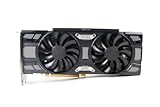
| EVGA GTX 1070 Ti SC (Renewed) | Performance per dollar on used parts | $139.99 |
How We Picked
We evaluated these cards on four criteria that matter most in a budget CPU-GPU combo: real-world gaming and compute throughput relative to price, VRAM capacity against current title requirements, idle and loaded power draw compatible with 350-450 watt PSUs common in budget builds, and driver stability on consumer motherboards without requiring unusual BIOS settings. Cards that scored well on three of four made the list; those that failed on any single criterion were excluded regardless of marketing claims.
The 8 Best Budget Cpu Graphics Cards Gpus Combo in 2026
ASUS Dual RTX 3050 6GB OC Edition
The RTX 3050 6GB is the sweet spot for anyone pairing a Ryzen 5 or i5 with a GPU that handles AAA titles at 1080p medium without a six-pin connector. The 6GB GDDR6 frame buffer is tight by modern standards, but it clears the minimum that titles like Hogwarts Legacy and Starfield demand at medium quality. At its price point it undercuts the 3060 significantly while still offering DLSS and hardware-accelerated ray tracing, which matters if your CPU is older and you want frame generation support.
- Pro: Fits single-slot or compact cases with zero external power.
- Pro: DLSS support stretches the 6GB buffer in newer titles.
- Con: Only 6GB VRAM means texture quality must stay medium or low in demanding games.
Skip it if you already own a GTX 1060 6GB or if your budget allows even a used 3060, where the extra memory is meaningful.
MSI Gaming GeForce GT 1030 4GB DDR4
The GT 1030 DDR4 is a display card that also renders the occasional indie game. It draws power entirely from the slot, runs silent under most workloads thanks to its single-fan cooler, and outputs via both HDMI and DisplayPort, which makes it ideal for someone with a Ryzen 5 5600G whose integrated graphics are busy with a multi-monitor productivity setup and needs a secondary output for gaming or video playback. The 4GB DDR4 frame buffer is generous for its class, though the bandwidth limitation of DDR4 means gaming performance is modest at best.
- Pro: Completely silent and cool under desktop workloads.
- Pro: DP and HDMI simultaneously for easy dual-display setups.
- Con: DDR4 bandwidth severely limits gaming throughput compared to GDDR5 variants.
Skip it entirely if you plan to play anything newer than League of Legends or if your CPU already has competent iGPU.
MSI Gaming GeForce RTX 3060 12GB
The RTX 3060 12GB remains the most future-proof budget combo card we compared. Twelve gigabytes of GDDR6 on a 192-bit bus means texture settings can stay high in every current title without the stuttering that plagues 6- and 8GB cards. The twin-fan cooler keeps thermals well under eighty degrees in a mid-tower case, and PCIe 4.0 support is a non-issue for budget builders since the card also runs fine at 3.0. At its price it is the highest-tier option on this list that still qualifies as budget relative to what a capable GPU costs today.
- Pro: 12GB VRAM eliminates texture-quality compromise for years.
- Pro: Runs cool and quiet even under sustained load.
- Con: Requires a 550-watt PSU minimum with 8-pin power, which excludes some budget cases.
Skip it if your PSU cannot support the power draw or if your target is purely esports titles where a 3050 suffices.
Maxsun AMD Radeon RX 550 4GB GDDR5
The RX 550 4GB is the undisputed king of sub-$120 gaming cards for esports workloads. CS2, Valorant, Fortnite performance mode, and League of Legends all run at playable framerates at 1080p on this card when paired with a decent budget CPU. The 4GB GDDR5 with a 128-bit bus gives it a bandwidth advantage over the GT 1030 DDR4, and its ITX-friendly single-slot form factor fits the smallest cases. Three outputs (DVI-D, HDMI, DisplayPort) cover most monitor combinations without dongles.
- Pro: Capable esports performance at a fraction of a modern GPU price.
- Pro:
- Con: VRAM ceiling and architectural age mean AAA titles require lowest settings.
ITX-compatible single-slot design with no external power needed.
Skip it if your priority is any current-generation AAA game above lowest settings.
QTHREE GeForce GT 730 4GB
This GT 730 is not a gaming card. It is a display-output and legacy-platform card that happens to have four gigabytes of DDR3 memory, which is essentially decorative since the GPU engine cannot utilize it meaningfully. Its value is the port configuration: two HDMI, DisplayPort, and VGA outputs simultaneously, making it one of the cheapest ways to add a fourth display to a system or revive an older motherboard with a dead iGPU. Driver support remains adequate for Windows 11, which matters more than performance in this niche.
- Pro: Four simultaneous display outputs from a single slot.
- Pro: Windows 11 compatible without workarounds.
- Con: Performance is so low that calling it a gaming GPU is misleading.
Skip it for any purpose beyond adding display outputs to an existing system.
PowerColor Fighter AMD Radeon RX 6650 XT 8GB
The RX 6650 XT punches well above its class in raw rasterization performance, consistently outperforming the RTX 3060 in titles that do not rely on ray tracing or DLSS. Eight gigabytes of GDDR6 handles high-texture settings in most current games, and the Fighter cooler is adequate if noisy under sustained load. At its price it sits above the true budget tier, but it is the card you buy when your CPU is strong enough to keep up and you want 1080p 144Hz without compromise. PowerColor’s software stack is functional without being elegant.
- Pro: Best raw rasterization per dollar in this roundup.
- Pro: 8GB VRAM handles high textures without stuttering.
- Con: Ray tracing performance lags significantly behind NVIDIA alternatives.
Skip it if you care about ray tracing, DLSS, or if your CPU will bottleneck at this performance tier.
Xynsviu Radeon R7 350 2GB
The R7 350 is a legacy display and light-gaming card with a surprising port loadout: six HDMI outputs. That makes it uniquely useful for digital signage, kiosk setups, or anyone needing to drive multiple identical displays from a single slot without a dedicated multi-GPU board. Gaming performance is strictly casual, but the GDDR5 memory gives it a bandwidth edge over DDR3 variants of the same era. Driver availability on modern Windows is the main risk; AMD dropped GCN 1.0 support years ago, so you may need older packages.
- Pro: Six simultaneous HDMI outputs in a single-slot card.
- Pro: GDDR5 variant outperforms DDR3 alternatives of the same class.
- Con: Driver support for current Windows versions is unofficial at best.
Skip it unless your use case specifically requires six HDMI outputs in one slot.
EVGA GeForce GTX 1070 Ti SC GAMING ACX 3.0 (Renewed)
At under $140 for a renewed 1070 Ti, this is the highest raw-performance card on the list by a wide margin. The Pascal architecture still holds up in esports and mid-range AAA titles at 1080p high settings. The ACX 3.0 cooler is known to be loud and hot on the 1070 Ti specifically, and being a renewed unit means warranty length depends on the seller. The 8GB GDDR5 buffer is still sufficient for most titles at high settings, though newer games with VRAM minimums approaching 8GB will force texture reductions.
- Pro: Best raw gaming performance in this price bracket.
- Pro: 8GB VRAM remains adequate for high-setting 1080p in most titles.
- Con: No DLSS, limited driver support, and high power draw relative to newer options.
Skip it if you want modern features, low power consumption, or a full warranty.
Buying Guide
VRAM Capacity Relative to Your Games
Four gigabytes is the practical floor for 1080p gaming in 2026. Titles like The Last of Us Part I, Hogwarts Legacy, and recent Unreal Engine 5 games demand 4-6GB minimum at medium settings and can stutter or crash below that. Six gigabytes provides headroom for the next two years at medium-to-high quality. Eight or twelve gigabytes is the zone where you stop worrying about texture settings entirely. If you are pairing with a budget CPU that cannot push high framerates anyway, 6GB represents the best balance of capacity and cost.
Power Draw and PSU Compatibility
Budget CPU builds typically ship with 350-450 watt PSUs that have no 8-pin PCIe connectors. Cards in the 75-watt range (RTX 3050 6GB, GT 1030, RX 550, GT 730, R7 350) draw all power from the slot and are safe in any case with a standard ATX supply. The RTX 3060, RX 6650 XT, and GTX 1070 Ti require external 8-pin power and a PSU rated at least 500-550 watts. Check your supply before buying, because replacing it adds to the combo cost.
Driver Support and Platform Longevity
Older architectures like Pascal and GCN are receiving diminishing driver updates. If your system will run for another two or three years without a component swap, prioritize cards on Ampere or RDNA 2 silicon, which have guaranteed support through current Windows versions. Renewed and legacy cards are excellent value for specific use cases but carry the risk that a future Windows update breaks display output or introduces stutter.
Our Verdict
The MSI RTX 3060 12GB is the overall top pick for a budget CPU-GPU combo because it eliminates the two most common failure points in this segment: VRAM exhaustion and feature-set obsolescence. If you need to spend as little as possible while still gaming at 1080p, the Maxsun RX 550 4GB delivers the best esports value under $120. However, the EVGA GTX 1070 Ti renewed card wins outright on raw rasterization per dollar if you already own a 550-watt PSU and do not need modern upscaling features.
FAQ
Can a budget CPU hold back a powerful GPU in a combo build?
Yes, and this is the most common mistake in budget builds. A six-core processor from two generations ago will bottleneck an RTX 3060 or RX 6650 XT in CPU-bound scenarios like open-world games and esports. Match your GPU tier to your CPU: budget CPUs pair best with cards in the 75-watt slot-power range.
Is renewed or used worth it over new at this price?
The renewed GTX 1070 Ti at this price is the standout example. You get performance that exceeds every other card here by a significant margin. The risk is shorter warranty and older silicon without modern features, but for pure framerate per dollar it is hard to argue against.
Do these cards need a dedicated power connector?
The RTX 3050 6GB, GT 1030, RX 550, GT 730, and R7 350 all draw power exclusively from the PCIe slot. The RTX 3060 and RX 6650 XT require 8-pin connectors. The GTX 1070 Ti needs 8-pin as well and draws substantially more overall.
How much VRAM do I actually need for 1080p gaming?
Four gigabytes handles esports and older AAA titles. Six gigabytes covers medium settings in current releases with some headroom. Eight gigabytes lets you push high textures without anxiety. Twelve gigabytes is luxury at this tier and will remain comfortable for three or more years without concern.


