When you plug several drives into a NAS or an external enclosure, you have to tell it how to treat them. Two of the most common choices are JBOD and RAID, and they sit at opposite ends of the philosophy spectrum. Understanding the difference prevents the classic mistake of assuming your data is protected when it is not.
As an Amazon Associate we earn from qualifying purchases at no extra cost to you.


Our Top Picks
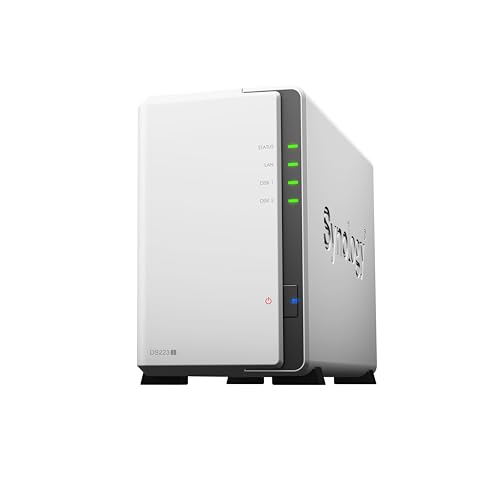
 Synology 4-Bay DiskStation DS925+166 mm x 199 mm x 223 mm8.78 x 7.83 x 6.54 inches5 PoundsCheck on Amazon


Top 3 picks at a glance
What JBOD means
JBOD stands for Just a Bunch Of Disks. In its simplest form, each drive appears to your system as its own separate volume, exactly as if you had installed them individually. Some enclosures also offer a spanning mode that glues several drives into one big volume by filling the first, then the next, and so on.
The appeal of JBOD
JBOD wastes nothing. If you combine a 4TB, a 6TB, and an 8TB drive, you get the full 18TB of usable space because there is no redundancy overhead. It is also the most flexible option for mismatched drives you already own, which is why budget-minded home users like it.
What RAID means
RAID, Redundant Array of Independent Disks, combines drives to gain either speed, redundancy, or both. The common levels behave very differently, and the word redundant is doing a lot of work in that name for most, but not all, of them.
| Mode | Usable space (4x 4TB) | Drive failures survived | Best for |
|---|---|---|---|
| JBOD / spanning | 16TB | 0 | Max capacity, no protection |
| RAID 0 | 16TB | 0 | Speed only |
| RAID 1 (mirror) | 8TB | 1 per pair | Simple redundancy |
| RAID 5 | 12TB | 1 | Balance of space and safety |
| RAID 6 | 8TB | 2 | Larger, safer arrays |
The dangerous overlap
Notice that JBOD spanning and RAID 0 both survive zero drive failures, but RAID 0 is worse in one way: because data is striped across every disk, losing any single drive destroys the entire volume. With JBOD spanning, a failed drive usually takes only the files that lived on it. Neither is a backup, and both should hold only replaceable data unless paired with a real backup.
Which should you choose?
Pick JBOD when you want maximum capacity from mismatched drives and your important files are backed up elsewhere. Pick a redundant RAID level like 1, 5, or 6 when you want the array to keep running through a drive failure, accepting that you sacrifice some capacity for that safety. RAID 0 is a niche speed play that rarely makes sense for home storage given the risk.
Frequently asked questions
Is JBOD safer than RAID 0?
Slightly, in a spanning configuration, because a single drive failure typically loses only that drive’s contents rather than the whole volume. But do not rely on that; treat any non-redundant array as one accident away from data loss and keep backups.
Can I convert JBOD to RAID later?
Usually not without wiping the drives and rebuilding the array, because the two arrange data on disk in fundamentally different ways. Decide your layout before you load the drives with data, or make sure everything is backed up before you switch.
Rebuild risk on large arrays
One practical wrinkle pushes many home users toward more redundancy than they first plan. When a drive in a RAID 5 array fails and you replace it, the array must read every remaining drive in full to rebuild the missing data. On today’s huge drives that process can take many hours or even days, and it stresses the surviving disks precisely when they are already the same age and mileage as the one that just died. If a second drive fails mid-rebuild, a single-redundancy array is lost. That risk is why larger arrays increasingly favor double-redundancy RAID 6, which can lose two drives and survive.
Bottom line
JBOD prioritizes flexibility and capacity with no protection, while RAID trades some capacity for speed, redundancy, or both depending on the level. Choose based on whether the array itself needs to survive a drive failure, and remember that neither replaces a proper backup of anything you cannot afford to lose.