
Adding internal storage to your console is one of the most practical home-tech upgrades you can make, but it is also one of the most nerve-wracking. Unlike external hard drives that plug simply into a USB port, expanding your console’s storage requires opening up the outer casing and installing a bare circuit board directly into the motherboard. If you are researching how to choose a compatible ssd for playstation five, you have likely encountered a wall of confusing technical jargon: PCIe Gen4, NVMe, M.2 2280, sequential read speeds, and thermal throttling.
The biggest mistake buyers make is purchasing based on speed ratings alone. Many shoppers spend top dollar on an ultra-fast drive, only to find it lacks a heatsink and overheats within twenty minutes of gameplay. Others buy massive third-party drives that physically do not fit inside the console’s dedicated slot, forcing them to leave the metal expansion cover off—which ruins the console’s internal airflow pressure. To get the best performance without wasting money, you need to understand the exact physical and digital thresholds your system requires.
As an Amazon Associate we earn from qualifying purchases at no extra cost to you. Product prices and availability are accurate as of the date shown and are subject to change.

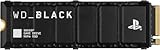

Top 3 picks at a glance
Decide These 3 Things First
Before comparing brands or hunting down sales, you must establish three baseline parameters for your home gaming setup. Making these decisions upfront will eliminate 80% of the incompatible or overpriced options on the market.
- Your Target Capacity (1TB vs. 2TB vs. 4TB): Modern triple-A games regularly exceed 100GB to 150GB of installation space. A 1TB drive provides immediate relief, but a 2TB drive offers the best long-term headroom for a growing digital library.
- Pre-Installed vs. DIY Heatsink: The console requires a heatsink to dissipate heat. You can buy an SSD with a pre-installed heatsink (plug-and-play) or buy a “flat” bare SSD and attach a separate aftermarket heatsink yourself. While DIY can save $10 to $20, pre-installed units guarantee structural integrity and protect your warranty.
- Official License vs. Third-Party Value: Decide if you are willing to pay a premium for officially licensed products (which feature the console logo and guaranteed out-of-the-box compatibility) or if you prefer saving money with reputable third-party brands that meet or exceed the exact same technical specifications.
1. Storage Capacity and Digital Footprint
When selecting your drive capacity, look at your actual downloading and playing habits. The internal usable storage of a stock console is only around 667GB after accounting for the system operating software.
A 1TB expansion drive (such as the entry-level WD_BLACK SN850P or the 1TB Fanxiang NVMe drive) effectively doubles your space, allowing you to store roughly 10 to 15 additional major titles. If you share your console with family members who play different games, a 2TB drive is the sweet spot. As game installation sizes continue to swell toward 2026, a 2TB drive ensures you will not have to constantly delete and redownload files. While 4TB drives exist, they jump significantly in price, often costing more than the console itself, making them practical only for extreme collectors.
2. Physical Dimensions and the 11.25mm Limit
The storage bay is a small, rectangular metal trench. Any drive you buy must conform to the M.2 2280 form factor. The number “2280” simply means the card is 22mm wide and 80mm long. While the console can technically accept shorter cards (like 2230 or 2242), the vast majority of consumer gaming drives are 2280.
The critical measurement is the height of the heatsink. The total thickness of the SSD combined with its heatsink cannot exceed 11.25 millimeters (0.44 inches). Of this total height, there are strict sub-limits: no more than 8.0mm of the structure can sit above the SSD board, and no more than 2.45mm can sit below it. If you buy a drive designed for a desktop PC with a bulky, finned heatsink, the metal expansion bay cover will not close. Running the console without this cover alters the internal pressure differential, causing dust buildup and preventing the main cooling fan from drawing heat away from the drive.
3. Material and Thermal Cooling Construction
Solid-state drives get incredibly hot under load, sometimes reaching operating temperatures over 80 degrees Celsius (176 degrees Fahrenheit). Without a heatsink, the drive will trigger its thermal protection protocols, cutting its read and write speeds in half to prevent physical damage. This causes stuttering, frame drops, and mid-game crashes.
Look for heatsinks constructed from high-grade aluminum or copper. Aluminum offers rapid heat dissipation, while copper provides excellent thermal conductivity. Premium drives use specialized thermal pads sandwiched between the flash memory chips and the metal casing to transfer heat away efficiently. High-quality third-party drives, such as the Fanxiang 2TB NVMe SSD, feature custom-engineered aluminum heat spreaders designed specifically to match the internal airflow paths of the console bay, ensuring consistent cooling even during long, multi-hour gaming sessions.
4. Speed and Interface Requirements
To run games directly from your expansion drive without lagging, the SSD must use a PCIe Gen4 x4 M.2 NVMe interface. Older PCIe Gen3 drives use a different keying system and slower lanes; if you install one, the console will display an error message on boot and refuse to start until the drive is removed.
Sony officially recommends a minimum sequential read speed of 5,500 MB/s. However, modern premium drives easily exceed this benchmark. Drives like the WD_BLACK SN850P boast speeds up to 7,300 MB/s, while competitive alternatives like the Fanxiang 2TB reach up to 7,100 MB/s. Opting for a drive that operates in the 7,000+ MB/s range guarantees that loading times will be identical to—or in some cases, faster than—the console’s built-in custom SSD.
5. Price Tiers and Brand Licensing
The SSD market is divided into three distinct price tiers, largely dictated by brand recognition, performance ratings, and official licensing fees.
- Budget Tier ($60 to $100 for 1TB): These are often DRAM-less drives or brands that require you to purchase and install a separate heatsink. They meet the minimum 5,500 MB/s speed requirement but may slow down slightly during massive 100GB file transfers.
- Mid-Range Tier ($110 to $190 for 1TB / $180 to $330 for 2TB): This is where you find high-performance third-party drives like the Fanxiang series. These drives offer top-tier speeds (7,000+ MB/s) and include high-quality, pre-installed heatsinks that fit perfectly in the console bay without a premium markup.
- Premium/Licensed Tier ($200 to $240 for 1TB / $350 to $470 for 2TB): Dominated by officially licensed options like the WD_BLACK SN850P. These drives carry a price premium because they are officially tested and approved by the console manufacturer, featuring the PlayStation logo on the heatsink packaging. They offer absolute peace of mind but perform identically to high-end mid-range drives.
6. Warranty, Reliability, and TBW Ratings
An SSD’s lifespan is measured in TBW (Terabytes Written). This number tells you how much data you can write to the drive before the memory cells begin to degrade. For a typical 1TB drive, look for a TBW rating of at least 600TB; for a 2TB drive, the rating should be 1,200TB or higher.
Additionally, never buy a drive that offers less than a 5-year limited warranty. Reputable brands back their hardware for half a decade because they use high-quality NAND flash memory (the physical chips that hold your data) and reliable controllers (the brain of the SSD). If a manufacturer only offers a 1-year or 3-year warranty, it is a clear sign they are using lower-grade components that may fail under the high thermal stress of console gaming.
7. Installation and Tool Requirements
Installing an internal SSD does not require advanced technical skills, but it does require the correct tools. You will need a clean, flat work surface, a flashlight, and a Phillips #1 screwdriver.
The console’s expansion bay cover is secured by a single screw, and the SSD itself is held in place by a small screw and a metal spacer ring. The spacer ring must be positioned in the slot marked “80” (matching the 80mm length of your M.2 2280 drive). When inserting the SSD, it must be pushed firmly into the connector at a 30-degree angle until it clicks, then gently pressed flat and secured with the screw. Never overtighten the screw, as this can crack the drive’s printed circuit board.
Spec Checklist
Use this quick-reference table to compare drive specifications across different market segments before making your purchase:
| Specification | Budget Tier | Mid-Range Tier | Premium Tier |
|---|---|---|---|
| Interface Type | PCIe Gen4 x4 NVMe | PCIe Gen4 x4 NVMe | PCIe Gen4 x4 NVMe |
| Sequential Read Speed | 5,500 to 6,000 MB/s | 6,000 to 7,100 MB/s | 7,000 to 7,300+ MB/s |
| Heatsink Design | Not included or basic sheet metal | Integrated aluminum/copper alloy | Officially licensed integrated heatsink |
| Average Price (1TB) | $60 – $100 | $110 – $190 | $200 – $240 |
| Average Price (2TB) | $120 – $170 | $180 – $330 | $350 – $470 |
| Warranty Length | 3 to 5 Years | 5 Years | 5 Years |
Red Flags
When shopping online, avoid products that exhibit any of the following warning signs:
- “SATA” or “M.2 SATA” in the Title: SATA drives use a different interface key and are capped at speeds around 550 MB/s. They will not physically fit or function in the console’s expansion slot.
- Heatsinks Taller than 11.25mm: If the product description lists a heatsink height of 12mm, 15mm, or more, it is designed for a desktop computer and will prevent the console’s expansion bay cover from closing.
- No Mention of PCIe Gen4: If a listing vaguely claims to be “super-fast” but does not explicitly state “PCIe Gen4,” it is likely an older Gen3 drive that is incompatible.
- Unusually Low Prices with No Brand Name: Beware of 2TB or 4TB drives priced under $50. These are frequently counterfeit drives that use hacked firmware to display a false storage capacity before failing and corrupting your save files.
FAQ
Can I use an external USB drive to play PlayStation 5 games?
No. While you can store games on an external USB hard drive or external SSD, you cannot play them directly from there. The console’s games require the massive bandwidth of the internal PCIe Gen4 system to stream assets instantly. To play these games, you must transfer them back to the internal console storage or install a compatible internal M.2 SSD.
Does installing an aftermarket SSD void my console warranty?
No. The console is explicitly designed with a user-accessible expansion bay. Opening the outer plastic cover and removing the metal expansion slot cover to install an SSD does not void your manufacturer’s warranty, provided you do not damage any other internal components during the installation process.
What happens if I run a compatible SSD without a heatsink?
If you run a high-speed PCIe Gen4 SSD without a heatsink, the drive will quickly overheat during intense gaming. To protect itself from permanent heat damage, the drive will trigger thermal throttling, drastically reducing its read and write speeds. This leads to severe game stuttering, extended loading screens, and eventually, system crashes or data corruption.
Do I need to format the new SSD on a PC before installing it?
No. You should install the SSD directly into your console while the system is completely powered off and unplugged. Once you plug the console back in and power it on, the system will automatically detect the new drive, guide you through a quick formatting process using the console’s on-screen menu, and run a speed test to ensure it meets the performance threshold.


