
Network attached storage is meant to run quietly in the background for years, but neglected drives fail early and take your photos, backups, and media library with them. Without regular maintenance, NAS hard drives overheat, vibrate themselves loose, accumulate bad sectors, and fall out of RAID sync. That leads to degraded arrays, slow file access, loud clicking or grinding, and in the worst case, total data loss that requires expensive recovery. A simple, consistent routine prevents most of those failures and extends drive life from three years to five or more.
What You Need
| Item | Why | Optional? |
|---|---|---|
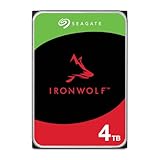
| NAS-rated hard drives (CMR, 3.5-inch) | Designed for 24/7 operation, vibration resistance, and RAID compatibility. Example: Seagate 8TB IronWolf Internal NAS Hard Drive SATA 6 Gb/s (ST8000VNZ04) typically $300-$350, or Seagate IronWolf 4TB NAS Internal Hard Drive CMR 3.5 Inch SATA 6Gb/s 5400 RPM 64MB Cache (ST4000VNZ06/006) typically $170-$200. Standard 3.5-inch dimensions are about 5.79 x 4.0 x 1.03 inches and weight is 1.3 to 1.7 pounds. | No, if replacing or expanding |
| Compressed air canister or electric blower | Removes dust from drive bays, fans, and vents to keep operating temps down | No |
| Soft microfiber cloth and isopropyl alcohol | Cleans exterior and bay contacts without leaving residue | No |
| Screwdriver set and drive trays/caddies | For secure mounting to reduce vibration and ensure proper SATA connection | No |
| Uninterruptible power supply (UPS) 600-1500VA | Protects against power loss and brownouts that corrupt arrays. Power draw per NAS drive is typically 4.5-7.5 watts under load and 3-5 watts at idle | Recommended |
| Spare NAS hard drive | Allows immediate RAID rebuild after a failure instead of running degraded for days | Recommended |
| NAS health monitoring software / built-in DSM/QTS | Checks S.M.A.R.T. data, bad sectors, and temperature alerts | No |
Step-by-Step
Step 1: Check Drive Health and Temperatures (10 minutes)
Log into your NAS interface and open Storage Manager or Drive Health. Review S.M.A.R.T. status for each drive, looking for reallocated sectors, pending sectors, and high temperature warnings. Healthy NAS drives idle between 77-95 degrees Fahrenheit (25-35 degrees Celsius) and should stay under 122 degrees Fahrenheit (50 degrees Celsius) under load. Note any drives with warnings, unusually high power-on hours, or temperatures 10 degrees above the others in the same bay. Export or screenshot the health report so you have a baseline. If your system supports it, enable email or push notifications for drive errors.
As an Amazon Associate we earn from qualifying purchases at no extra cost to you. Product prices and availability are accurate as of the date shown and are subject to change.

Step 2: Update NAS Firmware and Drive Settings (10-15 minutes)
Install the latest stable firmware for your NAS enclosure as of 2026, then check for IronWolf Health Management or equivalent drive-specific features. Enable automatic S.M.A.R.T. tests, data scrubbing, and temperature protection if available. Set drive hibernation carefully: for drives used daily, disable aggressive spin-down to avoid extra wear from constant start-stop cycles. For archival units accessed weekly, a 20-30 minute idle spin-down is reasonable. Do not update firmware during a RAID rebuild or heavy file transfer.
Step 3: Power Down Safely and Clean the Enclosure (15-20 minutes)
Shut down the NAS through its software, not by pulling the plug, then disconnect power and Ethernet. Move it to a well-lit space. Remove each drive, label its bay number, and set drives on a non-static surface. Use short bursts of compressed air to clear dust from bays, rear fans, side vents, and the power supply grille. Hold fans still while blowing to avoid overspinning. Wipe the outer case with a dry microfiber cloth. Do not use a vacuum inside the enclosure, as it creates static. Inspect SATA connectors for dust or bent pins and check that rubber grommets or screws on trays are snug.
Step 4: Reseat and Secure Drives to Reduce Vibration (10 minutes)
Vibration is a major killer of multi-bay arrays. Reinsert each drive firmly into its tray, tightening all four screws evenly. If your NAS uses tool-less caddies, confirm the side pins click fully into the drive’s screw holes. Slide each tray back until it locks with a solid click and no wobble. Uneven mounting can add noise and increase long-term error rates. Leave at least 2-3 inches of clearance behind the NAS for exhaust and avoid stacking other equipment directly on top, which traps heat and transfers vibration.
Step 5: Optimize Placement and Airflow (5 minutes)
Place the NAS on a hard, level surface in a cool, low-dust area. Ideal ambient temperature is 65-75 degrees Fahrenheit with relative humidity between 30-50 percent. Avoid enclosed cabinets without ventilation, direct sunlight, or carpeted floors. Ensure front intakes and rear exhaust are unobstructed. If your NAS has fan modes, set it to cool or balanced rather than quiet if drives regularly exceed 104 degrees Fahrenheit (40 degrees Celsius). A small room fan or improved shelf placement often drops drive temps by 5-10 degrees without any hardware change.
Step 6: Run Manual Tests and Verify RAID/Backups (20-60 minutes, mostly unattended)
Power the unit back on and let it fully boot before running tasks. Start a quick S.M.A.R.T. test on all drives, then schedule an extended test monthly. Next, run a data scrub or RAID consistency check from Storage Manager. This verifies parity and finds bit rot before it becomes unrecoverable. Scrubbing time varies: a 4TB array may take 4-6 hours, an 8TB array 8-12 hours, so run it overnight. Finally, confirm your backup plan: maintain at least one off-device copy, ideally following the 3-2-1 rule, and test that you can restore a file. Check that your UPS is connected, charged, and configured to safely shut down the NAS after 2-5 minutes on battery.
Mistakes to Avoid
Do not mix drive types randomly. Combining NAS-rated CMR drives with desktop SMR drives in the same RAID can cause slow rebuilds, timeouts, and dropped arrays. Stick to CMR drives rated for NAS use when possible.
Do not ignore a single drive warning. A single reallocated sector may be early wear, but a rising count or any current pending sector is a sign to back up immediately and order a replacement rather than waiting for a second warning.
Do not yank drives while the NAS is on unless your model explicitly supports hot-swap and you have marked the correct failed bay. Pulling the wrong drive degrades or disables the array.
Do not block airflow to make the NAS quieter. Taping over vents, pushing it against a wall, or hiding it in a closed media console raises internal temps and shortens drive life far more than normal fan noise.
Do not skip the UPS. Even brief power flickers can interrupt writes, corrupt the file system, and force a lengthy parity check. A UPS in the $80-$180 range is far cheaper than data recovery.
Do not fill drives beyond 85-90 percent capacity. Performance drops and fragmentation increases as drives fill, and rebuilds require free space to handle errors safely.
How Often
Weekly: Glance at health notifications and make sure backups completed. No hands-on work needed if alerts are set up.
Monthly: Review S.M.A.R.T. data and temperatures, run a quick S.M.A.R.T. test, check for firmware updates, and dust the area around the NAS.
Quarterly: Power down, clean inside with compressed air, reseat and tighten trays, verify fan operation, and check UPS battery status.
Every 6 to 12 months: Run an extended S.M.A.R.T. test and a full data scrub or RAID scrub. Review total power-on hours and error counts, clean or replace dust filters, and test restore from backup. Replace any drive that shows a steady increase in reallocated sectors, even if still marked healthy.
When to Call a Pro or Replace
Replace a drive immediately if you hear repeated clicking, grinding, or beeping, or if the NAS reports drive failure, uncorrectable errors, or rapid growth in bad sectors. If a RAID rebuild fails twice or the array shows as crashed or unmountable, power down and contact a data recovery specialist rather than forcing repeated rebuilds.
Plan proactive replacement for NAS drives after 4-5 years of 24/7 use or around 30,000-40,000 power-on hours, even if they appear healthy. Drives that consistently run hotter than 113 degrees Fahrenheit despite cleaning and improved airflow may need larger capacity drives to reduce load or a NAS with better cooling.
Call a professional if you experience frequent volume crashes, file system errors after power outages despite a UPS, or multiple drives reporting errors at once, which can indicate a backplane, power supply, or controller issue rather than individual drive failure. If data is critical and no current backup exists, do not attempt DIY fixes that write to the failing drive.
FAQ
How long do NAS hard drives typically last?
Most NAS-rated drives are designed for about 1 million hours mean time between failures and workloads of 180-300 terabytes per year. In real home use with good cooling and a UPS, expect 4-6 years before proactive replacement is wise. Heavy 24/7 writing, high heat, or frequent power interruptions can cut that significantly.
Is it better to leave NAS drives spinning or let them sleep?
For a NAS accessed daily, leaving drives spinning is usually gentler than spinning them down every few minutes, which adds wear to motors and heads. If you only access the NAS once or twice a day, a 20-30 minute idle timer saves power and heat. Check manufacturer guidance for your specific drive and enable staggered spin-up if your NAS supports it.
Can I use different capacities or brands in the same NAS?
You can mix brands if all are CMR and NAS-rated, but mixing capacities wastes space in traditional RAID: the array will treat all drives as the size of the smallest. For flexibility with mixed sizes, use Synology Hybrid RAID or similar flexible volume systems. For best performance and reliability, add identical model and capacity drives when expanding.
What temperature is too hot for a NAS hard drive?
Aim to keep drives under 104-113 degrees Fahrenheit (40-45 degrees Celsius) during normal operation and never above 122 degrees Fahrenheit (50 degrees Celsius) for extended periods. If one drive runs consistently hotter than the others, check its bay airflow, reseat it, and verify the fan is not clogged. Sustained high heat accelerates wear and increases the chance of bad sectors.
