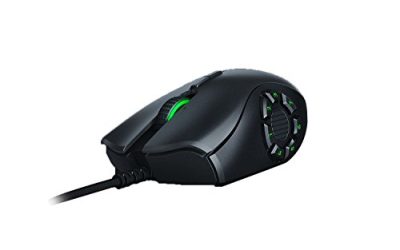
The best basic gaming mouse for most people in 2026 is a wired model with a solid mid-grade optical sensor, mechanical switches, six or fewer buttons and a weight between 70 and 90 grams. The Logitech G203 Lightsync is the safest default, the SteelSeries Rival 3 is the pick if you want a lighter shell, and the Logitech G305 is the one to buy if you want wireless without a premium price. Everything above that tier mostly adds weight savings, extra buttons and marketing numbers.
Quick comparison of basic gaming mice
| Pick | Best for | Key specs (per manufacturer spec sheets) | Price tier |
|---|---|---|---|
| Logitech G203 Lightsync | Best overall basic pick | Wired, 8,000 DPI max, 6 buttons, about 85 g, RGB | Budget |
| SteelSeries Rival 3 | Best for lighter weight at a low price | Wired, 8,500 DPI max, 6 buttons, about 77 g | Budget |
| Logitech G305 Lightspeed | Best basic wireless | 2.4 GHz wireless, 12,000 DPI max, 6 buttons, about 99 g with an AA battery, up to roughly 250 hours | Budget to mid-range |
| Corsair Katar Pro | Best for small hands and claw grip | Wired, 12,400 DPI max, 6 buttons, about 69 g | Budget |
| Razer DeathAdder Essential | Best for large palm-grip hands | Wired, 6,400 DPI max, 5 buttons, ergonomic right-hand shape | Budget |
Exact weights and DPI ceilings vary slightly by regional variant and firmware, so check the current spec sheet before you buy.
What “basic” should mean when you shop
A basic gaming mouse is not a worse mouse. It leaves out the things most players never use: ten-plus programmable buttons, adjustable weights, 8,000 Hz polling and magnesium shells. What it keeps is a reliable sensor, decent switches, a shape you can hold for hours and a cable or receiver that does not add lag. A basic mouse should clear all of these:
- A real gaming sensor. Look for a named optical sensor with no acceleration or smoothing at normal DPI, not a bare “up to 12,000 DPI” claim.
- 1,000 Hz polling. This means a 1 ms interval between reports to the PC.
- Mechanical or optical switches with a rated life in the tens of millions of clicks.
- A shape that fits your grip. This matters more than any spec on the box.
- Software that is optional. Onboard DPI storage lets you set the mouse once and uninstall the app.
Best overall: Logitech G203 Lightsync
The G203 is a small, symmetrical-feeling six-button mouse with a conservative shape that suits palm, claw and fingertip grip for medium hands. Its sensor tops out at 8,000 DPI, which is far more than you will use, and the switches have a firm, consistent click. At around 85 g it is not light by 2026 standards, but it is not tiring either. The trade-off is the fixed cable, which is a bit stiff, and a body shell that feels plain next to pricier mice. If you want one answer without research, this is it.
Best for lighter weight: SteelSeries Rival 3
The Rival 3 is about 77 g and has a TrueMove Core sensor rated to 8,500 DPI. It also has a braided cable that drags less than the G203’s. It suits players moving from a heavy office mouse who want to feel the difference in flicks and micro-adjustments. The trade-off is a thinner shell that some large-handed players find cramped, and the software is less polished than Logitech’s. If your hand is medium or smaller, try this first.
Best basic wireless: Logitech G305 Lightspeed
The G305 uses Logitech’s Lightspeed 2.4 GHz connection, so the latency is aimed at gaming rather than office Bluetooth. It runs on a single AA battery. Logitech rates it at up to about 250 hours of continuous use in its performance mode. That is cheap to run, but the weight is about 99 g with the battery installed, which is the heaviest pick here. Use it for casual shooters, MOBAs, MMOs and strategy games where cable freedom is worth more than minimum weight. Competitive twitch-aim players will likely prefer a lighter wired model at the same price.
Best for small hands and claw grip: Corsair Katar Pro
The Katar Pro is a compact, light (about 69 g) six-button mouse with a sensor rated to 12,400 DPI. Its short body suits small hands, claw grip and fingertip grip. The trade-off is that it feels too small for a full palm grip on large hands, and the side buttons are close together. Measure your hand before buying: a mouse that is too short forces your fingers to overextend.
Best for large palm-grip hands: Razer DeathAdder Essential
The DeathAdder Essential keeps the classic tall, right-handed ergonomic shape in a stripped-down package. It has five buttons, a 6,400 DPI sensor and a body that fills a large palm. It is a good match for long sessions where comfort matters more than weight. The trade-offs are right-hand-only shaping, a weight above 90 g and a lower DPI ceiling. That ceiling is irrelevant in practice, but it looks weak on a spec table.
How to choose: decision matrix
| Your situation | Choose | Why |
|---|---|---|
| Small hand (under about 17 cm, wrist crease to middle fingertip), claw grip | Corsair Katar Pro | Short body, lowest weight in the group |
| Medium hand, mixed games, no strong preference | Logitech G203 Lightsync | Neutral shape, widely stocked |
| Medium hand, first-person shooters | SteelSeries Rival 3 | Lighter, with less cable drag |
| Large hand (over about 19 cm), palm grip | Razer DeathAdder Essential | Tall, supportive right-hand shape |
| Desk is cluttered or you play from the couch | Logitech G305 Lightspeed | Low-latency wireless, cheap AA power |
| Left-handed | A symmetrical model such as the G203 shape or Katar Pro | The DeathAdder Essential is right-handed only |
Worked example: set DPI by sensitivity, not by the box
A higher DPI figure does not make a mouse better. What matters is how far your crosshair turns for a given hand movement, which you can calculate. Take Valorant, which uses 0.07 degrees of rotation per mouse count at a sensitivity of 1.0.
- Set the mouse to 800 DPI and in-game sensitivity to 0.35.
- Degrees per inch = 0.07 × 0.35 × 800 = 19.6.
- Inches for a full 360° turn = 360 ÷ 19.6 ≈ 18.4 inches, or about 47 cm.
That is a common mid-range setting for tactical shooters, and an 8,000 DPI sensor reaches it with plenty of headroom. The same turn at 1,600 DPI would need a sensitivity of 0.175 to match. The result is identical, so DPI above 800 to 1,600 offers no aiming advantage for most players. Other games use different yaw values, so use that game’s own value or a sensitivity converter if you switch titles. The 800 DPI figure is a starting point, not a rule.
Polling rate and battery math
At 1,000 Hz the mouse reports every 1 ms. At 125 Hz, the old default on cheap office mice, the interval is 8 ms. That 7 ms gap is small but measurable on a 240 Hz display, where one frame lasts about 4.2 ms. For the wireless G305, a 250-hour rating at 4 hours of play a day works out to about 62 days per battery. Real runtime depends on lighting, polling rate and battery brand, so treat the figure as a ceiling rather than a promise.
Specs that do not matter at this tier
- Maximum DPI above 8,000. Almost no one plays above 3,200 DPI.
- RGB zones. They cost battery on wireless models and add nothing to performance.
- Programmable buttons beyond six. They matter for MMOs, not for shooters or MOBAs.
- 8,000 Hz polling. It can raise CPU load and needs a fast, stable USB port, with little visible gain for casual play.
Frequently Asked Questions
What is the best basic gaming mouse for FPS games?
For first-person shooters, pick a wired mouse that is light and has a shape you can control comfortably. The SteelSeries Rival 3 and Corsair Katar Pro are good basic choices because of their lower weight and fixed cable. Pair either with 800 to 1,600 DPI and adjust in-game sensitivity from there.
Is a wireless basic gaming mouse good enough for gaming?
Yes, if it uses a 2.4 GHz gaming receiver rather than Bluetooth. The Logitech G305 is a proven example. The compromise is weight, because the AA battery pushes it to about 99 g, and some competitive players prefer lighter wired mice.
How much DPI do I need on a basic gaming mouse?
Most players use 400 to 1,600 DPI and adjust sensitivity in the game. Any modern basic gaming mouse with a ceiling of 6,000 DPI or more already exceeds that range. Look for tracking quality and shape instead of the maximum number.
Is a gaming mouse worth it over an office mouse?
Usually yes, because even basic gaming mice offer a better sensor, 1,000 Hz polling, sturdier switches and onboard DPI settings. Many office mice poll at 125 Hz, which can feel less responsive on a high-refresh display. The upgrade does not need to be expensive.
Should I buy a lighter mouse or a heavier one?
Under about 80 g is easier for fast flicks and long sessions, but weight is personal. If your wrist tires or your aim overshoots, step down in weight. If the mouse feels floaty, a heavier model like the DeathAdder Essential can feel steadier.
Do I need the manufacturer’s software?
Not always. You can use the DPI button to cycle presets, and the settings are often stored on the mouse. Install the software once to set DPI stages, polling rate and lighting, then close or remove it if you prefer a lighter system.
Related guides
More from Amazon
Programs that pair well with the guide above. Offers and eligibility are set by Amazon and may change.
A free business account with business pricing and bulk-buying tools for work, shop or home office.
Create a business accountFree shipping on eligible items, Prime Video and more. Eligible new members can start with a free trial.
Start a Prime free trialAudiobooks and podcasts to listen to on the go. Eligible new members can start with a free trial.
Try Audible freeAd-free music streaming. Eligible new subscribers can start with a free trial.
Try Music Unlimited freeAs an Amazon Associate we earn from qualifying purchases.