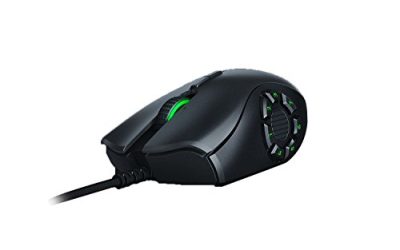
The best bargain gaming mouse for most players is a wired or Lightspeed-style wireless model with a modern 8,000+ DPI optical sensor, a weight under about 90 g, and mechanical or optical switches. The Logitech G203 Lightsync is the safe cheap pick, the Logitech G305 Lightspeed is the best wireless bargain, and the Razer Cobra is a strong step up if you want a light wired mouse. Past that point, extra DPI, RGB and macro buttons add very little to aim.
Quick comparison of the bargain picks
| Pick | Best for | Key specs (per manufacturer) | Market price range |
|---|---|---|---|
| Logitech G203 Lightsync | Cheapest solid all-rounder | Wired, 6 buttons, up to 8,000 DPI, roughly 85 g, RGB | Budget, often the lowest tier worth buying |
| Logitech G305 Lightspeed | Best wireless bargain | Wireless 2.4 GHz, HERO sensor up to 12,000 DPI, 6 buttons, one AA battery, roughly 99 g with battery | Budget to low mid-range |
| Razer Cobra | Light wired FPS mouse | Wired, about 58 g, optical switches, 26,000 DPI-class sensor, 8 buttons | Low mid-range |
| Ultralight wireless value class (for example the Attack Shark X3) | Competitive FPS on a tight budget | Roughly 55–65 g, flagship-class sensor, 2.4 GHz plus Bluetooth, rechargeable | Budget to low mid-range |
Specs and street prices shift between revisions and regions, so check the current listing before you buy. Pay particular attention to the sensor and the weight.
Best overall bargain: Logitech G203 Lightsync
The G203 is the baseline everything else gets measured against. It has a small, symmetrical shell, six buttons, a sensor that tracks cleanly at the 800–1,600 DPI most players use, and a braided-free but flexible cable that doesn’t drag much. Logitech’s G Hub software handles DPI stages and button remaps.
Who it suits: anyone who wants a dependable first gaming mouse, kids and teens, or a spare for a second PC. It fits small to medium hands in palm or claw grip.
Trade-off: the shell is small for large hands, the weight is average rather than light, and the side buttons feel a bit light. It does everything adequately and nothing exceptionally.
Best wireless bargain: Logitech G305 Lightspeed
The G305 gives you the same Lightspeed 2.4 GHz wireless family as Logitech’s far pricier mice, with a HERO sensor that is more than enough for any game. It runs on a single AA battery, so there is no charging dock or cable to manage.
Who it suits: players who want a clean desk and low-latency wireless without paying flagship prices. It also works well for a laptop plus occasional gaming.
Trade-off: a roughly 99 g weight with the battery in is heavy next to current ultralight mice. You can remove the battery’s extra weight only by switching to a lighter AA, and the shape suits medium hands best.
Best light wired pick: Razer Cobra
At about 58 g, the Cobra is the lightest of the mainstream-brand picks here. Razer specifies optical switches and a high-end sensor, and the symmetrical shape suits claw and fingertip grips. It is aimed squarely at FPS players who want a light mouse without a wireless premium.
Who it suits: Valorant, CS2 and Apex players who find 85–100 g mice tiring on long flick sessions.
Trade-off: it costs noticeably more than the G203, and the sensor’s headline DPI figure is irrelevant in practice. You are paying for weight and switch feel.
Best for competitive FPS on a tight budget: ultralight wireless value class
Several budget brands now sell 55–65 g wireless mice with flagship-class sensors (the PAW3395 family is common) at prices well below the big brands. The Attack Shark X3 is a well-known example. They usually offer 2.4 GHz and Bluetooth, a rechargeable battery and 1,000 Hz or higher polling.
Who it suits: players who prioritise weight and wireless and are willing to accept a less polished ecosystem.
Trade-off: software is often web-based or basic, quality control and long-term support vary, and warranty handling is less predictable than with Logitech or Razer. Read the return policy before you commit.
How to choose: the criteria that matter at a low budget
1. Weight and shape beat DPI
Every sensor in this class tracks accurately at the DPI you will actually use. Nobody benefits from 26,000 DPI. What you will notice every session is whether the shape fits your hand and whether the weight tires your wrist. Measure your hand length (wrist crease to middle fingertip): under about 17 cm suits small shells such as the G203; 17–19 cm suits medium shapes; over 19 cm calls for a larger shell, and you should check dimensions before you buy.
2. Worked example: setting DPI and sensitivity properly
The number that matters is effective DPI (eDPI): mouse DPI multiplied by in-game sensitivity. In CS2, one mouse count turns the view by 0.022 degrees at a sensitivity of 1.0. So at 800 DPI and 1.0 sensitivity:
- Counts for a 360° turn: 360 ÷ 0.022 ≈ 16,364 counts
- Distance for a 360° turn: 16,364 ÷ 800 DPI ≈ 20.5 inches (about 52 cm)
- eDPI: 800 × 1.0 = 800
Run the same mouse at 1,600 DPI with 0.5 in-game sensitivity and you get the identical 52 cm turn and the same eDPI. The difference is that higher DPI makes cursor movement on the desktop faster and slightly smoother in-game. On a budget mouse, 800 or 1,600 DPI is the sweet spot because the sensor is at its most consistent there. Keep it consistent across games rather than chasing a number.
3. Wireless battery maths
Logitech rates the G305 at up to about 250 hours in performance mode on one AA battery, per its spec sheet. At 4 hours of play a day, that is roughly 62 days, or about two months, between battery changes. A rechargeable ultralight mouse rated for about 70 hours would need charging roughly every 17 days at the same use. Real figures drop with lighting, higher polling rates and Bluetooth versus 2.4 GHz.
4. Polling rate and latency
Polling rate sets how often the mouse reports to the PC. At 125 Hz the interval is 8 ms, at 500 Hz it is 2 ms, and at 1,000 Hz it is 1 ms. Every mouse in this guide supports 1,000 Hz, which is all you need. Higher polling modes (4,000 or 8,000 Hz) cost battery life and CPU load and are not worth chasing on a budget.
5. Switches and lifespan
Cheap mice use mechanical switches rated for roughly 10–50 million clicks. Optical switches avoid the double-click failure that wears out mechanical ones. For a bargain pick this is a tie-breaker: choose optical if the price gap is small.
Decision matrix: match your situation to a pick
| Your situation | Choose | Why |
|---|---|---|
| Lowest realistic spend, general gaming | Logitech G203 Lightsync | Proven sensor, simple shape, wide availability |
| Want wireless, mixed work and play | Logitech G305 Lightspeed | Low-latency wireless, long battery life, mainstream support |
| FPS with fast flicks, wired is fine | Razer Cobra | About 58 g, optical switches |
| FPS, want wireless and ultralight | Ultralight value class (e.g. Attack Shark X3) | Light, flagship-class sensor, low price; accept looser support |
| Large hand or palm grip | Check dimensions; prefer a longer shell over these small mice | Comfort matters more than weight |
| MMO or MOBA needing many buttons | A budget model with a side-button grid | None of the picks above is built for 12 side buttons |
What to skip at the bargain end
- Unbranded mice with inflated DPI claims. A “12,000 DPI” figure with no named sensor often means interpolated, inconsistent tracking.
- Heavy shells packed with extra buttons. Weight above about 110 g makes sustained aiming harder for most players.
- Software-locked features. If DPI stages or button remaps require bloated software, onboard memory is worth looking for.
- Old sensor generations sold as new. Look for a named sensor or a recent product generation rather than just marketing terms.
Frequently Asked Questions
What is the best bargain gaming mouse overall?
For most buyers it is the Logitech G203 Lightsync if wired is acceptable, and the Logitech G305 Lightspeed if you want wireless. Both have reliable sensors, mainstream software and wide availability. Step up to the Razer Cobra only if you specifically want a lighter mouse for FPS.
Is a cheap wireless gaming mouse laggy?
Not if it uses a 2.4 GHz dongle. Logitech’s Lightspeed and similar dongle-based systems report at 1,000 Hz, which is a 1 ms interval, and are used in competitive play. Bluetooth mode is the slower option on most budget mice, so use the dongle for games.
Does a higher DPI make a gaming mouse better?
No. Most players use 400–1,600 DPI, and all the mice here handle that range accurately. High maximum DPI figures are marketing. What matters is sensor consistency, weight and shape.
How light should a budget gaming mouse be?
For FPS, under about 70 g is considered light, and 55–65 g is ultralight. For general gaming, anything under about 90 g is comfortable for most hands. If a mouse above 100 g feels fine in your hand, there is no need to chase weight.
Are budget brands like Attack Shark safe to buy?
They can offer excellent hardware for the money, often with sensors that match far costlier mice. The risks are inconsistent quality control, basic software and slower warranty service. Buy from a seller with a clear return policy and avoid relying on a single unit for years of use.
Do I need RGB on a bargain mouse?
No. RGB adds no performance and on wireless models it cuts battery life. If you like it, keep it, but never pay extra for it over a better sensor, lighter weight or better switches.
Related guides
More from Amazon
Programs that pair well with the guide above. Offers and eligibility are set by Amazon and may change.
A free business account with business pricing and bulk-buying tools for work, shop or home office.
Create a business accountFree shipping on eligible items, Prime Video and more. Eligible new members can start with a free trial.
Start a Prime free trialAudiobooks and podcasts to listen to on the go. Eligible new members can start with a free trial.
Try Audible freeAd-free music streaming. Eligible new subscribers can start with a free trial.
Try Music Unlimited freeAs an Amazon Associate we earn from qualifying purchases.