
A power outage hits your desktop mid-render, drops your NAS write cache before it flushes, or takes your router offline for twenty minutes while you’re in the middle of a video call. An uninterruptible power supply ups exists to prevent exactly that scenario, bridging the gap between grid failure and a graceful shutdown or full recovery. The category is straightforward in concept but deceptively varied in execution, ranging from basic standby units that cost less than a pizza to online-interaction models with pure sine wave output, automatic voltage regulation, and enough capacity to keep a full workstation running long enough to save every file and close every application.
What separates a genuinely useful battery backup from a disappointment comes down to three things: topology (how quickly the unit switches to battery and how clean the output waveform is), capacity relative to your actual load, and whether the software integration lets your system shut down cleanly without user intervention. A mismatch in any of these turns a protective device into a liability. This roundup compares published specifications, price points, and recurring themes from owner feedback across eight units available in 2026 to help you match the right model to your specific setup.
As an Amazon Associate we earn from qualifying purchases at no extra cost to you.
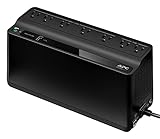


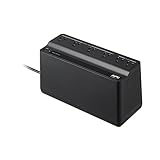
Top 3 picks at a glance
Quick Picks
| Product | Best for | Price |
|---|---|---|
| APC BE600M1 | Home routers and small NAS | $83.99 |
| CyberPower CP1500PFCLCD | High-end workstations and sensitive electronics | $239.95 |
| CyberPower ST425 | Single-monitor desktops with modest loads | $59.95 |
| CyberPower EC850LCD | Budget-conscious gamers wanting AVR | $119.95 |
| APC BX1500M | Multi-device home office setups | $189.99 |
| CyberPower ST625U | Entry-level line-interactive coverage | $79.95 |
| CyberPower CP1500AVRLCD3 | Users prioritizing display clarity and management | $199.95 |
| APC BE425M | Modems, switches, and small electronics | $62.50 |
How We Picked
Selection focused on four criteria. First, topology and waveform: standby units are cheapest but introduce a brief transfer gap, while line-interactive models with automatic voltage regulation correct minor fluctuations without switching to battery, and pure sine wave output protects sensitive power supplies. Second, rated capacity relative to realistic draw — many cheap units nominally cover a desktop but provide seconds of runtime under full load. Third, software and management: units with USB connectivity and companion applications enable automatic shutdown, whereas unmanaged models leave you relying on manual intervention. Fourth, price-to-protection ratio: a unit that costs more than the hardware it protects, without delivering proportional runtime or waveform quality, fails the value test.
The 8 Best Uninterruptible Power Supply Ups in 2026
APC BE600M1
The BE600M1 occupies the sweet spot for anyone who needs to protect a router, a small NAS, and a computer simultaneously without spending over $100. Its 600VA/330W rating comfortably covers a networking load plus a modest desktop tower. Owner feedback consistently praises the compact footprint and reliable transfer switching. The integrated PowerChute software handles graceful shutdowns over USB.
- Pro: Proven APC reliability with straightforward software setup
- Pro: Compact enough to sit under most desks without drawing attention
- Con: Simulated sine wave output can stress active PFC power supplies on high-end systems
Skip this if your workstation draws close to 330W under load or uses a sensitive power supply that benefits from pure sine wave delivery. The runtime margin becomes uncomfortably thin at full capacity.
CyberPower CP1500PFCLCD PFC Sinewave UPS
This is the unit to recommend when someone asks what to buy for a workstation running an active PFC power supply, multiple drives, or a monitor. The pure sine wave output matches what the PSU expects from the wall, eliminating the compatibility headaches that simulated sine wave models introduce. Twelve outlets, automatic voltage regulation, and a clear LCD readout round out a package that justifies its position at the premium end of this list. Owner reports highlight the detailed status display and quiet operation during normal use.
- Pro: Pure sine wave output ideal for modern switching power supplies
- Pro: Twelve outlets with battery-backed surge protection on half of them
- Con: Noticeably larger and heavier than standby units; requires desk or floor space
Skip if your total load stays well under 500W and you want the most compact form factor available.
CyberPower ST425
The ST425 is a standby UPS priced to undercut most competitors in the entry tier. For a single-monitor setup with an efficient desktop, it provides enough runtime to save work and shut down. The small form factor fits behind a monitor stand or on a shelf without visual intrusion. Owners appreciate the simple plug-and-play approach with no software required for basic protection.
- Pro: Lowest price in this roundup, making protection accessible
- Pro: Very compact and light, easy to tuck anywhere
- Con: Standby topology means a brief transfer gap; no voltage regulation
Skip this for gaming rigs or NAS units where even milliseconds of interruption can cause data loss or application crashes.
CyberPower EC850LCD Ecologic UPS
The EC850LCD sits in the middle of the value spectrum, offering 850VA capacity with automatic voltage regulation at a price that undercuts most comparable line-interactive units. The LCD front panel provides clear status at a glance. Owners frequently note the useful runtime headroom for its class and the quiet standby mode. It is a sensible pick for gamers who want protection beyond what a power strip delivers.
- Pro: Line-interactive topology with AVR at a mid-range price point
- Pro: Readable LCD display for real-time load and battery status
- Con: Simulated sine wave output; not ideal for the most sensitive power supplies
Skip if you run equipment that explicitly requires pure sine wave input or if your draw consistently exceeds what the 850VA rating comfortably supports.
APC BX1500M
The BX1500M is designed for people who need to protect a cluster of devices rather than a single tower. Its 1500VA/900W rating, automatic voltage regulation, and LCD display make it a flexible option for home offices where a computer, monitor, router, and small switch all need coverage. The PowerChute software is mature and handles shutdown logic cleanly. Owner feedback centers on the generous outlet count and the reliability of the AVR correction during brownouts.
- Pro: High wattage capacity handles demanding multi-device setups
- Pro: Well-regarded APC software ecosystem for managed shutdown
- Con: Bulkier chassis demands dedicated floor or under-desk space
Skip if your setup consists of a single low-draw device and you want something discreet on a desk.
CyberPower ST625U
Positioned as a step up from the ST425, the ST625U offers slightly more capacity and USB connectivity for software management. For users who want automatic shutdown capability without paying for line-interactive features, this is a reasonable middle ground. The U-series designation indicates it includes a USB port for computer communication. Owners report adequate performance for basic desktop and monitor protection.
- Pro: USB management at a standby-UPS price point
- Pro: Small footprint with adequate runtime for light loads
- Con: No AVR; voltage fluctuations will trigger a battery transfer rather than being corrected
Skip in areas with frequent brownouts or sags, where the lack of voltage regulation means the battery drains faster than it should.
CyberPower CP1500AVRLCD3
The CP1500AVRLCD3 is the management-focused option in this group. Its large, readable LCD panel displays input and output voltage, load percentage, runtime estimate, and battery health simultaneously. For users who want visibility into their electrical environment and detailed software control, this unit delivers more information than any other model listed. The 1500VA capacity with AVR handles typical desktop loads with comfort. Owner feedback praises the intuitive display and the breadth of data available.
- Pro: Exceptional display with real-time voltage and runtime data
- Pro: Strong AVR performance for unstable grid conditions
- Con: Simulated sine wave at this price point feels limiting next to the CP1500PFCLCD
Skip if you specifically need pure sine wave output; the PFCLCD variant is the better choice for sensitive electronics at a similar price.
APC BE425M
The BE425M is the smallest unit here, rated at 425VA/225W and explicitly marketed for routers, modems, and small electronics. It is not meant to carry a gaming PC. Instead, it excels at keeping a network alive through brief outages or providing enough time to shut down a connected NAS. The USB connection and PowerChute software work as expected. Owners value the no-fuss protection for devices that cost little individually but cause disproportionate disruption when offline.
- Pro: Perfectly sized for network gear and minimal-draw devices
- Pro: Trusted APC build quality in the most affordable package
- Con: Insufficient capacity for any full desktop or monitor combination
Skip this entirely if your primary goal is protecting a workstation; look at the BE600M1 or a line-interactive model instead.
Buying Guide
Topology: Standby, Line-Interactive, or Online
Standby units pass wall power directly to outlets and switch to battery only when an outage is detected, introducing a brief transfer gap (typically a few milliseconds). Line-interactive models add automatic voltage regulation, which corrects minor surges and sags without touching the battery, preserving its lifespan and providing cleaner output. Online (double-conversion) units continuously invert power through the battery, offering zero transfer time and perfect isolation, but they generate more heat, draw more power, and cost significantly more. For PC hardware, line-interactive is the practical floor; standby is acceptable for networking gear only.
Waveform: Simulated Sine vs. Pure Sine
Most budget and mid-range uninterruptible power supply ups units produce a simulated or stepped sine wave on battery. Modern active PFC power supplies can interpret this as a fault, sometimes causing the PSU to shut down during transfer rather than continuing to run. Pure sine wave output eliminates this risk entirely and is strongly recommended for any system with a quality power supply, a NAS, or audio/video equipment. If the product listing does not specify the waveform type, assume simulated and cross-reference your PSU documentation.
Runtime and Load Matching
VA and wattage ratings describe maximum capacity, not comfortable sustained load. A unit rated for 600VA/330W should not be loaded to 300W if you expect more than a minute or two of runtime. The practical approach: add up the actual draw of everything on battery-backed outlets (use your PSU wattage rating as a ceiling estimate), then select a unit whose rated capacity exceeds that total by a comfortable margin. Runtime scales inversely with load percentage, so a unit at forty percent capacity will last dramatically longer than the same unit at eighty percent.
Our Verdict
The top pick is the CyberPower CP1500PFCLCD. It addresses the most common failure point in this category — waveform compatibility with modern power supplies — while offering enough capacity, outlet count, and AVR for nearly any home or small-office setup. For budget protection, the CyberPower ST425 delivers meaningful coverage for a basic desktop without requiring a premium outlay. The condition under which another unit wins: if your setup is entirely networking and storage gear with a combined draw under 200W, the APC BE600M1 provides better software integration and a more proven track record for that specific use case at a lower price.
FAQ
Do I need an uninterruptible power supply ups if I already have a surge protector?
A surge protector guards against voltage spikes but does nothing during an outage or brownout, and it has no battery to keep connected devices running. An uninterruptible power supply ups adds the critical function of maintaining power long enough for a clean shutdown, preventing data corruption on drives and avoiding abrupt restarts that can damage operating systems.
How long do UPS batteries last before replacement is needed?
Most sealed lead-acid batteries inside these units degrade meaningfully after three to five years of normal use, and replacement is a standard maintenance task. Some CyberPower and APC models support hot-swappable or user-replaceable battery packs; others require sending the unit to a service center or replacing the entire device. Owner feedback suggests the battery is the single most common failure point across all brands.
Can a UPS run on battery long enough to keep working during a multi-hour outage?
No, not without external intervention. These units are designed for graceful shutdown, not extended runtime. Even the 1500VA models here will provide only minutes at typical desktop loads. For sustained power, you would need a generator or an inverter system with a larger external battery bank, which is a different product category entirely.
Is it safe to plug a laser printer into a UPS?
Generally, no. Laser printers draw a large surge of current during warm-up and printing that can overwhelm a UPS rated for lower wattage, tripping its overload protection or draining the battery rapidly. Most manufacturers explicitly advise against connecting laser printers to battery-backed outlets. Plug them into surge-only outlets if your unit provides those, or leave them on a separate surge strip.


