The RTX 5070 is the safer buy at equal prices: it is roughly 5 to 10 percent faster in rasterized 1440p gaming according to launch reviews, has the broader DLSS 4 game support, and offers Multi Frame Generation. The RX 9070 GRE becomes the smarter choice when it sells for noticeably less, since it delivers close to the same 1440p experience with FSR 4 and a lower 220 W power rating.
As an Amazon Associate we earn from qualifying purchases at no extra cost to you.


Our Top Picks
 msi Gaming RTX 5070 12G Shadow 3X OC1.9" x 4.8" x 11.9"11.9 x 4.8 x 0.1 inches3.1 poundsCheck on Amazon


Top 3 picks at a glance
Two 12 GB Cards Aimed at the Same Gamer
This is one of the closest head-to-heads in the current lineup. Both are 2025 cards, both carry 12 GB of VRAM on a 192-bit bus, and both are pitched at high-refresh 1440p. The spec database lists each at a $549 launch price, although launch coverage from Tom’s Hardware described the RX 9070 GRE as positioned about $50 below the RTX 5070 in practice. The GRE has also had more limited regional availability than NVIDIA’s card, so in some markets the choice is decided by what is actually on the shelf.
Spec Table
| RX 9070 GRE | RTX 5070 | |
|---|---|---|
| Architecture | RDNA 4.0 | Blackwell 2.0 |
| Release date | 8 May 2025 | 4 March 2025 |
| Launch MSRP (listed) | $549 | $549 |
| Stream processors / CUDA cores | 3072 | 6144 |
| Boost clock | 2790 MHz | 2512 MHz |
| Process | 4 nm | 5 nm |
| TDP | 220 W | 250 W |
| Memory | 12 GB GDDR6 | 12 GB GDDR7 |
| Bus / bandwidth | 192-bit / 432.0 GB/s | 192-bit / 672.0 GB/s |
| Cache | 8 MB L2 + 48 MB L3 | 48 MB L2 |
| Interface | PCIe 5.0 x16 | PCIe 5.0 x16 |
| Power connectors | 2x 8-pin | 1x 16-pin |
| Length | Varies by partner model | 245 mm (reference) |
| Outputs | 1x HDMI 2.1b, 3x DP 2.1a | 1x HDMI 2.1b, 3x DP 2.1b |
Core counts are not comparable across vendors, so ignore the 3072 versus 6144 figure. The more telling number is memory bandwidth: GDDR7 gives the RTX 5070 about 55 percent more raw bandwidth, which AMD partly offsets with 48 MB of Infinity Cache.
Benchmarks From Published Reviews
1440p rasterization
Tom’s Hardware’s roundup of launch reviews found the RTX 5070 on average 5 to 10 percent faster than the RX 9070 GRE at 1440p. A summary of early Chinese launch reviews put the gap closer to 4 to 5 percent. Later per-game testing from TechSpot (the written home of Hardware Unboxed) showed the GRE trailing by around 6 to 11 percent in titles such as Marvel Rivals, Resident Evil Requiem and Cyberpunk 2077, tying in Forza Horizon 6, and winning by around 12 percent in Cities: Skylines II.
That makes the realistic expectation a single-digit to low-double-digit lead for the RTX 5070 in most games. In demanding AAA titles at 1440p high settings, both typically land somewhere around 70 to 110 FPS, depending on the game, CPU and patch.
Ray tracing
RDNA 4 brought a large ray tracing improvement over earlier Radeon cards. At launch, Tom’s Hardware reported the GRE keeping pace with the RTX 5070 in a handful of RT titles, but buyer’s guides published later note that the GRE falls off more steeply in heavy RT and path-traced workloads. Expect near parity in lighter RT games and a clear RTX 5070 advantage in path tracing.
4K
Neither is a native 4K card for demanding games. With upscaling, both can reach playable frame rates at 4K in many titles, and the RTX 5070’s extra bandwidth tends to help it slightly more there.
FSR 4 vs DLSS 4
This gap has narrowed considerably. The RX 9070 GRE supports FSR 4, AMD’s machine-learning upscaler that runs only on RDNA 4, and its image quality is a major step up from FSR 3. The RTX 5070 supports DLSS 4 with the transformer model plus Multi Frame Generation, which can insert up to three generated frames per rendered frame.
Two practical differences remain. First, DLSS is integrated into more games, and NVIDIA’s app can override older DLSS versions to the newer model. Second, Multi Frame Generation has no direct equivalent on the GRE, although FSR frame generation is available. If you play mostly the latest big releases, both upscalers are strong; if you play a broad back catalog, DLSS coverage is wider.
Cost per Frame at Real-World Prices
Take the RTX 5070 as 100 and the RX 9070 GRE as about 93, the midpoint of the 5 to 10 percent gap reported at 1440p.
- At the listed $549 for both, the RTX 5070 costs $5.49 per point and the GRE about $5.90. NVIDIA wins on value.
- If the GRE sells for $499, its cost per point falls to about $5.37, slightly better than the RTX 5070 at $549.
- Break-even is roughly $510. Below that, the GRE offers more performance per dollar; above it, the RTX 5070 does.
That simple threshold is the most useful way to decide between these two cards when you see them listed side by side.
Power Supply and Connectors
Sizing formula: GPU board power + CPU gaming draw + about 150 W headroom.
- RX 9070 GRE: 220 W + about 150 W for a typical 8-core gaming CPU + 150 W = roughly 520 W. A quality 650 W unit with two 8-pin PCIe cables is a sensible target.
- RTX 5070: 250 W + 150 W + 150 W = roughly 550 W. NVIDIA’s guidance for this class is a 650 W supply, ideally ATX 3.x with a native 16-pin cable. Older supplies work with the included adapter, which needs two or three 8-pin cables depending on the model.
The GRE’s standard 8-pin connectors are a small convenience for anyone reusing an older power supply. With the 16-pin connector, make sure it is fully seated and avoid tight bends close to the plug.
Case Fit
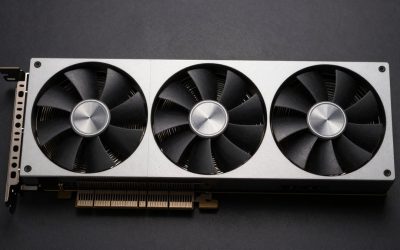
NVIDIA’s reference RTX 5070 is a compact 245 mm, 2-slot card, and many partner versions stay under about 300 mm. The RX 9070 GRE has no reference length in the spec sheet because it ships only in partner designs, and those vary from compact dual-fan cards to long triple-fan models. Check the exact model’s length against your case’s GPU clearance, and allow room for the power cables.
Decision Table
| If you… | Choose |
|---|---|
| Want the highest 1440p frame rates at equal price | RTX 5070 |
| Can buy the GRE for about $40 or more less | RX 9070 GRE |
| Care about path tracing in games like Cyberpunk 2077 | RTX 5070 |
| Use Linux or prefer AMD’s open-source drivers | RX 9070 GRE |
| Want to reuse an older PSU with 8-pin cables | RX 9070 GRE |
| Stream or record often | RTX 5070, for NVENC’s broad app support |
| Play mostly older games with DLSS but no FSR 4 | RTX 5070 |
Streaming, Encoding and Software Extras
Gaming frame rates are only part of the decision for many buyers. The RTX 5070’s NVENC encoder is supported by virtually every streaming and recording tool, and NVIDIA Broadcast adds AI noise removal and background effects for webcams and microphones. The RX 9070 GRE’s media engine also supports modern codecs, including AV1, and AMD improved encoding quality with RDNA 4, so it is a capable streaming card as well; NVIDIA simply has the broader app ecosystem.
On the driver side, both companies release frequent game-ready updates for these current-generation cards. AMD’s Adrenalin software bundles overclocking, undervolting and performance overlays in one place, and many GRE owners undervolt slightly to cut power and noise without losing frame rate. NVIDIA’s app handles similar tasks plus DLSS override settings that let you apply the newer upscaling model to older games. Neither software suite is a reason on its own to choose one card, but both add practical value over the life of the card.
What About the RX 9070 Instead?
If your budget can stretch, the full RX 9070 offers 16 GB of VRAM and more performance than both of these cards in rasterization. For long-term 1440p use with heavy textures, that extra memory is worth considering. Within the 12 GB pairing discussed here, though, the decision comes down to price and feature priorities.
Frequently Asked Questions
Is the RTX 5070 faster than the RX 9070 GRE?
Yes, modestly. Launch reviews summarized by Tom’s Hardware put the RTX 5070 about 5 to 10 percent ahead at 1440p in rasterized games. Some individual titles favor the GRE, and a few tie.
Does the RX 9070 GRE support FSR 4?
Yes. It is an RDNA 4 card, so it supports FSR 4’s machine-learning upscaler. Image quality is much better than FSR 3 and competitive with DLSS in supported games.
Is 12 GB of VRAM enough for 1440p?
For most current games at 1440p, 12 GB is adequate. A small number of titles push past it with maximum textures and ray tracing. If you plan to keep the card for many years, a 16 GB model offers more margin.
What PSU do I need for the RTX 5070?
A quality 650 W unit is the usual recommendation with a mainstream gaming CPU. An ATX 3.x supply with a native 16-pin cable is the tidiest option. The RX 9070 GRE runs comfortably on a similar 650 W unit using two 8-pin cables.
Which card is better for ray tracing?
The RTX 5070. The RX 9070 GRE is competitive in lighter ray tracing workloads thanks to RDNA 4’s upgraded RT units. In heavy ray tracing and path tracing, NVIDIA keeps a clear lead.
Related guides
More from Amazon
Programs that pair well with the guide above. Offers and eligibility are set by Amazon and may change.
A free business account with business pricing and bulk-buying tools for work, shop or home office.
Create a business accountFree shipping on eligible items, Prime Video and more. Eligible new members can start with a free trial.
Start a Prime free trialAudiobooks and podcasts to listen to on the go. Eligible new members can start with a free trial.
Try Audible freeAd-free music streaming. Eligible new subscribers can start with a free trial.
Try Music Unlimited freeAs an Amazon Associate we earn from qualifying purchases.