
The RTX 4070 Super is the better card overall, roughly 10-20% faster than the RX 6800 XT in standard games, much faster with ray tracing, and about 80 W more efficient, with DLSS 4 and frame generation on top. The RX 6800 XT remains a smart buy only when it costs clearly less, typically on the used market, or when its 16 GB of VRAM matters more to you than ray tracing and NVIDIA’s software features.
The RX 6800 XT launched in October 2020 at $649 as AMD’s RDNA 2 answer to the RTX 3080. The RTX 4070 Super arrived in January 2024 at $599 as a mid-cycle refresh of the RTX 4070 with more cores and a larger cache. Both are previous generation now, with the RX 9070 family and RTX 5070 series as their current successors, but both remain popular 1440p cards on the used market.
As an Amazon Associate we earn from qualifying purchases at no extra cost to you.

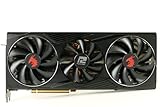


Our Top Picks
 GIGABYTE GeForce RTX 4070 Super WINDFORCE OC 12G2" x 5" x 10.3"10.27 x 4.96 x 0.1 inches2.8 PoundsCheck on Amazon


Top 3 picks at a glance
Spec Comparison Table
| Specification | RX 6800 XT | RTX 4070 Super |
|---|---|---|
| Architecture | RDNA 2.0 | Ada Lovelace |
| Release date | 28 October 2020 | 8 January 2024 |
| Launch MSRP | $649 | $599 |
| Shaders / CUDA cores | 4608 | 7168 |
| Boost clock | 2250 MHz | 2475 MHz |
| Process | 7 nm | 5 nm |
| Board power | 300 W | 220 W |
| Memory | 16 GB GDDR6 | 12 GB GDDR6X |
| Bus width | 256-bit | 192-bit |
| Bandwidth | 512.0 GB/s | 504.2 GB/s |
| Cache | 4 MB L2 + 128 MB L3 (Infinity Cache) | 48 MB L2 |
| Interface | PCIe 4.0 x16 | PCIe 4.0 x16 |
| Power connectors | 2x 8-pin | 1x 16-pin |
| Length / width | 267 mm, 2-slot | 267 mm, 2-slot |
| Outputs | 1x HDMI, 2x DisplayPort, 1x USB Type-C | 1x HDMI 2.1, 3x DisplayPort 1.4a |
Memory bandwidth is almost identical at around 504-512 GB/s, and both cards lean on large caches: 128 MB of Infinity Cache on the Radeon, 48 MB of L2 on the GeForce. The meaningful differences are compute (the 4070 Super has a newer, more efficient architecture), VRAM capacity (16 GB versus 12 GB) and power (300 W versus 220 W).
Raster Performance at 1440p and 4K
TechPowerUp’s RTX 4070 review found the standard RTX 4070 matching the RX 6800 XT almost exactly in pure rasterization. Its later RTX 4070 Super review showed the Super about 15% faster than the RTX 4070 and able to match the old RTX 3090 flagship. Chaining those results puts the 4070 Super around 15% ahead of the RX 6800 XT in raster, though the two reviews used different test setups. Independent comparisons land in a similar range, from about 11% to about 20%.
At 1440p, both cards deliver high-refresh gaming in most titles, with the RTX 4070 Super holding a consistent lead. At 4K, the RX 6800 XT’s 16 GB and wider bus help it close some of the gap in memory-heavy games, and a few titles favor the Radeon outright. As a broad guide, both cards handle demanding modern games at 1440p high settings in the 60-100+ FPS range, depending on the title. FPS varies with settings, CPU and game patch.
Ray Tracing: A Clear Win for NVIDIA
Ray tracing is where the gap opens up. TechPowerUp’s data shows the RX 6800 XT falling about 22% behind the standard RTX 4070 once ray tracing is enabled, and the 4070 Super is faster still. In heavy RT titles, independent comparisons show leads approaching 50%. RDNA 2’s first-generation ray accelerators simply cannot match Ada’s third-generation RT cores.
For path-traced showcases, the difference is even larger, and the RTX 4070 Super is the only one of the two where those modes are realistically playable with DLSS. Players who care about ray tracing should treat this as the deciding factor.
DLSS 4 and Frame Generation Versus FSR 3
The RTX 4070 Super supports the DLSS 4 feature set available to RTX 40 cards: the transformer-based Super Resolution model, Ray Reconstruction and DLSS frame generation (2x). Multi Frame Generation is reserved for RTX 50 cards. DLSS image quality is widely considered the best of the upscalers, particularly in Performance and Balanced modes at 1440p and 4K.
The RX 6800 XT relies on FSR 3.x upscaling and frame generation, plus AMD Fluid Motion Frames for driver-level frame generation in many games. FSR 4 officially targets RDNA 4 Radeon RX 9000 cards, so the RX 6800 XT should not be bought with FSR 4 in mind. In practice, the 4070 Super’s combination of DLSS upscaling and frame generation can multiply its lead in supported single-player games.
16 GB Versus 12 GB: Does It Matter?
The RX 6800 XT’s 16 GB is its strongest argument. A rough VRAM guide for current AAA games:
- 1440p ultra: about 8-12 GB, so both cards are comfortable in nearly all titles.
- 4K ultra: about 10-14 GB, where 12 GB becomes tight in the heaviest games.
- 4K with ray tracing and frame generation: 12-16 GB in demanding titles, favoring the 16 GB card for headroom but not for frame rate, since the RX 6800 XT is much slower in RT.
For a 1440p player, 12 GB is sufficient today. For 4K with high-resolution texture packs or heavy mods, the Radeon’s extra memory provides genuine long-term headroom.
Power, PSU Sizing and Connectors
Using GPU board power plus CPU gaming power plus about 150 W of headroom:
- RX 6800 XT: 300 W + ~125 W (typical midrange CPU while gaming) + 150 W = about 575 W, so a quality 650 W unit is the minimum and 750 W is comfortable.
- RTX 4070 Super: 220 W + ~125 W + 150 W = about 495 W, so a quality 600-650 W unit is enough.
The RX 6800 XT uses two standard 8-pin connectors. The RTX 4070 Super uses a 16-pin 12VHPWR-style connector, with an adapter from 8-pin cables included on most models; seat the plug fully and avoid sharp bends near the connector. Both reference figures list 267 mm length in a dual-slot design, though many partner models of both cards are longer and thicker triple-fan designs.
The 80 W difference also adds up. At 20 hours of gaming a week, the 4070 Super uses about 83 kWh less per year, roughly $12-$17 at $0.15-$0.20 per kWh, and it runs cooler and quieter.
Value by the Numbers
Using launch MSRP and approximate raster performance (RX 6800 XT = 100, RTX 4070 Super = about 115):
- RX 6800 XT: $649 / 100 = $6.49 per performance point.
- RTX 4070 Super: $599 / 115 = about $5.21 per performance point.
At launch prices, the 4070 Super offered both more performance and better value. The real decision today usually happens on the used market, where the RX 6800 XT commonly sells around $300-$380 used and the RTX 4070 Super around $450-$530 used. At those prices, the RX 6800 XT delivers more raster performance per dollar, while the 4070 Super justifies its premium with ray tracing, DLSS and efficiency. Used RX 6800 XT cards are often several years old, so check fan and thermal condition.
Buyer’s Guide by Resolution and Budget
| If you want… | Choose |
|---|---|
| 1440p high-refresh with RT and DLSS | RTX 4070 Super |
| Best raster performance per dollar, used | RX 6800 XT |
| 4K with large texture packs and mods | RX 6800 XT (16 GB) |
| Path tracing or heavy RT | RTX 4070 Super |
| 600-650 W PSU and a quiet build | RTX 4070 Super |
| Linux gaming with open-source drivers | RX 6800 XT |
Buyers spending close to new-card prices should also compare the current RX 9070 and RTX 5070, which add FSR 4 and Multi Frame Generation respectively.
Frequently Asked Questions
Is the RTX 4070 Super faster than the RX 6800 XT?
Yes. Combining TechPowerUp’s review data, the RTX 4070 Super is roughly 15% faster in raster, and other comparisons range from about 11% to 20%. With ray tracing enabled, its lead grows much larger.
Is 12 GB on the RTX 4070 Super enough?
For 1440p gaming, 12 GB is enough for nearly all current titles. At 4K with ultra textures and ray tracing, a few demanding games approach the limit. The RX 6800 XT’s 16 GB offers more headroom for 4K and heavy modding.
What PSU do I need for the RX 6800 XT?
A quality 650 W power supply is the practical minimum, and 750 W gives more margin for transient spikes. The card is rated at 300 W and uses two 8-pin connectors. The RTX 4070 Super runs well on a quality 600-650 W unit.
Does the RX 6800 XT support FSR 4?
FSR 4 officially targets AMD’s RDNA 4 Radeon RX 9000 series. The RX 6800 XT supports FSR 3.x upscaling and frame generation, plus AMD Fluid Motion Frames. Those still deliver solid boosts in supported games.
Is a used RX 6800 XT still a good buy in 2026?
It can be at the right price, especially for raster-focused 1440p gaming. Its 16 GB of memory remains generous. Buyers should weigh weaker ray tracing, higher power draw and a maintenance-style driver cadence for RDNA 2 against the savings.

