
The RTX 3080 12GB is the clearly faster card and the right pick for 1440p high-refresh, 4K and ray tracing, while the RX 6750 XT is the better buy for 1080p and budget 1440p builds where its lower power draw and lower used price matter more than the last 25-40% of performance.
These two cards were never designed as direct rivals. The RX 6750 XT launched at $549 as a refreshed upper-midrange card, and the RTX 3080 12GB launched at $799 as a late, beefed-up version of Nvidia’s 2020 flagship. Both now live mostly on the used market, where the price gap is smaller than it was at launch, and that is what makes the comparison worth running.
As an Amazon Associate we earn from qualifying purchases at no extra cost to you.
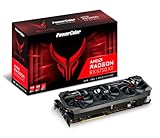
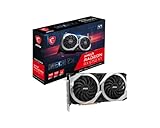
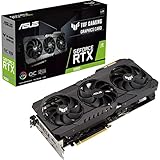
Top 3 picks at a glance
Spec Sheet Side by Side
| Spec | RX 6750 XT | RTX 3080 12GB |
|---|---|---|
| Architecture | RDNA 2.0 (7 nm) | Ampere (8 nm) |
| Release date | 3 March 2022 | 11 January 2022 |
| Launch MSRP | $549 | $799 |
| Shaders | 2560 stream processors | 8960 CUDA cores |
| Boost clock | 2600 MHz | 1710 MHz |
| VRAM | 12 GB GDDR6 | 12 GB GDDR6X |
| Bus / bandwidth | 192-bit / 432.0 GB/s | 384-bit / 912.4 GB/s |
| Cache | 3 MB L2 + 96 MB Infinity Cache | 6 MB L2 |
| TDP | 250 W | 350 W |
| Power connectors | 1x 6-pin + 1x 8-pin | 1x 12-pin (reference spec) |
| Length / width | 267 mm / 2-slot | 285 mm / 2-slot |
| Outputs | 1x HDMI 2.1, 3x DP 1.4a | 1x HDMI 2.1, 3x DP 1.4a |
The headline is that VRAM is a tie at 12 GB, but the RTX 3080 12GB has more than double the raw memory bandwidth. AMD offsets part of that with 96 MB of Infinity Cache, which works well at 1080p and 1440p but runs out of hit rate as resolution climbs. That is the technical reason the gap widens at 4K.
Rasterization: How Big Is the Gap?
Reviews and aggregated benchmark data place the RTX 3080 10GB roughly 20-30% ahead of the RX 6750 XT overall, with the gap close to zero in some CPU-limited 1080p tests and growing to 40% or more at 4K. TechPowerUp’s review of the ASUS RTX 3080 12 GB STRIX OC measured that card 7% ahead of the original 10GB model, and TechSpot found the 12GB version around 5% faster at 1440p. Combining those, the RTX 3080 12GB lands roughly:
- 1080p: about 10-25% faster, often limited by the CPU.
- 1440p: about 25-40% faster.
- 4K: about 40-60% faster, where the RX 6750 XT’s narrow bus and cache become the bottleneck.
There are exceptions. In AMD-friendly titles such as Assassin’s Creed Valhalla, TweakTown recorded the RX 6750 XT slightly ahead of an RTX 3080 at 1080p. As a loose illustration, a demanding game running around 70-80 fps on the RX 6750 XT at 1440p high would typically sit near 95-110 fps on the RTX 3080 12GB; real numbers vary with settings, CPU and patch level.
Ray Tracing and Upscaling
Ray tracing is where the cards separate decisively. RDNA 2’s ray accelerators are first-generation hardware, while Ampere has second-generation RT cores. In ray-traced games the RTX 3080 12GB’s lead is typically much larger than its raster lead, and in heavy RT titles the RX 6750 XT often becomes unplayable at 1440p without aggressive upscaling. Anyone who wants ray-traced reflections or global illumination should treat the RTX 3080 12GB as the only realistic option of the two.
DLSS 4 vs FSR
The RTX 3080 12GB supports DLSS Super Resolution including the DLSS 4 transformer model and Ray Reconstruction, which give noticeably cleaner image quality than FSR 3 at the same internal resolution. It does not support DLSS Frame Generation, which starts with the RTX 40 series.
The RX 6750 XT relies on FSR 3.1 upscaling and frame generation, plus AMD Fluid Motion Frames at the driver level. AMD’s machine-learning FSR 4 upscaler is aimed at the RX 9000 series, so RDNA 2 owners should not count on it. Interestingly, FSR 3 frame generation also works on the RTX 3080 12GB in supported games, giving Nvidia’s card both ecosystems.
VRAM Headroom
Both cards have 12 GB, which is a comfortable amount for 1440p in 2026 and workable for 4K with high rather than ultra textures in some new releases. Neither card will run out of memory as quickly as the 8 GB and 10 GB cards of the same era. The practical difference is that the RTX 3080 12GB’s bandwidth lets it use that memory more effectively at high resolutions, while the RX 6750 XT’s 12 GB is mainly insurance against texture stutter at 1080p and 1440p.
Power Draw, PSU and Case Fit
At 350 W the RTX 3080 12GB draws 100 W more than the RX 6750 XT’s 250 W. Over a long gaming session that difference also becomes heat inside the case and more fan noise.
PSU sizing worked example
- RX 6750 XT: 250 W + 125 W (typical gaming CPU) + 150 W headroom = about 525 W, so a quality 600-650 W unit is a sensible match.
- RTX 3080 12GB: 350 W + 125 W + 150 W = about 625 W, which points to a quality 750 W unit, especially since Ampere’s high-end cards are known for brief transient spikes.
Connectors and dimensions
The RTX 3080 12GB is listed with a 12-pin connector in its reference specification, but there was no Founders Edition of this model, and partner cards almost always use two or three standard 8-pin plugs. The RX 6750 XT uses a 6-pin plus 8-pin layout in its reference form. On length, the reference RTX 3080 12GB measures 285 mm versus 267 mm, and many partner versions run past 300 mm and beyond two slots, so measuring the case before buying is worth the minute it takes.
Value: Launch Price and Today’s Market
At launch MSRP the math was close. Taking the RX 6750 XT as 100 and the RTX 3080 12GB as about 132 at 1440p (the middle of the 25-40% range), the RX 6750 XT delivered 0.182 performance points per dollar at $549, and the RTX 3080 12GB delivered 0.165 at $799. The AMD card was roughly 10% better value per dollar in raster, before counting ray tracing.
On today’s used market, the RX 6750 XT usually sells for around $220-$280 and the RTX 3080 12GB for roughly $350-$430, depending on model and condition. That widens the RX 6750 XT’s value advantage in pure raster. The RTX 3080 12GB earns its premium only if ray tracing, DLSS image quality or 4K performance are priorities. Used RTX 3080 cards should be checked for mining history and worn fans or thermal pads, since GDDR6X runs hot.
Which One Fits Your Build
| Resolution and budget | Pick the RX 6750 XT if… | Pick the RTX 3080 12GB if… |
|---|---|---|
| 1080p, tight budget | You want strong raster at the lowest price and power | Only if a used deal brings it close in price |
| 1440p, mid budget | You mostly play raster titles and accept medium RT or none | You want 120+ fps targets or ray tracing with DLSS |
| 4K | Not recommended; the narrow bus limits it | You accept high settings plus DLSS in new games |
| Small case or 550-650 W PSU | Lower heat and power make it the easier fit | Only with a PSU upgrade and a case that fits 285 mm+ |
Buyers who can stretch further should also consider current cards. The RX 9060 XT 16 GB and RTX 5060 Ti 16 GB bring newer upscaling (FSR 4 and DLSS frame generation respectively) with lower power draw, and they carry warranties that used cards lack.
Frequently Asked Questions
Is the RTX 3080 12GB much faster than the 10GB version?
Reviews from TechPowerUp, TechSpot and Digital Trends put the 12GB model about 5-7% ahead of the original. The gain comes mostly from slightly more CUDA cores, a wider 384-bit bus and a higher power limit, not from the extra 2 GB alone. The added memory mainly helps in a handful of VRAM-heavy games at 4K.
Can the RX 6750 XT handle 1440p?
Yes, it is a capable 1440p card in rasterized games at high settings, often reaching 60-100 fps depending on the title, CPU and patch. Ray tracing at 1440p is where it struggles. FSR upscaling helps extend its life in newer releases.
Does the RTX 3080 12GB support DLSS frame generation?
No. DLSS Frame Generation requires an RTX 40-series card or newer. The RTX 3080 12GB does support DLSS 4 Super Resolution and Ray Reconstruction, and it can use FSR 3 frame generation in games that offer it.
What power supply does the RTX 3080 12GB need?
With a 350 W TDP, a quality 750 W power supply is the safe target for most systems. A 650 W unit can work with a low-power CPU but leaves little margin for transient spikes. Most partner cards need two or three 8-pin PCIe cables.
Is the RX 6750 XT the same as the RX 6700 XT?
It is a refreshed version of the same Navi 22 design with higher clocks and faster memory. It is typically a few percent faster than the RX 6700 XT and draws more power. Both share 12 GB of GDDR6 on a 192-bit bus.

