The newer RX 6500 XT is not a real upgrade over the RX 590. The two trade blows at best, and on a PCIe 3.0 motherboard, which is exactly where most RX 590 owners are, the 6500 XT often falls behind. Pick the RX 590 if you’re buying used for an older PC and want the most raster performance for very little money. Pick the RX 6500 XT only if you have a PCIe 4.0 platform and need lower power draw, a smaller PSU, newer driver support, or ray-tracing compatibility for games that require it.
As an Amazon Associate we earn from qualifying purchases at no extra cost to you.


Our Top Picks
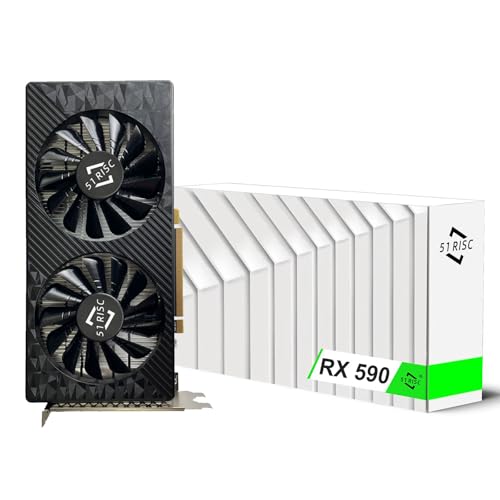
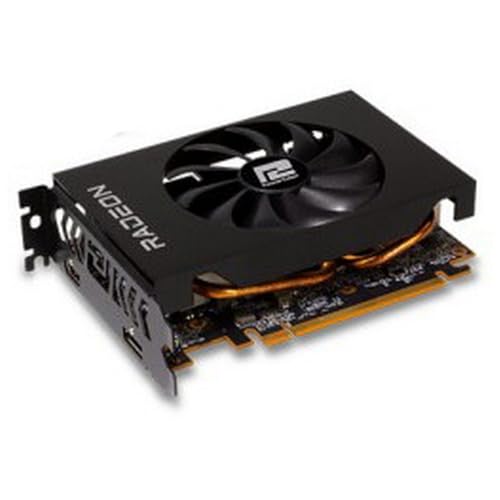

Top 3 picks at a glance
Why a 2022 Card Struggles Against a 2018 Card
The RX 590 was the last Polaris card, an overclocked 12 nm refresh of the RX 480/580 design with a wide 256-bit memory bus. The RX 6500 XT came in January 2022 on the modern 6 nm RDNA 2 architecture, but AMD originally designed its Navi 24 chip for laptops. That shows in its cut-downs: a 64-bit memory bus, only a PCIe 4.0 x4 link, no hardware video encoder, and only two display outputs. Its very high 2,815 MHz boost clock and 16 MB Infinity Cache recover a lot, but not enough to clearly beat an older card with three times the memory bus width.
Spec Sheet Comparison
| Specification | Radeon RX 590 | Radeon RX 6500 XT |
|---|---|---|
| Architecture / process | GCN 4.0 (Polaris), 12 nm | RDNA 2.0, 6 nm |
| Release date | 15 November 2018 | 19 January 2022 |
| Launch MSRP | $279 | $199 |
| Stream processors | 2,304 | 1,024 |
| Boost clock | 1,545 MHz | 2,815 MHz |
| Memory | 8 GB GDDR5 | 8 GB GDDR6 (listed; launch cards were 4 GB) |
| Bus / bandwidth | 256-bit / 256.0 GB/s | 64-bit / 143.9 GB/s |
| Cache | 2 MB L2 | 1 MB L2 + 16 MB Infinity Cache |
| TDP | 175 W | 107 W |
| Power connector | 1x 8-pin | 1x 6-pin |
| Interface | PCIe 3.0 x16 | PCIe 4.0 x4 |
| Size | 241 mm, 2-slot | 2-slot (length varies by model) |
| Outputs | 1x HDMI, 3x DisplayPort | 1x HDMI 2.1, 1x DisplayPort 1.4a |
The RX 6500 XT launched as a 4 GB card at $199. 8 GB versions appeared later from some board partners. The 8 GB models help in memory-heavy games, but they don’t fix the narrow bus or the x4 PCIe link.
Gaming Performance
On a PCIe 4.0 system
TechSpot’s launch review (Hardware Unboxed’s written outlet) found the 4 GB RX 6500 XT roughly matching the RX 590 in games like Assassin’s Creed Valhalla at medium settings on a PCIe 4.0 platform. The review was blunt about it, calling it “a bad, really bad graphics card.” Aggregate benchmark sites put the 6500 XT a few percent ahead of the RX 590 on average under ideal conditions. Realistically, on a modern platform the two are at about parity, with results swinging either way depending on the game.
On a PCIe 3.0 system
This is where the 6500 XT runs into trouble. Its x4 link runs at half the bandwidth on PCIe 3.0, and when a game spills past VRAM, the card has to pull data across that narrow link. TechSpot measured average frame-rate drops of roughly 9-28% and 1% low drops of up to about 50% in the worst cases, which put the 6500 XT around GTX 1650 level, below even an RX 570. The RX 590 has a full x16 PCIe 3.0 link and doesn’t lose anything on older boards. For upgraders with Intel 9th-gen-or-older, AMD A320/B450, or other PCIe 3.0 boards, the RX 590 is usually the faster card in practice.
As a rough guide, both manage 1080p at low-to-medium settings in many current games at about 40-60 fps, and well over 100 fps in esports titles, with large variation by game, settings, CPU and driver.
Ray tracing and upscaling
The RX 6500 XT supports hardware ray tracing and the RX 590 doesn’t. But RT on a card this small is mostly a compatibility checkbox. It allows the handful of games that require RT hardware to launch, without delivering a good RT experience. Both cards can use FSR 1/2/3 upscaling and XeSS DP4a where games support them. Upscaling helps the 6500 XT more because it lowers both rendering load and memory traffic. Neither card supports FSR 4.
Drivers and Longevity
AMD moved Polaris and Vega cards to a separate, infrequently updated driver branch in late 2023, so the RX 590 no longer gets regular game-specific optimizations. RDNA 2 cards like the 6500 XT entered AMD’s “maintenance mode” in late 2025, though AMD has said game fixes will continue as needed. Neither card is a strong long-term bet, but the 6500 XT is the more likely of the two to run newly released games without problems, especially titles that require DirectX 12 Ultimate features.
Power, PSU and Case Fit
Efficiency is where the 6500 XT clearly wins. It’s rated at 107 W versus 175 W for the RX 590 and needs only a 6-pin connector instead of an 8-pin.
- RX 590: 175 W + 65 W (budget 6-core CPU) + 150 W headroom = 390 W, so a quality 450-500 W unit.
- RX 6500 XT: 107 W + 65 W + 150 W = 322 W, so a quality 350-400 W unit is enough.
Office PCs being turned into budget gaming machines often have small, proprietary power supplies with only a 6-pin lead, or none. The 6500 XT fits those situations more easily. Both are two-slot cards. The RX 590 reference length is 241 mm, and 6500 XT models range from compact single-fan versions to longer dual-fan designs.
Media and streaming users should note that the RX 6500 XT has no hardware video encoder, and its decoder lacks AV1. The RX 590’s older encoder works for basic recording and streaming.
Budget and Used-Market Math
At launch MSRP, with roughly equal performance on a PCIe 4.0 system (both near 100 on an index), the RX 590 cost $2.79 per point and the RX 6500 XT $1.99 per point. On paper that made the newer card better value. But the 6500 XT launched during the 2022 GPU shortage, and the RX 590’s MSRP was already four years old.
Today the RX 590 usually sells for about $50-$80 used, while used 6500 XT cards typically go for about $80-$120, and the rarer 8 GB versions cost more. For PCIe 3.0 owners, the RX 590 is clearly the better value per frame. For about $150-$200 new, an RX 6600 used or an Intel Arc B570 new offers a much bigger step up than either card.
Pick the RX 590 If / Pick the RX 6500 XT If
| Situation | Better choice |
|---|---|
| PCIe 3.0 motherboard, 450 W+ PSU | RX 590 |
| Lowest possible spend for 1080p esports | RX 590 (used) |
| PCIe 4.0 platform (Ryzen 5000/7000, Intel 11th gen+) | RX 6500 XT, especially an 8 GB model |
| Small or proprietary PSU with only a 6-pin | RX 6500 XT |
| Games that require ray-tracing hardware | RX 6500 XT |
| Streaming with GPU encoding | RX 590 |
| Three or more monitors | RX 590 (four outputs vs two) |
Used RX 590 Checklist
Many RX 590s spent time in mining rigs. Ask for a stress test showing stable clocks without artifacts, expect to replace thermal paste, and confirm the fans spin smoothly. Avoid cards with modified BIOS settings unless the seller can restore the original firmware.
Frequently Asked Questions
Is the RX 6500 XT faster than the RX 590?
On PCIe 4.0 systems they’re roughly equal, with the 6500 XT a few percent ahead in some aggregates. On PCIe 3.0 systems the 6500 XT often falls behind, sometimes by a wide margin in 1% lows. For older PCs the RX 590 is usually faster.
Why does the RX 6500 XT lose performance on PCIe 3.0?
It uses only four PCIe lanes, and PCIe 3.0 halves the per-lane bandwidth compared with PCIe 4.0. When a game needs more data than fits in VRAM, the narrow link becomes a bottleneck. TechSpot measured up to about 50% lower 1% lows in worst cases.
Can the RX 590 run ray-traced games?
No. The RX 590 has no ray-tracing hardware, so games that require it won’t launch. Games with optional RT will still run with it turned off.
What power supply does each card need?
A quality 450-500 W unit with an 8-pin PCIe lead suits an RX 590 system. A 350-400 W unit with a 6-pin lead is enough for an RX 6500 XT system with a budget CPU.
Is the 8 GB RX 6500 XT worth it over the 4 GB model?
Yes, if the price difference is small. More VRAM means fewer trips across the slow PCIe x4 link, which helps 1% lows, especially on PCIe 3.0. It doesn’t fix the narrow 64-bit memory bus.
Related guides
More from Amazon
Programs that pair well with the guide above. Offers and eligibility are set by Amazon and may change.
A free business account with business pricing and bulk-buying tools for work, shop or home office.
Create a business accountFree shipping on eligible items, Prime Video and more. Eligible new members can start with a free trial.
Start a Prime free trialAudiobooks and podcasts to listen to on the go. Eligible new members can start with a free trial.
Try Audible freeAd-free music streaming. Eligible new subscribers can start with a free trial.
Try Music Unlimited freeAs an Amazon Associate we earn from qualifying purchases.