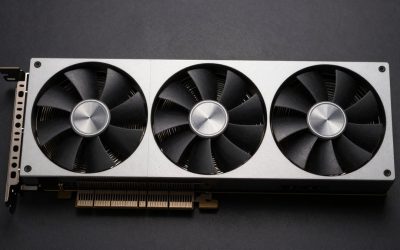
The Intel Arc B570 is the better buy for most budget 1080p gamers because it delivers RTX 4060-class performance for less than half the RTX 4060 Ti 16GB’s launch price, while the RTX 4060 Ti 16GB is the pick if you want roughly 15-25% more speed, the most VRAM in this class, DLSS frame generation and Nvidia’s mature drivers. Think of it as value-first versus feature-first.
These cards sit at very different price points. The RTX 4060 Ti 16GB launched in May 2023 at $499, which reviewers widely criticized as too high for its performance. The Arc B570 arrived in January 2025 at $219 as Intel’s entry Battlemage card. Shoppers end up comparing them because 4060 Ti 16GB prices have fallen over time, and because both pitch “more VRAM than usual” for a budget-to-midrange card.
As an Amazon Associate we earn from qualifying purchases at no extra cost to you.


Our Top Picks
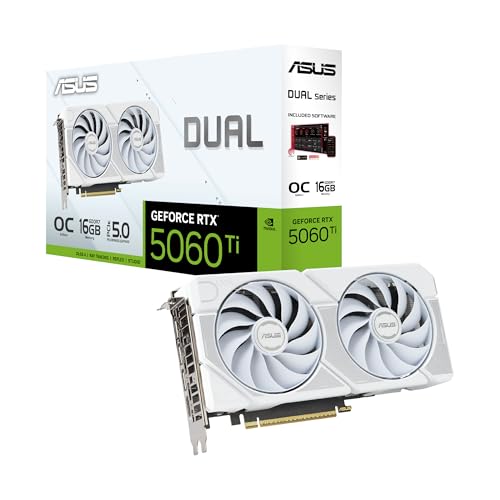 ASUS Dual GeForce RTX 5060 Ti 16GB GDDR7RTX5060Ti|OC|16GB|White9 x 4.7 x 0.1 inches1.4 poundsCheck on Amazon


Top 3 picks at a glance
Spec Comparison
| Spec | RTX 4060 Ti 16GB | Arc B570 |
|---|---|---|
| Architecture | Ada Lovelace | Xe2-HPG (Battlemage) |
| Release date | 18 May 2023 | 16 January 2025 |
| Launch MSRP | $499 | $219 |
| Shaders | 4352 CUDA cores | 2304 shading units |
| Boost clock | 2535 MHz | 2500 MHz |
| Process | 5 nm | 5 nm |
| TDP | 165 W | 150 W |
| Memory | 16 GB GDDR6 | 10 GB GDDR6 |
| Bus width | 128-bit | 160-bit |
| Bandwidth | 288.0 GB/s | 380.0 GB/s |
| L2 cache | 32 MB | 9 MB |
| Interface | PCIe 4.0 x8 | PCIe 4.0 x8 |
| Power connector | 1x 16-pin | 1x 8-pin |
| Length / width | 240 mm, 2-slot | 272 mm, 2-slot |
| Outputs | 1x HDMI 2.1, 3x DP 1.4a | 1x HDMI 2.1a, 3x DP 2.1 |
Two lines stand out. The B570 actually has more raw memory bandwidth (380 versus 288 GB/s), while the 4060 Ti relies on a large 32 MB L2 cache to make up for its narrow 128-bit bus. And both cards use a PCIe 4.0 x8 link, which matters if you plan to install either in an older PCIe 3.0 motherboard (more on that below).
Gaming Performance: How Big Is the Gap?
The B570 lands near the RTX 4060. KitGuru’s review data shows the B570 about 2% behind the RTX 4060 across its 1440p suite, and Tom’s Hardware found its performance “not too far off” the 4060 at 1440p and below. The RTX 4060 Ti 16GB is a step above the 4060, which puts it roughly 15-25% ahead of the B570 on average. The gap is not uniform, though: KitGuru found the B570 matching the 4060 Ti in some games, such as Ghost of Tsushima at 1440p, and Gamers Nexus observed that Arc tends to scale better at higher resolutions, while some titles favor Nvidia by a much wider margin.
The 16GB 4060 Ti and the 8GB 4060 Ti perform the same when memory is not a limit. The 16 GB only pays off in games and settings that push past 8-10 GB.
As a broad guide, and depending on settings, CPU and game version: in demanding current games at 1080p high, the B570 typically runs around 50-80 fps and the 4060 Ti 16GB around 60-95 fps. At 1440p, both usually need upscaling or medium-high settings in the newest AAA releases.
The Arc CPU Overhead Caveat
Battlemage reviews revealed that Intel’s driver adds more CPU overhead than Nvidia’s or AMD’s. Hardware Unboxed and others showed that pairing a B-series Arc card with an older or slower CPU can cost significant performance in some games, while a modern CPU largely eliminates the problem. Intel has improved this with driver updates, but if your system has an older 6-core processor from several generations ago, the 4060 Ti’s advantage will likely be larger than the averages above.
Arc also needs Resizable BAR (ReBAR) enabled in the BIOS to perform properly. Most systems from roughly 2020 onward support it, but very old platforms may not.
Ray Tracing and Upscaling Features
- RTX 4060 Ti 16GB: DLSS super resolution including the DLSS 4 transformer model, plus DLSS frame generation. No multi frame generation, which is limited to RTX 50 cards. Ray tracing performance is solid for this tier.
- Arc B570: XeSS 2 with XeSS super resolution, XeSS frame generation and Xe Low Latency. Battlemage ray tracing is competitive with Nvidia’s mid-range in many games, which is impressive at this price.
DLSS is in far more games than XeSS 2. Many games support XeSS upscaling, but XeSS frame generation support is narrower. If you want frame generation in a wide range of titles, Nvidia’s ecosystem is the safer bet. Both cards can also use FSR frame generation where available.
VRAM: 16 GB vs 10 GB
| Use case | Typical VRAM need | RTX 4060 Ti 16GB | Arc B570 10GB |
|---|---|---|---|
| 1080p high, AAA | about 7-10 GB | Plenty | Generally fine |
| 1440p high, AAA | about 9-12 GB | Plenty | Tight in heavier games |
| 1080p/1440p with RT + frame gen | about 10-13 GB | Comfortable | May require lower textures |
| Local AI models, creative apps | Varies, often 12 GB+ | Strong advantage | Limited |
The B570’s 10 GB is better than the 8 GB found on many budget cards, but the 4060 Ti 16GB has much more headroom, which also makes it attractive for local AI and creator workloads where Nvidia’s software support is broader.
Value: Launch Price Per Frame
Indexing the B570 at 100 and the 4060 Ti 16GB at roughly 120 (midpoint of the 15-25% range):
- Arc B570: $219 / 100 = about $2.20 per point.
- RTX 4060 Ti 16GB: $499 / 120 = about $4.15 per point.
At launch pricing, the B570 delivers nearly twice the performance per dollar. For the 4060 Ti 16GB to match it, it would need to sell for about $265. Used 4060 Ti 16GB cards usually trade in roughly the $280-$350 range, which narrows the gap but still leaves the B570 ahead on pure value. The 4060 Ti’s argument rests on features, memory and driver maturity, not price per frame.
Power, PCIe and Case Fit
Both are efficient. Using GPU TDP + CPU + about 150 W headroom with a 105 W CPU:
- RTX 4060 Ti 16GB: 165 + 105 + 150 = 420 W, so a quality 450-550 W PSU is enough.
- Arc B570: 150 + 105 + 150 = 405 W, so 450-550 W also works.
The B570 uses a single 8-pin connector, which almost every PSU provides. The 4060 Ti reference design uses one 16-pin plug, typically via an adapter, although most partner 4060 Ti cards use a standard 8-pin connector instead.
PCIe 3.0 warning: because both cards use only eight PCIe lanes, installing them in a PCIe 3.0 board halves the available bus bandwidth. This usually costs little when a game fits within VRAM, but performance drops faster when memory overflows. The 4060 Ti 16GB is less exposed here because its large buffer rarely overflows; the B570 is more sensitive in memory-heavy games on older boards.
Size: the reference 4060 Ti is 240 mm long and the B570 figure is 272 mm, both two slots wide. Partner models vary, so measure if you have a compact case.
Decision Guide by Resolution and Budget
| Situation | Pick | Reason |
|---|---|---|
| 1080p gaming on a tight budget | Arc B570 | Near-RTX 4060 performance for about $219 at launch |
| Older CPU (several generations old) | RTX 4060 Ti 16GB | Less driver CPU overhead |
| 1440p with high textures | RTX 4060 Ti 16GB | 16 GB VRAM and higher performance |
| Wide frame generation support | RTX 4060 Ti 16GB | DLSS frame generation in many more games |
| Local AI or creator workloads | RTX 4060 Ti 16GB | More memory, broader software support |
| Budget build with a modern CPU | Arc B570 | Best value per frame |
Bottom Line
The Arc B570 is one of the best values in budget gaming, and for 1080p players with a reasonably modern CPU it does most of what the RTX 4060 Ti 16GB does for far less money. The RTX 4060 Ti 16GB is faster, carries a much larger memory buffer and benefits from Nvidia’s broad DLSS support and lower CPU overhead, but it only makes sense at a price well below its original MSRP. If both are within your budget and you mainly game, the deciding factors are your CPU and how much you care about frame generation coverage.
Frequently Asked Questions
Is the RTX 4060 Ti 16GB faster than the Arc B570?
Yes, typically by around 15-25% on average, based on review data that places the B570 close to the RTX 4060. The gap varies a lot by game, and the B570 matches it in a few titles. With an older CPU, the 4060 Ti’s lead tends to grow because of Arc driver overhead.
Does the Arc B570 need Resizable BAR?
Yes. Intel Arc cards depend on Resizable BAR for proper performance. Enable it in the BIOS along with Above 4G Decoding. Most platforms from around 2020 onward support it.
Is 10 GB of VRAM enough for 1080p?
For most current games at 1080p high settings, 10 GB is enough. A few demanding titles with maximum textures and ray tracing can exceed it, in which case lowering textures one step usually solves the problem. It is noticeably safer than 8 GB.
Will either card work in a PCIe 3.0 motherboard?
Both work, but both use only eight PCIe lanes, so a PCIe 3.0 slot halves their bus bandwidth. The impact is small while games fit in VRAM and larger when memory overflows. The 4060 Ti 16GB is less affected thanks to its bigger buffer.
What PSU do I need for either card?
A quality 450-550 W power supply is enough for either card with a typical gaming CPU. The B570 needs one 8-pin connector. Most 4060 Ti partner cards also use one 8-pin, while the reference design uses a 16-pin plug with an adapter.
Related guides
More from Amazon
Programs that pair well with the guide above. Offers and eligibility are set by Amazon and may change.
A free business account with business pricing and bulk-buying tools for work, shop or home office.
Create a business accountFree shipping on eligible items, Prime Video and more. Eligible new members can start with a free trial.
Start a Prime free trialAudiobooks and podcasts to listen to on the go. Eligible new members can start with a free trial.
Try Audible freeAd-free music streaming. Eligible new subscribers can start with a free trial.
Try Music Unlimited freeAs an Amazon Associate we earn from qualifying purchases.