
For most gamers at 1080p and 1440p, the RTX 4070 Ti is the better buy. It matches the RTX 3090 Ti’s frame rates at those resolutions, adds DLSS frame generation, and draws far less power. The RTX 3090 Ti only makes sense if you game at 4K with very large texture packs or mods, or if you also run AI or creative workloads that need its 24 GB of VRAM. Neither card is a clear upgrade over the other. The 3090 Ti is the stronger 4K and memory card, and the 4070 Ti is the more efficient, more modern 1440p card.
As an Amazon Associate we earn from qualifying purchases at no extra cost to you.
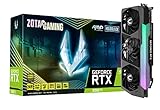

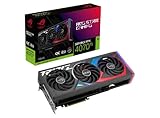
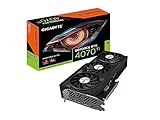
Our Top Picks
Top 3 picks at a glance
Two Very Different Ways to Reach the Same Frame Rate
The RTX 3090 Ti was NVIDIA’s last Ampere flagship, launched in January 2022 at $1,999. The RTX 4070 Ti arrived a year later at $799 on the Ada Lovelace architecture. On paper the older card looks overwhelming: 10,752 CUDA cores against 7,680, a 384-bit bus against 192-bit, and 1.01 TB/s of bandwidth against 504.2 GB/s. Ada closes that gap with much higher clocks (2610 MHz vs 1860 MHz boost), a 4 nm process, and a 48 MB L2 cache that is eight times larger than the 3090 Ti’s 6 MB. The cache absorbs memory traffic well at lower resolutions and becomes a bottleneck as resolution climbs.
Specifications Compared
| Spec | RTX 3090 Ti | RTX 4070 Ti |
|---|---|---|
| Architecture | Ampere | Ada Lovelace |
| Release date | 27 January 2022 | 3 January 2023 |
| Launch MSRP | $1,999 | $799 |
| CUDA cores | 10,752 | 7,680 |
| Boost clock | 1860 MHz | 2610 MHz |
| Process | 8 nm | 4 nm |
| TDP | 450 W | 285 W |
| VRAM | 24 GB GDDR6X | 12 GB GDDR6X |
| Memory bus | 384-bit | 192-bit |
| Bandwidth | 1.01 TB/s | 504.2 GB/s |
| L2 cache | 6 MB | 48 MB |
| Interface | PCIe 4.0 x16 | PCIe 4.0 x16 |
| Power connector | 1x 16-pin | 1x 16-pin |
| Length | 336 mm | 285 mm |
| Width | 3-slot | 2-slot |
| Display outputs | 1x HDMI 2.1, 3x DP 1.4a | 1x HDMI 2.1, 3x DP 1.4a |
Rasterized Gaming Performance by Resolution
The major launch reviews tell a consistent story. According to TechPowerUp’s RTX 4070 Ti review data, the 4070 Ti was about 4% faster than the 3090 Ti at 1080p, the two were evenly matched at 1440p, and the 3090 Ti pulled ahead by about 10% at 4K. Tom’s Hardware also recorded a tie at 1440p. TechSpot’s 16-game average put the 4070 Ti about 3% behind the 3090 Ti at 4K, so 4K results range from roughly 3% to 10% in the older card’s favor depending on the game mix.
- 1080p: RTX 4070 Ti slightly ahead (low single digits), though both cards are often CPU-limited here.
- 1440p: Effectively a tie. Demanding AAA titles at high settings typically land somewhere in the 90-130 fps range on either card, varying with settings, CPU and patches.
- 4K: RTX 3090 Ti ahead by roughly 3-10%, thanks to its double-width memory bus.
Individual games swing in both directions. TechSpot saw the 4070 Ti well ahead in Forza Horizon 5, while Tom’s Hardware found the 3090 Ti winning most of its 4K suite.
Ray Tracing and the DLSS Feature Gap
In native ray tracing the two cards are again close. Tom’s Hardware measured the 4070 Ti about 6% slower than the 3090 Ti in its demanding 4K RT suite, and the gap narrows at 1440p. Where the cards really differ is software features:
- DLSS Super Resolution (including the DLSS 4 transformer model): Available on both.
- DLSS Frame Generation: RTX 40 and newer only. The 4070 Ti can use it, and the 3090 Ti cannot.
- DLSS Multi Frame Generation: RTX 50 only. Neither card supports it.
- Ray Reconstruction and Reflex: Supported on both.
Frame generation lets the 4070 Ti show noticeably higher displayed frame rates in supported path-traced games. It adds some latency and works best when the base frame rate is already around 50-60 fps. Reviewers such as TechSpot criticized NVIDIA’s launch marketing for comparing frame-generated 4070 Ti results against native 3090 Ti numbers, and that caveat still applies.
VRAM: 24 GB vs 12 GB
This is the 3090 Ti’s lasting advantage. Twelve gigabytes is enough for 1440p in nearly every current game. At 4K with maximum textures, path tracing and frame generation stacked together, a few titles already approach or exceed 12 GB, and that causes stutter rather than just lower averages. Typical VRAM budgets look like this:
- 1080p high/ultra: roughly 6-9 GB in modern AAA games
- 1440p high/ultra: roughly 8-11 GB
- 4K ultra with RT: roughly 10-16 GB, higher with mods
Outside gaming, 24 GB lets the 3090 Ti load larger local AI models and handle heavier 3D scenes. That demand is why used 3090-class cards have held their value.
Power, PSU and Physical Size
Both cards use a single 16-pin (12VHPWR-style) connector, so neither needs a newer connector on the PSU side if an adapter is included. Their power budgets are very different, though.
PSU Math
- RTX 3090 Ti: 450 W + 150 W (high-end CPU) + 150 W headroom = 750 W. In practice an 850 W or larger quality unit is wise, because Ampere flagships produce sharp transient spikes.
- RTX 4070 Ti: 285 W + 150 W + 150 W = 585 W, so a quality 650-750 W unit is comfortable.
Size matters too. The reference-spec 3090 Ti is 336 mm long and three slots thick, and many partner versions are larger. The 4070 Ti is 285 mm and two slots in its reference form. Small-form-factor and mid-tower builds with front radiators are much easier with the 4070 Ti, and it runs noticeably cooler and quieter for the same frame rates.
Value: Launch Price vs Today’s Used Market
At launch MSRP the comparison is lopsided. With 1440p performance treated as equal (100 each):
- RTX 3090 Ti: $1,999 / 100 = about $20 per performance point
- RTX 4070 Ti: $799 / 100 = about $8 per performance point
Today both are previous-generation cards bought mostly used. Used RTX 4070 Ti cards usually trade around $500-$650. Used RTX 3090 Ti cards often sit higher, very roughly $750-$950, because AI hobbyists pay a premium for 24 GB. Before buying either, compare with current RTX 50 and RX 9000 cards. A new RTX 5070 Ti or RX 9070 XT offers 16 GB of VRAM, a warranty, and performance at or above both of these cards.
Pick the RTX 3090 Ti If / Pick the RTX 4070 Ti If
| Scenario | Better choice | Why |
|---|---|---|
| 1440p high-refresh gaming | RTX 4070 Ti | Same speed, frame generation, ~165 W less power |
| 4K gaming, heavy texture mods | RTX 3090 Ti | 3-10% faster at 4K and double the VRAM |
| Local AI / large 3D scenes | RTX 3090 Ti | 24 GB fits much larger models |
| SFF or mid-tower case | RTX 4070 Ti | 2-slot, 285 mm, lower heat |
| Existing 650-750 W PSU | RTX 4070 Ti | No PSU upgrade needed |
| Budget-focused gaming build | RTX 4070 Ti (used) | Usually much cheaper for equal 1440p results |
Frequently Asked Questions
Is the RTX 4070 Ti as fast as the RTX 3090 Ti?
At 1080p and 1440p, yes. TechPowerUp and Tom’s Hardware both found the two essentially tied at 1440p, with the 4070 Ti slightly ahead at 1080p. At 4K the RTX 3090 Ti leads by roughly 3-10% because of its much wider memory bus.
Can the RTX 3090 Ti use DLSS 3 frame generation?
No. DLSS Frame Generation requires an RTX 40-series or newer GPU, so the 3090 Ti is limited to DLSS Super Resolution, Ray Reconstruction and Reflex. It does benefit from the newer DLSS 4 transformer upscaling model, which improves image quality on all RTX cards.
Is 12 GB on the RTX 4070 Ti enough for 4K?
It is enough for most games at 4K with sensible settings, but a growing number of titles push past 12 GB with maximum textures and ray tracing enabled. When that happens, you see stutter rather than a smooth drop in frame rate. Gamers who plan to stay at 4K for years are better served by 16 GB or more.
What power supply does the RTX 3090 Ti need?
Adding 450 W for the card, about 150 W for a high-end CPU and 150 W of headroom gives roughly 750 W, and an 850 W or larger quality unit is the safer choice for transient spikes. The card uses a single 16-pin connector, so a native 16-pin cable or a correctly rated adapter is required. Make sure the connector is fully seated.
Should I buy either card in 2026 instead of an RTX 50-series GPU?
Only if the used price is clearly lower than a comparable new card. An RTX 5070 Ti offers 16 GB, multi frame generation and a warranty at performance above both cards. A used 4070 Ti can still be good value for 1440p, while a used 3090 Ti mainly makes sense for buyers who need 24 GB of VRAM.

