
The newer RTX 4060 is clearly slower than the older RTX 3080 12GB, so buy the RTX 3080 12GB for 1440p and high-refresh gaming if your power supply and case can handle it, and choose the RTX 4060 only for an efficient, low-power 1080p build or when frame generation and a small budget matter more than raw speed. This is a case where the newer generation number does not mean a faster card: the RTX 4060 was a mainstream $299 part, while the RTX 3080 12GB was a $799 enthusiast card.
Both cards belong to past generations now. In October 2026 NVIDIA’s current lineup is the RTX 50 series, so this matchup is mostly about used RTX 3080 12GB cards against new-old-stock or used RTX 4060 cards.
As an Amazon Associate we earn from qualifying purchases at no extra cost to you.
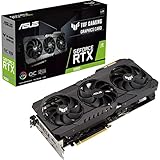

Specifications Compared
| Spec | RTX 3080 12GB | RTX 4060 |
|---|---|---|
| Architecture | Ampere, 8 nm | Ada Lovelace, 5 nm |
| Release date | 11 January 2022 | 18 May 2023 |
| Launch MSRP | $799 | $299 |
| CUDA cores | 8,960 | 3,072 |
| Boost clock | 1,710 MHz | 2,460 MHz |
| Memory | 12 GB GDDR6X, 384-bit | 8 GB GDDR6, 128-bit |
| Bandwidth | 912.4 GB/s | 272.0 GB/s |
| L2 cache | 6 MB | 24 MB |
| TDP | 350 W | 115 W |
| Interface | PCIe 4.0 x16 | PCIe 4.0 x8 |
| Reference length / width | 285 mm, 2-slot | 240 mm, 2-slot |
| Outputs | 1x HDMI 2.1, 3x DisplayPort 1.4a | 1x HDMI 2.1, 3x DisplayPort 1.4a |
The numbers explain the result before any benchmark. The RTX 3080 12GB has nearly three times the CUDA cores and more than three times the memory bandwidth. The RTX 4060’s larger L2 cache helps it at 1080p, but it cannot make up for a 128-bit bus at higher resolutions.
On power connectors, the spec database lists a 12-pin for both, but that is misleading for retail cards. There was no Founders Edition of the RTX 3080 12GB, and partner boards typically use two or three 8-pin connectors. Most RTX 4060 cards use a single 8-pin plug.
Real-World Gaming Gap
Where the RTX 4060 sits
According to TechSpot’s (Hardware Unboxed) review, the RTX 4060 at 1440p performed at roughly RX 7600 / RX 6650 XT level and only about 9% faster than the RTX 3060, while trailing the RTX 3060 Ti by around 11-27% depending on the game. Tom’s Hardware measured it roughly 18-22% faster than the RTX 3060 and pointed to its 8 GB buffer and reduced bandwidth as limits at 1440p.
Where the RTX 3080 12GB sits
The RTX 3080 12GB is a slightly faster version of the original RTX 3080, a full performance tier above the RTX 3060 Ti. No major outlet published a direct two-card RTX 3080 12GB versus RTX 4060 article, but chaining the review data gives a consistent picture: the RTX 3080 12GB is roughly 50-65% faster at 1440p, with a smaller lead of around 35-50% at 1080p where CPU limits and the RTX 4060’s cache help. At 4K the gap widens further.
Approximate frame rates make it concrete. In demanding modern games at 1440p high, the RTX 4060 often lands in the 40-65 FPS range, while the RTX 3080 12GB typically sits in the 70-100 FPS range. These ranges vary considerably with settings, CPU, game patch and driver version.
Ray tracing
Both cards have dedicated RT cores, but the RTX 3080 12GB’s much larger chip keeps it ahead. Its 12 GB also matters here, because ray tracing raises memory use, and the RTX 4060’s 8 GB becomes a bottleneck in RT-heavy titles at 1440p.
DLSS and Frame Generation: The RTX 4060’s Card to Play
Both cards support DLSS Super Resolution, including the DLSS 4 transformer model. The difference is frame generation. The RTX 4060, as an RTX 40 card, supports DLSS Frame Generation, which inserts AI-generated frames and can raise displayed frame rates substantially in supported games. Multi Frame Generation remains exclusive to RTX 50 cards. The RTX 3080 12GB has no DLSS Frame Generation, though it can use FSR 3 frame generation in games that offer it.
Frame generation is useful, but it is not the same as real performance. It works best when the base frame rate is already around 50-60 FPS, and it adds some input latency. A card that renders 90 real frames will feel more responsive than one rendering 50 and displaying 90. So DLSS FG narrows the visible gap in some single-player games without reversing the overall result.
VRAM: 12 GB Versus 8 GB
- 1080p high: 8 GB works in most games; some new releases need texture settings dropped.
- 1440p high: 12 GB is comfortable; 8 GB increasingly causes stutter or texture pop-in in new titles.
- 1440p with ray tracing or frame generation: both features add memory load, which hits the 8 GB RTX 4060 harder.
The RTX 4060 also uses a PCIe 4.0 x8 interface. On an older PCIe 3.0 motherboard, that halves the link bandwidth, which costs a little performance and hurts more when the card spills out of its 8 GB. The RTX 3080 12GB’s x16 link avoids this.
Power and PSU Math
This is where the RTX 4060 wins decisively. Using GPU TDP plus CPU plus about 150 W of headroom:
- RTX 3080 12GB + 125 W CPU: 350 + 125 + 150 = 625 W. A quality 750 W PSU is the realistic choice, with enough 8-pin cables for the specific card.
- RTX 4060 + 125 W CPU: 115 + 125 + 150 = 390 W. A quality 450-550 W PSU is plenty.
The 235 W TDP difference also means much more heat. The RTX 3080 12GB needs a case with decent airflow, and partner cards often run 300 mm or longer with thick triple-fan coolers. Many RTX 4060 models are compact dual-fan or even single-fan cards that fit small-form-factor builds.
Running cost is a minor factor for most players: at four hours of gaming per day, an extra 235 W adds roughly 340 kWh per year, which matters more in regions with expensive electricity.
Value at Launch and Today
Setting the RTX 4060’s 1440p performance at 100 and the RTX 3080 12GB at about 158 (midpoint of the 50-65% range):
- RTX 4060: $299 / 100 = about $2.99 per performance point.
- RTX 3080 12GB: $799 / 158 = about $5.06 per performance point.
At launch MSRP the RTX 4060 was far better value per frame. Used prices change the picture: the RTX 3080 12GB commonly trades around $320-$420 used and the RTX 4060 around $200-$260 used, depending on condition and region. At those prices, the RTX 3080 12GB is often equal or better per frame, but only if you can supply the power and cooling it needs.
Pick X If, Pick Y If
| Your situation | Pick |
|---|---|
| 1440p gaming, 144 Hz monitor | RTX 3080 12GB |
| 1080p, mostly esports, power-efficient build | RTX 4060 |
| PSU under 650 W and no plan to replace it | RTX 4060 |
| Small-form-factor or low-airflow case | RTX 4060 |
| Single-player games where frame generation is supported | RTX 4060 is viable; RTX 3080 12GB still faster in real frames |
| Ray tracing at 1440p | RTX 3080 12GB |
| 4K with DLSS upscaling | RTX 3080 12GB |
| Want AV1 hardware encoding for streaming | RTX 4060 (Ada adds AV1 encode) |
Used RTX 3080 12GB Checklist
Many RTX 3080 cards spent time mining, so ask about prior use, check the fans for wobble or noise, and look at memory junction temperatures in a monitoring tool if possible; GDDR6X runs hot, and worn thermal pads are common on older cards. Confirm the number of 8-pin connectors and the card length before buying. A card that needs three 8-pin plugs will not work with a PSU that only provides two.
Final Call
For pure performance, the RTX 3080 12GB is the stronger card by a wide margin and the better choice for 1440p. The RTX 4060 is not an upgrade from it; it is a smaller, cooler, cheaper-to-run card that leans on DLSS Frame Generation to look competitive. If your build has a modest PSU, a compact case or targets 1080p, the RTX 4060 is the sensible fit. Otherwise the RTX 3080 12GB gives far more real frames for the money on the used market.
Frequently Asked Questions
Is the RTX 4060 better than the RTX 3080 12GB?
No. The RTX 3080 12GB is substantially faster in real rendering performance, roughly 50-65% at 1440p based on published review data. The RTX 4060’s advantages are lower power draw, DLSS Frame Generation support and AV1 encoding.
Can DLSS 3 Frame Generation make the RTX 4060 match the RTX 3080 12GB?
It can raise the displayed frame rate in supported games to a similar number, but the generated frames do not improve responsiveness the way real frames do. Input latency follows the base frame rate, which stays much lower on the RTX 4060. In games without frame generation the gap remains large.
What PSU does the RTX 3080 12GB need?
With a typical gaming CPU, a quality 750 W unit is the realistic minimum. The card’s 350 W TDP plus around 125 W for the CPU and about 150 W headroom adds up to roughly 625 W. It also needs two or three 8-pin PCIe cables depending on the partner model.
Is the RTX 4060 good on a PCIe 3.0 motherboard?
It works, but its x8 interface runs at half the bandwidth on PCIe 3.0. The loss is usually small when the game fits within 8 GB of VRAM. It becomes more noticeable when a game exceeds the memory buffer.
Should I upgrade from an RTX 3080 12GB to an RTX 4060?
No, that would be a performance downgrade. An RTX 3080 12GB owner looking for more speed should look at current RTX 50 or RX 9000 cards in a higher tier, not at mainstream RTX 40 models.

