
For pure gaming, the RTX 3080 12GB is the better buy. The RTX 3090 Ti is only about 15-25% faster but launched at two and a half times the price, draws 100 W more, and needs a three-slot case and a 16-pin power setup. The 3090 Ti makes sense for buyers who need 24 GB of VRAM for 3D rendering, video work or local AI, or 4K ray-tracing players who want the last bit of Ampere performance and can find one at a fair used price.
As an Amazon Associate we earn from qualifying purchases at no extra cost to you.
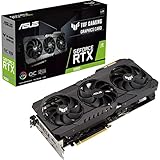
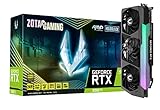

Top 3 picks at a glance
Same Chip, Very Different Tiers
Both cards use NVIDIA’s GA102 silicon and launched within about two weeks of each other in January 2022. The RTX 3080 12GB was a mid-cycle refresh of the 3080, adding more memory and a wider bus. The RTX 3090 Ti was Ampere’s final flagship, with the GA102 die fully enabled, faster GDDR6X, and a 450 W power target. Because the architecture is shared, the gap between them comes down to cores, memory and power. Neither has any feature the other lacks.
Spec Comparison
| Specification | RTX 3080 12GB | RTX 3090 Ti |
|---|---|---|
| Architecture / process | Ampere, 8 nm | Ampere, 8 nm |
| Release date | 11 January 2022 | 27 January 2022 |
| Launch MSRP | $799 | $1,999 |
| CUDA cores | 8,960 | 10,752 |
| Boost clock | 1,710 MHz | 1,860 MHz |
| Memory | 12 GB GDDR6X | 24 GB GDDR6X |
| Bus / bandwidth | 384-bit / 912.4 GB/s | 384-bit / 1.01 TB/s |
| L2 cache | 6 MB | 6 MB |
| TDP | 350 W | 450 W |
| Power connector (spec listing) | 1x 12-pin | 1x 16-pin |
| Length / slots | 285 mm / 2-slot | 336 mm / 3-slot |
| Outputs | 1x HDMI 2.1, 3x DP 1.4a | 1x HDMI 2.1, 3x DP 1.4a |
The 3090 Ti has 20% more CUDA cores, a higher boost clock, about 11% more bandwidth and double the memory. On paper that suggests a gap of roughly 20-25% where the GPU is the bottleneck, and reviews broadly agree.
Gaming Performance
Rasterization
Benchmark aggregates and the major review outlets’ relative-performance charts put the RTX 3090 Ti roughly 15-20% ahead of the 3080 12GB on average. At 4K, where the extra cores and bandwidth matter most, the gap is closer to 20-25%. At 1440p it narrows to roughly 10-18%. At 1080p, both cards are often limited by the CPU, and the difference can drop to single digits.
As an illustration, a demanding game at 4K high settings running around 60 fps on a 3080 12GB would usually land around 70-75 fps on a 3090 Ti. Exact results depend on the game, settings, CPU and patch level. Both cards benefit greatly from DLSS at 4K.
Ray tracing
RT performance scales with the same core and clock advantages, so the 3090 Ti typically leads by a similar 15-25% in ray-traced games. It doesn’t change the experience the way an architectural jump would. If a path-traced game needs DLSS Performance mode on the 3080 12GB, it will very likely need DLSS Balanced or Performance on the 3090 Ti as well.
Upscaling and Frame Generation
Feature support is identical. Both cards support DLSS Super Resolution with the transformer model, DLSS Ray Reconstruction, Reflex, NVENC and the NVIDIA Broadcast and Studio tools. Neither supports DLSS Frame Generation or Multi Frame Generation, which require RTX 40 and RTX 50 hardware. Both can use FSR 3 frame generation where games offer it. If frame generation is a priority, a current RTX 50 card is the better path than either of these.
VRAM: 12 GB vs 24 GB
For gaming in 2026, 12 GB is enough at 1440p in almost every title and works at 4K with sensible texture settings. A few heavily modded games and extreme 4K path-traced settings can exceed it, and that’s where the 3090 Ti’s 24 GB prevents stutter. Gaming is not where 24 GB really pays off, though:
- Local AI: Larger language models and image-generation pipelines that won’t fit in 12 GB run fully in GPU memory on 24 GB.
- 3D rendering: Complex Blender or Unreal scenes can fail or fall back to slower paths when they exceed VRAM.
- Video editing: 8K and multi-layer 4K timelines with GPU effects benefit from the extra space.
If any of those describe your workload, the 3090 Ti, or a used RTX 3090, may be worth the premium. If you only game, the extra memory mostly goes unused.
Power, PSU and Physical Size
PSU sizing worked example
- RTX 3080 12GB: 350 W + 125 W CPU + 150 W headroom = 625 W, so a quality 750 W unit, or 850 W with a high-power CPU.
- RTX 3090 Ti: 450 W + 125 W + 150 W = 725 W, so 850 W is the minimum, and 1000 W gives comfortable margin for the sharp transient spikes GA102 flagships are known for.
Connectors
The RTX 3080 12GB’s spec listing shows a 12-pin connector, but most retail partner cards use two or three standard 8-pin plugs. The RTX 3090 Ti was the first card to use the 16-pin connector widely, and partner cards came with adapters that take three or four 8-pin cables. Make sure the 16-pin plug is fully seated, and leave room so the cable doesn’t bend sharply right at the connector.
Case fit
The 3080 12GB reference spec is 285 mm and two slots, though many partner cards are 2.5-3 slots and over 300 mm long. The 3090 Ti is 336 mm and three slots in its reference form, and several partner models are larger still. Small mid-towers and most SFF cases can’t take a 3090 Ti, so measure before buying.
Heat, Noise and Memory Temperatures
An extra 100 W of rated power has to go somewhere. The 3090 Ti’s large coolers generally keep the GPU core at reasonable temperatures, but the case has to remove roughly a third more heat than with a 3080 12GB, which raises fan noise across the whole system in warm rooms. The 3090 Ti also moved all 24 GB of its memory to the front of the board, using higher-density modules, which avoided the hot rear-mounted memory that troubled the original RTX 3090. On used cards of either model, GDDR6X memory temperatures are worth checking with monitoring software during a long gaming session. Worn thermal pads are a common cause of memory overheating, and replacing them is an inexpensive fix.
Value Math
At launch MSRP, with the 3090 Ti at 100 on a 4K index and the 3080 12GB at about 82, the 3080 12GB cost $9.74 per point ($799 / 82) and the 3090 Ti $19.99 per point ($1,999 / 100). The flagship cost roughly twice as much per unit of gaming performance.
Used prices narrow but don’t close that gap. A used RTX 3080 12GB typically sells for about $320-$400, and a used RTX 3090 Ti for about $700-$900. That’s still around twice the money for about a fifth more frames. The 24 GB of memory is what keeps 3090 Ti prices high, and that’s driven mostly by AI and creative demand, not gaming.
Pick X If, Pick Y If
| Priority | Pick | Notes |
|---|---|---|
| 1440p high-refresh gaming | RTX 3080 12GB | The 3090 Ti’s lead shrinks at 1440p |
| 4K gaming on a budget | RTX 3080 12GB | DLSS Quality closes most of the gap |
| 4K maximum settings with RT | RTX 3090 Ti | About 20-25% more headroom at 4K |
| Local AI, 3D rendering, 8K video | RTX 3090 Ti | 24 GB fits larger models and scenes |
| 750 W PSU, mid-tower case | RTX 3080 12GB | Avoids a PSU upgrade and 3-slot clearance issues |
| Wants frame generation | Neither | Look at RTX 5070 / 5070 Ti-class cards |
Frequently Asked Questions
How much faster is the RTX 3090 Ti than the RTX 3080 12GB?
Roughly 15-20% on average and about 20-25% at 4K, based on published review data and benchmark aggregates. At 1080p the gap often falls to single digits because of CPU limits. Actual results depend on the game and settings.
Is 12 GB of VRAM enough for 4K gaming?
For most games at 4K with high textures and DLSS, yes. A handful of extreme path-traced or heavily modded games can exceed 12 GB. Lowering texture quality one step usually fixes it.
Does the RTX 3090 Ti need a new power supply?
Plan on at least a quality 850 W unit, and 1000 W with a high-power CPU. The card uses a 16-pin connector, either natively from an ATX 3.x PSU or through the bundled multi-8-pin adapter.
Is a used RTX 3090 a better alternative than the 3090 Ti?
Often, yes, for buyers who mainly want 24 GB. The RTX 3090 is only modestly slower than the 3090 Ti, usually sells for less used, and draws less power. Watch for memory temperature problems on some 3090 models, which have GDDR6X on the back of the board.
Can either card use DLSS Frame Generation?
No. DLSS Frame Generation requires an RTX 40 or RTX 50 series GPU. Both cards do support DLSS upscaling, including the transformer model, and can use FSR 3 frame generation in supported games.

