
The RTX 2080 Ti and RTX 4060 Ti 16GB deliver nearly identical raw gaming performance, so the RTX 4060 Ti 16GB is the better pick for most buyers thanks to DLSS Frame Generation, 16 GB of VRAM and roughly 85 W lower power draw, while a used RTX 2080 Ti makes sense only when it is clearly cheaper. The newer card is not meaningfully faster in native rendering; its advantages are features, efficiency and memory capacity.
As an Amazon Associate we earn from qualifying purchases at no extra cost to you.

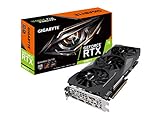

Our Top Picks
Top 3 picks at a glance
Two Routes to the Same Frame Rate
These cards arrive at similar performance from opposite directions. The RTX 2080 Ti was NVIDIA’s 2018 flagship: a huge Turing chip with a 352-bit memory bus and 616 GB/s of bandwidth. The RTX 4060 Ti 16GB is a midrange Ada Lovelace card with the same 4352 CUDA core count, much higher clocks, a 32 MB L2 cache and a narrow 128-bit bus. Ada’s large cache compensates for the low bandwidth at 1080p and 1440p, but the 2080 Ti’s wide bus can still help at 4K.
Specification Comparison
| Specification | GeForce RTX 2080 Ti | GeForce RTX 4060 Ti 16GB |
|---|---|---|
| Architecture | Turing | Ada Lovelace |
| Release date | 20 September 2018 | 18 May 2023 |
| Launch MSRP | $999 | $499 |
| CUDA cores | 4352 | 4352 |
| Boost clock | 1545 MHz | 2535 MHz |
| Process | 12 nm | 5 nm |
| Power (TDP) | 250 W | 165 W |
| Memory | 11 GB GDDR6 | 16 GB GDDR6 |
| Memory bus | 352-bit | 128-bit |
| Memory bandwidth | 616.0 GB/s | 288.0 GB/s |
| L2 cache | 5.5 MB | 32 MB |
| Interface | PCIe 3.0 x16 | PCIe 4.0 x8 |
| Power connectors | 2x 8-pin | Single 8-pin on most retail cards |
| Length / width | 267 mm / 2-slot | 240 mm / 2-slot |
| Display outputs | 1x HDMI 2.0, 3x DisplayPort 1.4a, 1x USB Type-C | 1x HDMI 2.1, 3x DisplayPort 1.4a |
Some spec databases list a 16-pin connector for the RTX 4060 Ti 16GB, but there was no Founders Edition of the 16 GB model, and the vast majority of partner cards use a single standard 8-pin plug.
Raster Results: Essentially a Tie
According to Tom’s Hardware’s 2022-2024 GPU benchmarks hierarchy, the RTX 4060 Ti 16GB is about 4-7% faster at 1080p, the two are level at 1440p ultra, and the RTX 2080 Ti pulls about 5% ahead at 4K ultra thanks to its much wider memory bus. Tech4Gamers’ direct comparison found the opposite tilt at lower resolutions, with the RTX 2080 Ti narrowly ahead by about 1% at 1080p and around 4-5% at 1440p. Taken together, the gap is within roughly 5% either way, which is too small to notice without a frame counter.
For a sense of scale, both cards land in a similar band: around 100 fps at 1080p ultra and mid-70s fps at 1440p ultra in Tom’s Hardware’s older suite, with recent heavy releases running lower. Results vary with game, settings, CPU and driver version.
Ray tracing
Ada’s third-generation RT cores give the RTX 4060 Ti 16GB a small edge in ray tracing. Tom’s Hardware’s ray tracing tests show it about 3-5% faster at 1080p and 1440p ultra. Neither is a strong native ray tracing card at 1440p, so both rely on DLSS to make RT playable.
DLSS Support Is the Deciding Factor
Both are RTX cards with Tensor cores, so both support DLSS 4 Super Resolution with the transformer model and NVIDIA Reflex. The difference is frame generation:
- RTX 4060 Ti 16GB: supports DLSS Frame Generation, which can substantially raise displayed frame rates in supported games when the base frame rate is already reasonable.
- RTX 2080 Ti: no DLSS Frame Generation; it can use FSR 3 frame generation in games that offer it.
- Neither: supports DLSS Multi Frame Generation, which is exclusive to the RTX 50 series.
In games with DLSS Frame Generation, the RTX 4060 Ti 16GB can feel noticeably smoother than the RTX 2080 Ti despite similar native performance. Frame generation adds some latency, so it works best when the base frame rate is around 50-60 fps or higher.
VRAM and Bandwidth Trade-Off
The RTX 4060 Ti 16GB’s 16 GB is the larger buffer, and Tom’s Hardware’s 4K results show it handling memory-heavy situations better than the 8 GB version of the same card. The RTX 2080 Ti’s 11 GB remains adequate for 1440p in most games, but it is closer to the limit in 2026 releases with ultra textures. Bandwidth favors the 2080 Ti, which helps at 4K, but the 4060 Ti 16GB’s capacity advantage is more valuable for avoiding stutter.
- 1080p: both have ample memory.
- 1440p ultra: 11 GB is usually enough; 16 GB has room to spare.
- 4K or heavy ray tracing: both are limited by GPU speed more than VRAM, but 16 GB avoids texture swaps.
Power, PSU and the PCIe Question
Using GPU power plus CPU power plus about 150 W of headroom:
- RTX 2080 Ti: 250 W + 125 W + 150 W = about 525 W, so 600-650 W is sensible (NVIDIA recommended 650 W).
- RTX 4060 Ti 16GB: 165 W + 125 W + 150 W = about 440 W, so 550 W is enough (NVIDIA’s guidance for the 4060 Ti family).
The 85 W gap also adds up on the electricity bill. At three hours of gaming per day and a rate of about $0.17 per kWh, 85 W works out to roughly 93 kWh and about $16 per year. That is not huge, but it partly offsets a lower used price on the RTX 2080 Ti over a few years.
The RTX 4060 Ti 16GB uses a PCIe 4.0 x8 link. On a PCIe 3.0 motherboard it runs at PCIe 3.0 x8, which typically causes a small loss. The RTX 2080 Ti uses a full x16 link, so it is the safer option for older PCIe 3.0 platforms. Both cards are dual-slot; at 240 mm the RTX 4060 Ti 16GB is a little shorter than the 267 mm RTX 2080 Ti, though partner cards of both vary.
Value Check
At launch, the RTX 4060 Ti 16GB matched the RTX 2080 Ti’s performance for half the original MSRP ($499 versus $999). Today, the comparison is mostly between a used RTX 2080 Ti and a new or used RTX 4060 Ti 16GB. Broad typical ranges are around $250-$330 used for an RTX 2080 Ti and roughly $300-$400 for an RTX 4060 Ti 16GB, depending on condition and whether it is new. With similar performance, the 2080 Ti offers about 15% better price per frame at the middle of those ranges, but gives up frame generation, a warranty (if buying new) and efficiency.
Decision Table by Budget and Resolution
| Situation | Better pick |
|---|---|
| 1080p/1440p, wants DLSS Frame Generation | RTX 4060 Ti 16GB |
| Lowest cost for this performance level | RTX 2080 Ti (used) |
| PCIe 3.0 motherboard | RTX 2080 Ti (full x16 link) |
| 550 W power supply or compact case | RTX 4060 Ti 16GB |
| Long-term VRAM headroom or AI hobby use | RTX 4060 Ti 16GB |
| 4K with upscaling | Roughly even; 2080 Ti slightly faster natively, 4060 Ti 16GB has frame gen |
Both are previous-generation or older parts. The current RTX 5060 Ti 16GB is the direct successor to the RTX 4060 Ti 16GB and adds Multi Frame Generation, so check its price before settling on either card here.
Frequently Asked Questions
Is the RTX 4060 Ti 16GB faster than the RTX 2080 Ti?
Not meaningfully. Tom’s Hardware’s data shows the two within about 5% of each other, with the 4060 Ti 16GB slightly ahead at 1080p and the 2080 Ti slightly ahead at 4K. With DLSS Frame Generation enabled, the 4060 Ti 16GB pulls ahead in supported games.
Does the RTX 2080 Ti support DLSS 4?
It supports DLSS 4 Super Resolution with the transformer model, like every RTX card. It does not support DLSS Frame Generation or Multi Frame Generation. FSR 3 frame generation is an alternative in games that include it.
Is 11 GB on the RTX 2080 Ti still enough?
For 1080p and most 1440p gaming, yes. Some 2026 games at 1440p or 4K with maximum textures approach or exceed 11 GB. The RTX 4060 Ti 16GB has more margin for those cases.
Which card uses less power?
The RTX 4060 Ti 16GB is rated at 165 W, compared with 250 W for the RTX 2080 Ti. That means less heat, quieter cooling and a smaller power supply requirement. NVIDIA’s guidance is about 550 W versus 650 W.
Is a used RTX 2080 Ti a risky buy?
It can be, since many are now seven or more years old. Check fan condition, temperatures under load and whether the thermal paste or pads have been serviced. Buying from a seller who allows testing or returns reduces the risk.

