
Every streamer, podcaster, and casual gamer eventually hits the same wall: the built-in microphone on their webcam or headset makes them sound like they are speaking through a coffee can. The problem is not always the mic itself. A cheap condenser with the wrong pickup pattern can capture more keyboard clicks than voice, while a well-matched dynamic mic can make a noisy bedroom feel like a vocal booth. Choosing the right pc mic means understanding what your room, your platform, and your budget actually demand.
What separates a genuinely good microphone from a forgettable one comes down to a handful of factors that manufacturer spec sheets rarely explain clearly. Gain staging matters more than sample rate. Pickup pattern alignment matters more than the number of buttons on the body. And whether you get XLR, USB, or both determines how your setup scales over the next two years. We compared published specifications, checked owner-reported experiences across major retail platforms, and ranked every product below on how well it solves a specific use case at its price point in 2026.
As an Amazon Associate we earn from qualifying purchases at no extra cost to you.


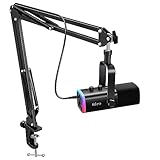


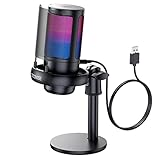

Top 3 picks at a glance
Quick Picks
| Product | Best for | Price |
|---|---|---|
| TONOR TC310+ | Streamers who want a complete kit under $30 | $29.99 |
| FIFINE AM8 | Gamers upgrading from USB who want XLR flexibility | $56.99 |
| ZealSound Podcast Mic | Mobile-first creators who also record on PC | $29.74 |
| FIFINE AM8T | Full kit buyers who want a boom arm included | $67.99 |
| Amazon Basics Condenser | Minimum viable upgrade from a webcam mic | $25.19 |
| Razer Seiren V3 Mini | Clean desk setups with tight spaces | $39.99 |
| RGB Condenser Mic | Gift buyers and PS5 streamers on a budget | $23.99 |
| Blue Yeti | Multi-pattern versatility for podcasters and musicians | $101.15 |
How We Picked
We filtered this list on four criteria. First, pickup pattern appropriateness: a cardioid or supercardioid pattern suits untreated rooms, while multi-pattern mics justify their cost only if you actually switch between configurations. Second, gain control quality: built-in analog gain knobs matter far more than software mixers for beginners who do not own an interface. Third, connectivity headroom: USB-only mics cap your upgrade path, while dual USB/XLR models let you grow into a professional signal chain without replacing the capsule. Fourth, value relative to price: a $25 mic that nails one job beats a $100 mic that does ten jobs mediocrely.
The 8 Best PC Mic in 2026
1. TONOR TC310+
For the streamer who has never owned a standalone microphone and wants to sound professional before spending more than thirty dollars, this kit delivers a complete starting point. The condenser capsule paired with cardioid pickup handles voice recording well in quiet-to-moderate rooms, and the included boom arm eliminates desk-shake noise that plagues stand-mounted budget mics.
- Boom arm and stand both included at this price, removing hidden accessory costs
- Tap mute and gain control give real-time adjustments without software
- Condenser capsule picks up background noise in untreated or noisy environments
Skip it if you stream from a room near a busy street or HVAC system; a dynamic mic handles those conditions better.
2. FIFINE AM8
This dynamic USB/XLR microphone targets gamers who want broadcast-style voice reproduction without a separate interface right now. The dynamic capsule rejects ambient noise aggressively, making it a strong choice for bedrooms, dorms, and shared offices. Owners consistently praise its warm proximity effect for voice, and the dual connectivity means you can plug into a PC via USB today and a mixer or interface tomorrow.
- Dynamic pickup pattern naturally suppresses keyboard and room noise
- XLR and USB outputs extend the upgrade path without replacing the mic
- Requires closer mouth-to-grille distance than a condenser for optimal gain
Skip it if you need to capture instruments, group conversations, or any source more than four inches away.
3. ZealSound Podcast Mic
A cross-platform USB condenser designed for creators who record on phones and tablets as often as on a computer. The noise cancellation processing is software-adjacent rather than capsule-level, which means it works through algorithmic filtering that some owners find effective for voice but others note introduces a slight digital harshness. The built-in monitoring and echo controls matter for podcasters who need to hear remote guests clearly.
- Compatible with iPhone, iPad, Android, and Mac alongside PC
- Hardware mute and volume buttons keep workflow simple
- Noise cancellation is algorithmic and can thin out lower voice frequencies
Skip it if you only record on a desktop and do not need mobile compatibility.
4. FIFINE AM8T
The AM8T pairs the same dynamic capsule as the AM8 with an added boom arm kit, targeting buyers who want a complete streaming setup in one purchase. The package handles the mechanical side of clean audio, which matters more than most beginners realize. Owners report the included arm is sturdy for its price tier and the cable management keeps desk areas tidy.
- Boom arm included, removing the need to shop for compatible accessories
- Dynamic capsule handles noisy rooms without aggressive processing
- At $68, you can find better standalone arms separately if arm quality is a priority
Skip it if you already own a boom arm or if your desk setup uses a fixed stand.
5. Amazon Basics Condenser
The absolute floor for a meaningful pc mic upgrade. At roughly twenty-five dollars, this cardioid condenser with a 360-degree adjustable stand gives podcasters and casual streamers a recognizable jump in voice clarity over any webcam or headset. The build is utilitarian and the stand is plastic, but the capsule performs well for spoken word in quiet rooms.
- Plug-and-play USB with no drivers or software required
- Lowest price point on this list with a functioning cardioid pattern
- Plastic stand and short cable limit positioning and durability
Skip it if you need gain control on the body or plan to mount it on an arm.
6. Razer Seiren V3 Mini
A supercardioid condenser in an extremely compact form factor, designed for users who want quality audio without a tall desk footprint. The supercardioid pattern offers tighter rear rejection than a standard cardioid, and the integrated pop filter saves you from buying one separately. At roughly forty dollars, it sits in a sweet spot between the no-name budget tier and the hundred-dollar prosumer shelf.
- Supercardioid pattern rejects more off-axis noise than a standard cardioid
- Integrated pop filter and low-profile design suit minimal desk setups
- Limited built-in gain adjustment may require software control
Skip it if you already own a boom arm and want maximum flexibility over compactness.
7. RGB Condenser Mic
The cheapest option on this list at under twenty-four dollars, positioned primarily as a visual accessory that also captures acceptable audio. It ships with a quick-mute button and a pop filter, which are meaningful inclusions at this price. Owners buying it as a gift for younger gamers report it meets expectations for casual Discord calls and early streaming experiments, though audiophiles will find it limiting.
- Includes pop filter and quick mute at the lowest price on this list
- RGB lighting and compact footprint suit younger or casual setups
- Audio quality is a step below the TONOR despite a similar price
Skip it if you care more about voice reproduction than aesthetics; the TONOR TC310+ is better at a similar cost.
8. Blue Yeti
The default recommendation for anyone who needs to switch between pickup patterns without buying a second microphone. Four selectable patterns (cardioid, bidirectional, omnidirectional, and stereo) make it a legitimate studio tool for interviews, round-table podcasts, and simple music recording. The Blue VO!CE effects software adds compression and EQ processing that reduces post-production workload for non-engineers.
- Four pickup patterns handle solo podcasts, interviews, and ambient recording
- Blue VO!CE software adds real-time processing without a separate interface
- Large footprint and weight make it awkward on boom arms designed for smaller mics
Skip it if your room is untreated and noisy; its condenser capsule and multiple patterns will capture more background than a dynamic alternative.
Buying Guide
Condenser vs. Dynamic: Matching the Capsule to Your Room
The single most consequential choice in any pc mic purchase is whether you buy a condenser or a dynamic capsule. Condensers are more sensitive and capture wider frequency ranges, which is excellent in a quiet, treated space or when recording instruments. In an untreated bedroom with HVAC hum, mechanical keyboard noise, or traffic outside the window, that same sensitivity works against you. Dynamic capsules need closer mouth positioning and higher gain, but they naturally roll off low-level ambient sound. If your recording space is not silent, buy a dynamic mic before you buy anything else on this list.
Pickup Pattern and Off-Axis Rejection
Cardioid patterns reject sound from directly behind the capsule, while supercardioid patterns extend that rejection further but introduce a small rear lobe. Bidirectional patterns capture front and back simultaneously, which suits two-person interviews but fails in noisy single-operator environments. Omni and stereo patterns are for controlled studio use. For most home recording situations, cardioid or supercardioid is the correct answer. A multi-pattern microphone like the Blue Yeti only justifies its extra cost if you genuinely plan to rotate between configurations.
USB, XLR, or Both: Your Upgrade Path
A USB-only microphone connects directly to a computer and handles digital conversion internally. It is the simplest entry point but caps your signal chain permanently. An XLR-only microphone requires a separate audio interface or mixer, adding cost and desk clutter. A dual USB/XLR model like the FIFINE AM8 lets you start simple and transition to an interface later without replacing the microphone. For buyers who expect to grow their setup over two or three years, the dual option is the most cost-effective long-term strategy.
Our Verdict
Our top pick is the FIFINE AM8. It solves the hardest problem for most home users (noise rejection) with the best long-term flexibility (dual USB/XLR) at a price that undercuts most competitors by a wide margin. The ZealSound Podcast Mic is our budget pick at $29.74, but only if you genuinely need cross-platform mobile compatibility; otherwise the TONOR TC310+ at $29.99 is a better pure-pc value. If you record in a genuinely quiet, treated room and need stereo or omnidirectional patterns for music or round-table podcasts, the Blue Yeti remains the right answer despite its higher price.
FAQ
Do I need an audio interface for a pc mic?
Not if the microphone connects via USB, since the analog-to-digital conversion happens inside the mic body. You only need a separate interface if you use an XLR-only microphone or if you want higher-quality conversion than a USB mic’s internal chip provides.
Why does my mic sound quiet even with gain turned up?
Dynamic microphones have lower output levels than condensers by design. If you are using a USB dynamic mic and it sounds weak, check whether your operating system input volume is set below maximum, and consider moving the capsule closer to your mouth. The proximity effect of a dynamic capsule increases bass and volume as distance decreases.
Can I use a USB pc mic with a PlayStation or Xbox?
PS4 and PS5 accept most USB microphones directly through their audio settings. Xbox Series X and Series S support USB mics as well, but the older Xbox One generation required a specific compatibility certification. Always verify your console generation before purchasing.
Is a pop filter necessary with an integrated pop filter?
An integrated pop filter handles most plosive sounds adequately for spoken word. If you record aggressive vocal performances, fast speech patterns, or find that integrated mesh still lets through percussive breath hits, an external pop shield or foam windscreen adds another layer of protection.


