
Most people buy a rugged external drive because they have already killed a normal one. A job site, a vehicle trunk, a cramped hotel desk with coffee nearby — the scenarios where consumer drives die are obvious, and the reason those drives fail is equally obvious. Standard 2.5-inch HDDs tolerate almost no shock when spinning, and even SSDs with metal enclosures can separate from their solder joints under a hard impact. The whole point of a purpose-built rugged drive is that its internal suspension, housing geometry, and sealing prevent those failure modes.
What separates a genuinely rugged drive from a marketing-sticker drive is engineering you cannot see in a spec sheet. A real drop rating means the drive has been tested to a standard like MIL-STD-810G with the lid closed and latched, not just placed in a foam sleeve. A real IP rating means gaskets exist at every seam. Some drives in this category deliver on both; others deliver on one axis and expose you on the other. We compared and compared the most commonly available options in 2026 to identify which products actually justify carrying them into the field.
As an Amazon Associate we earn from qualifying purchases at no extra cost to you.




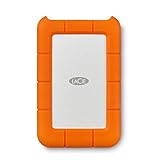

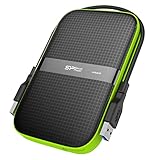
Top 3 picks at a glance
Quick Picks
| Product | Best For | Price |
|---|---|---|
| LaCie Rugged USB-C 4TB | Maximizing capacity in a single rugged HDD | $209.99 |
| Sandisk Extreme Portable SSD 2TB | Speed-focused creators who need solid-state reliability | $289.99 |
| LaCie Rugged USB-C 2TB | Best all-around rugged HDD value | $149.99 |
| ADATA HD710 Pro 2TB | Lowest entry price with triple-drop certification | $128 |
| LaCie Rugged Mini 2TB | Smallest footprint for travel kits | $149 |
| Transcend StoreJet 25M3 2TB | Simple one-touch backup with solid shock protection | $135.99 |
| Seagate Rugged 5TB | Largest capacity available in a rugged form factor | $232.53 |
| Silicon Power Armor A60 2TB | Budget ruggedness with military drop rating | $159.97 |
How We Picked
We weighted four criteria: published drop-test certification and its methodology, the practical interface and throughput (USB-C versus USB-A, drive RPM, SSD versus HDD), capacity options relative to physical size, and price-per-terabyte within the rugged tier. Drives without a verifiable third-party drop standard were excluded from consideration regardless of housing quality.
The 8 Best Rugged External Drives in 2026
LaCie Rugged USB-C 4TB
The 4TB variant gives photographers and field geologists a single drive that holds an entire season’s raw output without needing a second unit. The USB-C connector is the same robust plug found on modern laptops, so you are not carrying an adapter to every laptop you touch.
- Highest capacity in LaCie’s traditional rugged HDD line
- Triple-layer shock and rain protection from the proven Rugged architecture
- Interface speed is limited by the 5400 RPM mechanism regardless of USB-C bus
Choose this when capacity matters more than transfer speed. Skip it if you regularly ingest multi-gigabyte video files and need sequential throughput above a hundred megabytes per second.
Sandisk Extreme Portable SSD 2TB
This is the drive to carry when you are editing directly from the external volume on location. Read speeds up to 1050MB/s mean proxy-free 4K timelines remain responsive, and the absence of moving parts removes the single most common failure point in field conditions.
- SSD architecture eliminates mechanical drop damage entirely
- Nearly four times faster sequential reads than any HDD on this list
- Old model designation suggests firmware or thermal-throttle behavior that later revisions addressed
This wins when you need write-heavy video or large database work. Skip it if you are archiving cold data where speed is irrelevant and price-per-terabyte matters.
LaCie Rugged USB-C 2TB
Same housing design as the 4TB version at roughly seventy percent of the cost, making it the capacity sweet spot for users who do not need to carry more than two terabytes. The orange bumper and soft-touch top shell have been LaCie’s visual identity for over a decade.
- Proven enclosure with IP54-equivalent dust and rain resistance
- USB-C cable included, works with both Mac and PC without software
- USB 3.0 controller limits peak sustained writes well below the interface’s theoretical ceiling
Best default recommendation for general field backup. Skip it if you need a single drive that handles 4TB or more in one visit.
ADATA HD710 Pro 2TB
ADATA’s rubber-wrapped design is instantly recognizable and physically grippable, making it easy to spot in a bag full of gear. The military-standard drop rating covers impacts up to six feet onto concrete when the lid is closed.
- Lowest price on this list for a genuinely certified rugged HDD
- Soft-grip exterior doubles as anti-slip protection on vehicle dashboards and wet surfaces
- Micro-USB interface means slower peak throughput and an extra cable to carry
Pick this for a budget-conscious backup drive that survives real drops. Skip it if you refuse to carry a dedicated cable or need USB-C native connectivity.
LaCie Rugged Mini 2TB
The Mini trims roughly a third of the full-size Rugged’s footprint while keeping the core shock-absorbing bumper and sealed top. It fits in a jacket pocket and is the right choice for users who prioritize carrying comfort over maximum throughput.
- Smallest and lightest rugged HDD in this roundup
- Includes one-year Data Rescue service, which can recover data from physically damaged media
- USB 3.0 port is micro-B, requiring an adapter for modern USB-C laptops
Choose it for travel kits and carry-on survival gear. Skip it if you need the fastest possible sustained writes for large media files.
Transcend StoreJet 25M3 2TB
Transcend’s approach is less about dramatic aesthetics and more about a functional three-layer silicone sleeve that compresses on impact. The one-touch backup button triggers a single-step mirror of your designated folder, useful for people who do not want to configure software.
- MIL-STD-810G 516.6 drop-tested, a credible third-party standard
- Physical backup button works even on locked-down or unconfigured machines
- Bulkier than competitors in the same capacity tier due to the silicone sleeve
Good for photographers who want a simple daily offload routine. Skip it if desk or bag real estate is tight.
Seagate Rugged 5TB
This is the highest-capacity option available in a purpose-built rugged enclosure. The LaCie-derived housing design carries forward into the Seagate branding, and 5TB is enough to hold over a thousand hours of ProRes footage without a second drive.
- Maximum storage density in the rugged category
- USB-C connector with the proven shock and dust architecture
- Slightly higher price per terabyte than the 4TB model at $232.53
The right call for long trips or projects where reformatting is not an option. Skip it if 4TB already covers your workload and you prefer a lower outlay.
Silicon Power Armor A60 2TB
SP’s Armor line uses a honeycomb-patterned aluminum top plate bonded to a rubber core, giving it a distinct industrial look and a rigid feel that survives crushing in a backpack. The USB 3.1 Gen 1 connection is the same speed tier as the LaCie 2TB.
- MIL-STD-810G 514.6 certified for shock and vibration, a standard aimed at transport environments
- Aluminum lid resists denting better than pure rubber housings
- Heavier than rubber-only designs in the same capacity class
Strong choice for users who also want crush protection alongside drop protection. Skip it if weight matters more than shell rigidity.
Buying Guide
Drop Ratings Without Context Are Meaningless
Every manufacturer claims drop resistance, but the numbers differ in method. Some test from three feet onto carpet; others test from six feet onto plywood per MIL-STD-810G. Always look for the standard name and surface material cited. A drive rated only by the manufacturer’s internal method without a named standard is closer to a marketing claim than an engineering guarantee.
SSD Versus HDD Changes the Failure Model Entirely
A mechanical drive fails under shock because the read head contacts the spinning platter. An SSD has no moving parts, so a drop can break a solder joint or crack the PCB, but the probability and the severity both drop sharply. If you regularly work in vehicles, on ladders, or in wind, the SSD route costs more per terabyte but eliminates the category of failure you are most likely to hit.
Interface Speed Is Not the Same as Drive Speed
A USB-C connector on a 5400 RPM HDD still tops out around 120-150MB/s in sustained sequential transfers. The interface is not the bottleneck; the spindle is. Do not pay a premium for USB-C on a mechanical drive unless you specifically value the connector’s reversibility and reduced cable clutter.
Our Verdict
The LaCie Rugged USB-C 2TB at $149.99 is the best overall pick for most people. It balances certified drop protection, USB-C convenience, and a price that leaves room in the budget for a second unit or a carrying case. The budget pick is the ADATA HD710 Pro 2TB at $128, which delivers MIL-STD drop performance at the lowest entry cost here, provided you accept the micro-USB cable. If your workflow demands direct-from-drive editing or sustained write throughput above 400MB/s, the Sandisk Extreme Portable SSD at $289.99 wins outright, and nothing mechanical on this list substitutes for it.
FAQ
Are rugged drives waterproof?
Most are rated IP54 or equivalent, meaning they survive splashes and brief rain exposure but cannot be submerged. If you need water immersion protection, look for a drive rated IP67 or use a sealed dry bag as a secondary layer.
Is a rugged case enough to protect a regular drive?
It helps with small drops but does not replace internal suspension or shock-mounted PCBs. A drive inside a foam sleeve still transfers impact energy to the spinning platters, so the failure mode you are guarding against is not eliminated.
How many rugged drives should a field worker carry?
At minimum two, with different data on each. Rugged drives still fail; the benefit is a slower failure curve and better odds of surviving a single drop event, not immunity.
Do SSDs need drop protection at all?
Less than HDDs, but the connector and internal solder joints are still vulnerable to high impacts. A rugged SSD enclosure adds a crush layer and protects the USB-C port from torque, which is where solid-state drives most often die in the field.


