Our Top Picks
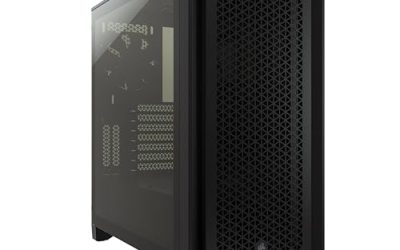
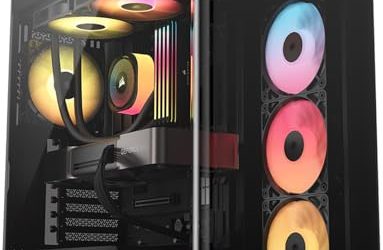
 MONTECH AIR 903 MAX High-Airflow E-ATX Mid-Tower PCAir 903 Max Black18.82 x 9.05 x 19.41 inches20.2 poundsCheck on Amazon
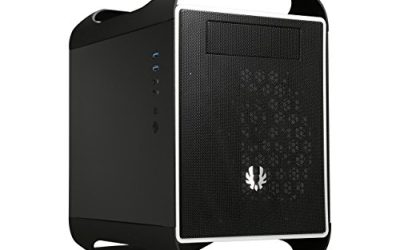
 LIAN LI LANCOOL 216 RGB Black ATX Mid-TowerMid-tower Case18.94 x 9.26 x 19.36 inches23.1 poundsCheck on Amazon
Top 3 picks at a glance

Intro
A PC case does far more than hold parts together. It sets the airflow path for the whole system, decides how large a graphics card and cooler can fit, and determines whether a build stays quiet during long gaming sessions. A well-chosen case also makes the build itself easier, with room to route cables and reach every connector without forcing a panel into place.


The cases in this guide sit in the value tier for gaming builds. Each one is a mid-tower or compact mid-tower with a tempered glass side panel, a mesh or perforated front for intake air, and support for standard ATX motherboards alongside smaller micro-ATX and Mini-ITX boards. A gaming PC needs steady intake air at the front, a clear exhaust path at the rear and top, and enough interior depth for a modern graphics card and a tall tower cooler.
Airflow is the first thing to look for in this tier. A solid glass front panel can look clean, yet it blocks the main intake path and forces fans to pull air through narrow side gaps. A mesh or perforated front lets intake fans draw cool air straight into the case, which keeps the graphics card and processor cooler under load. The difference shows up in fan speed and noise, because fans that do not have to fight a blocked front panel can run slower while moving the same amount of air.
Size and clearance decide whether the rest of the parts fit at all. Before choosing a case, check the maximum graphics card length, the maximum CPU cooler height, and the radiator support at the front and top. Cable management matters too: a deep channel behind the motherboard tray and a power supply shroud keep thick cables out of the airflow path.
The five cases below cover different strengths: a compact airflow tower, a proven airflow classic, a four-fan compact tower with USB Type-C, a wide E-ATX tower for very long graphics cards, and a tower with oversized intake fans.
At a Glance
| Case | Best For | Included Fans | Front Panel |
|---|---|---|---|
| NZXT H5 Flow RGB 2024 | Compact airflow builds | F360 RGB Core fan unit | Perforated |
| Corsair 4000D Airflow | Simple, proven airflow builds | Two 120mm fans | High-airflow mesh |
| Lian Li Lancool 207 | Four-fan cooling in a compact tower | Two 140mm ARGB and two 120mm PWM fans | Mesh |
| Montech AIR 903 MAX | Large graphics cards and E-ATX boards | Three 140mm ARGB PWM and one 140mm PWM fan | Mesh |
| Lian Li Lancool 216 | Oversized intake fans and quiet airflow | Two 160mm and one 140mm PWM fans | Mesh |
1. NZXT H5 Flow RGB 2024
The NZXT H5 Flow RGB 2024 is a compact ATX mid-tower built around airflow first. Its perforated front and top panels let intake and exhaust air move through the case without passing through a solid barrier, and the tempered glass side panel keeps the finished build visible from the desk. The compact footprint suits a smaller desk, while the interior still accepts a standard ATX motherboard and a long graphics card.
The headline feature is the included F360 RGB Core fan unit, a single frame that holds three RGB fans and mounts at the front of the case. A second airflow idea sits at the bottom: an angled fan mount near the power supply shroud directs air upward toward the graphics card, which draws most of its cooling air from below. Radiator support covers a 360mm radiator at the front and a 240mm radiator at the top.
Listing Features
- Compact ATX mid-tower with a perforated front and top for direct airflow
- Included F360 RGB Core fan unit at the front for intake and lighting
- Angled bottom fan mount that directs air toward the graphics card
- 360mm front radiator support and 240mm top radiator support
- Tempered glass side panel and a cable management system behind the tray
Considerations
- The compact interior leaves less spare room than a full mid-tower, so measure graphics card length and cooler height against the published limits before ordering.
- Front radiator mounting can reduce the maximum graphics card length, so plan the cooler and the card together.
2. Corsair 4000D Airflow
The Corsair 4000D Airflow is one of the most widely used airflow mid-towers, and its appeal is simplicity. The front panel is a high-airflow mesh design that lets intake fans draw air through the whole front of the case. Two 120mm fans come pre-installed, one at the front and one at the rear, giving a basic intake and exhaust path out of the box. The tempered glass side panel shows the motherboard, graphics card, and cable runs without adding a solid panel that blocks airflow.
Inside, the 4000D Airflow keeps a spacious and uncluttered layout. The motherboard tray has wide cable routing channels and tie points, and the power supply shroud hides the power supply and its spare cables from the main chamber. The case accepts ATX, micro-ATX, and Mini-ITX motherboards, and it has room for a long graphics card and a tall tower air cooler. The front supports up to a 360mm radiator and the top up to a 280mm radiator.
Listing Features
- High-airflow mesh front panel with a tempered glass side panel
- Two included 120mm fans for intake and exhaust
- Cable management system with routing channels and a power supply shroud
- Support for a 360mm front radiator and a 280mm top radiator
- Spacious interior for long graphics cards and tall air coolers
Considerations
- Only two fans are included, so a hot build may need one or two extra intake fans for the best airflow.
- The standard front panel does not include a USB Type-C port, so check the front I/O list when that port matters.
3. Lian Li Lancool 207
The Lian Li Lancool 207 is a compact ATX tower that ships with four pre-installed fans, which is unusual in this tier. Two 140mm ARGB fans and two 120mm PWM fans come fitted from the factory, so the case has a complete intake and exhaust path without any extra fan purchase. The mesh panels at the front and sides let those fans pull air through the case, and the tempered glass side panel keeps the interior visible.
Larger 140mm fans at the front move a large volume of air at lower speed than smaller fans, which keeps noise down during gaming. The ARGB lighting on the front fans shows through the mesh front, while the PWM control lets the motherboard adjust fan speed with temperature. A USB Type-C port sits on the front panel alongside the usual USB ports and audio jacks.
Listing Features
- Four pre-installed fans: two 140mm ARGB fans and two 120mm PWM fans
- Airflow-optimised mesh panels and a tempered glass side panel
- USB Type-C port on the front panel
- Compact ATX tower with support for ATX, micro-ATX, and Mini-ITX boards
- Rear-mounted power supply layout for a clear bottom chamber
Considerations
- The rear power supply mount changes the cable routing path, so plan the power cables before fitting the motherboard.
- The compact frame leaves less room for thick front radiators alongside a very long graphics card.
4. Montech AIR 903 MAX
The Montech AIR 903 MAX is the largest case in this guide, and its size is the point. It accepts E-ATX motherboards as well as ATX, micro-ATX, and Mini-ITX boards, and it has the interior depth for very long graphics cards. The mesh front panel runs the full height of the case, so intake air reaches the graphics card, the motherboard, and the storage area without passing through a solid front.
Four fans come pre-installed: three 140mm ARGB PWM fans and one 140mm PWM fan. Three large fans at the front move a large volume of air into the case, and the fourth fan at the rear pulls warm air out. The PWM control lets the motherboard slow the fans down when the system is idle.
The tempered glass side panel shows the full interior, while a USB Type-C port on the front covers modern phones, headsets, and external drives. The trade-off is desk space: this is a full mid-tower with an E-ATX frame, so measure the desk depth and height before ordering.
Listing Features
- E-ATX mid-tower with a full-height mesh front panel
- Four pre-installed fans: three 140mm ARGB PWM fans and one 140mm PWM fan
- Tempered glass side panel and a USB Type-C port on the front
- Support for very long graphics cards and large tower coolers
- Support for E-ATX, ATX, micro-ATX, and Mini-ITX motherboards
Considerations
- The wide E-ATX frame needs more desk space than a compact mid-tower, so measure the desk before ordering.
- A front-mounted radiator can reduce the maximum graphics card length, so plan the cooler and the card together.
5. Lian Li Lancool 216
The Lian Li Lancool 216 uses oversized intake fans to move air with less noise. Two 160mm PWM fans sit at the front, and one 140mm PWM fan sits at the rear, so the case has a strong front-to-back airflow path from the moment it is unboxed. Larger fans spin slower than smaller fans while moving the same amount of air, which keeps the build quieter during long gaming sessions and during idle use.
The front and side panels use mesh throughout, so the intake fans draw cool air straight into the case instead of pulling it through narrow gaps. A rear PCIe fan bracket adds a second airflow idea: a fan mounted at the rear of the motherboard area pushes air across the motherboard and toward the graphics card, which helps cool the board and the memory as well as the card itself. Radiator support is broad at the front and top, and the case supports E-ATX, ATX, micro-ATX, and Mini-ITX motherboards.
Listing Features
- Two pre-installed 160mm PWM intake fans and one 140mm PWM rear fan
- All-around mesh panels for direct front airflow
- Rear PCIe fan bracket for airflow across the motherboard
- Support for large front and top radiators
- Tempered glass side panel and cable management channels
Considerations
- The standard fan set has no RGB lighting, so a builder who wants lighting should plan for separate fans or strips.
- Oversized 160mm fans use a different mount spacing than 120mm and 140mm fans, so replacement fans need the correct size.
How to Choose
Start with the motherboard and the graphics card, because those two parts set the minimum case size. Check the motherboard form factor first: ATX is the standard size, micro-ATX is shorter, Mini-ITX is the smallest, and E-ATX is wider than ATX. A case that lists E-ATX support will take any smaller board as well, while a compact ATX case may not take an E-ATX board at all. Then check the graphics card length against the case limit, and leave a margin for the power cables that plug into the end or the side of the card.
Next, look at the cooler. A tall tower air cooler needs a case with enough width from the motherboard tray to the side panel. A liquid cooler needs radiator space at the front or the top, and the radiator position affects the graphics card length. A front radiator sits in front of the card, so it shortens the space for the card. A top radiator sits above the motherboard, so it can clash with tall memory modules. Choose the cooler position first, then check the card and memory against the remaining space.
Airflow comes next. A mesh or perforated front panel is the simplest sign of a case built for cooling, because it lets intake fans work without a barrier. Count the included fans and note their size: two 140mm or 160mm fans often move more air with less noise than three small fans. Check whether the fans are PWM, which lets the motherboard control speed with temperature, and whether they include ARGB lighting when lighting matters.
Finally, match the case to the desk: a compact tower fits a shallow desk, while a wide E-ATX tower needs a deeper desk and more clearance at the side for the glass panel. A USB Type-C port on the front is useful for modern phones, headsets, and external drives, so check the front I/O list on the listing before ordering.
Fit and Installation
Begin by reading the manual for the case and the motherboard together, because the manual shows the exact standoff positions, the front panel connectors, and the fan mounting points. Fit the standoffs for the motherboard form factor first, then fit the I/O shield if the motherboard uses a separate shield. Lay the case on its side with the glass panel removed, and keep the glass panel on a soft surface away from the edge of the desk while working.
Fit the power supply next, with the fan facing the vent at the bottom or the rear mount shown in the manual. Route the main motherboard power cable, the processor power cable, and the graphics card power cables through the openings behind the tray before fitting the motherboard, because those cables are hard to reach once the board is screwed down. Leave the cables loose at first, then tighten the routing once the board and the card are in place.
Fit the motherboard, then the processor cooler, then the memory, then the graphics card. Check the graphics card seating by pressing it firmly into the slot until the latch clicks, and secure the card bracket screws before connecting the power cables.
Connect the front panel wires last, using the manual diagram for the power switch, reset switch, power LED, and audio connectors. Connect the case fans to the motherboard fan headers or to a fan hub, and set the fan curves in the BIOS so the intake fans spin up with temperature. Before closing the case, check that no cable touches a fan blade. Power the system on with the side panel off first, check that every fan spins, then close the panel.
FAQ
Do I need extra fans with these cases?
The Lancool 207, the AIR 903 MAX, and the Lancool 216 ship with three or four fans, so most gaming builds need no extra fans at first. The H5 Flow RGB 2024 and the 4000D Airflow ship with fewer fans, so a build with a hot graphics card may benefit from one or two extra intake fans.
Can a compact mid-tower fit a long graphics card?
Many compact mid-towers fit a long graphics card, but a front-mounted radiator can shorten the available length. Measure the card length, check the case limit in the listing, and leave room for the power cables at the end of the card.
Is a mesh front panel better than a solid front panel?
A mesh or perforated front panel lets intake fans draw cool air straight into the case, which usually keeps the graphics card and the processor cooler at the same fan speed. A solid front panel can look clean, yet it forces air through narrow side gaps and makes the fans work harder. For a gaming build where cooling and noise matter, a mesh front is the safer choice.
Does an E-ATX case work with an ATX motherboard?
Yes. A case that supports E-ATX also supports ATX, micro-ATX, and Mini-ITX boards, because the smaller boards use a subset of the same mounting holes. The trade-off is size: an E-ATX case is wider and deeper, so it needs more desk space.
Conclusion
The best case in this tier is the one that fits the motherboard and the graphics card, moves air through a mesh front without excess noise, and leaves room for clean cable routing. The NZXT H5 Flow RGB 2024 suits a compact build with an angled fan mount for the graphics card. The Corsair 4000D Airflow suits a simple build with a proven layout and a clean interior. The Lian Li Lancool 207 suits a builder who wants four fans and a USB Type-C front port in a compact tower. The Montech AIR 903 MAX suits a large build with an E-ATX board and a very long graphics card. The Lian Li Lancool 216 suits a builder who wants oversized intake fans and quiet front-to-back airflow. Measure the desk, the graphics card, the cooler, and the memory before ordering.
As an Amazon Associate, we earn from qualifying purchases.
Related guides
More from Amazon
Programs that pair well with the guide above. Offers and eligibility are set by Amazon and may change.
A free business account with business pricing and bulk-buying tools for work, shop or home office.
Create a business accountFree shipping on eligible items, Prime Video and more. Eligible new members can start with a free trial.
Start a Prime free trialAudiobooks and podcasts to listen to on the go. Eligible new members can start with a free trial.
Try Audible freeAd-free music streaming. Eligible new subscribers can start with a free trial.
Try Music Unlimited freeAs an Amazon Associate we earn from qualifying purchases.