
Quick answer
For most people building around an Intel Core i9-13900K, the best GPU is a high-end card that fits the monitor and budget—not necessarily the fastest one available. For demanding 4K gaming, look at the GeForce RTX 5080 class. For a more balanced 1440p or entry-level 4K build, an Radeon RX 9070 XT class is a sensible place to start.
The 13900K is still a fast gaming CPU, but it doesn’t make every graphics card a good match. Resolution, ray tracing, the games you play, and your power supply matter more than trying to pair components at the same price. These recommendations assume a gaming PC; for rendering or machine-learning work, check software support and GPU memory needs before choosing.
As an Amazon Associate we earn from qualifying purchases at no extra cost to you.
Match the GPU to your resolution
At 1440p, a strong upper-midrange or high-end GPU can deliver high frame rates without the cost and power draw of a flagship. At 4K, the graphics card carries more of the workload, so spending more can make sense—especially if you use ray tracing or want to keep demanding games smooth for several years.
At 1080p and very high refresh rates, the 13900K can help push frame rates, but the GPU still determines performance in many new games. Don’t buy a premium 4K card just because the CPU is expensive. If you mostly play esports titles, a cheaper GPU can be the better-value pairing.
GPU options at a glance
| GPU tier | Best fit | Main trade-off |
|---|---|---|
| Upper-midrange Radeon | 1440p gaming and occasional 4K | Less headroom for demanding ray tracing than a top-end card |
| GeForce RTX 5080 class | High-refresh 1440p or 4K, including ray tracing | Higher purchase cost; check pricing against alternatives |
| Flagship GPU | Maximum 4K performance and demanding effects | High cost, power use, heat, and diminishing returns |
| Value-focused GPU | 1080p, esports, or moderate 1440p settings | May need lower settings or upscaling in demanding new games |
These are performance tiers, not promises of identical results across models. Cooling, power limits, game engines, and driver updates all affect real-world performance. Compare current benchmarks for the specific games and resolution you use before buying.
Best balanced choice for 1440p
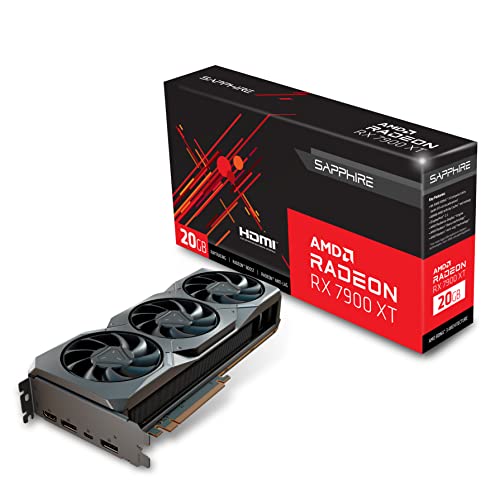
A Radeon RX 9070 XT-class card is a strong match for a 13900K if you want high-quality 1440p gaming and some 4K capability without paying flagship prices. AMD cards are often attractive when traditional rasterized performance per dollar is the priority. The main compromise is that performance can fall behind a comparable GeForce option in some ray-traced games, so check benchmarks for your favorites.
This tier also makes sense if you’d rather put money toward a better monitor, a larger SSD, or a quiet case. The CPU won’t be a meaningful limit in most GPU-heavy 1440p games. Choose a specific board model based on price, cooler noise, warranty, and dimensions—not factory overclock claims alone.
Best for 4K and ray tracing
A GeForce RTX 5080-class card is the stronger fit if you play at 4K, use ray tracing often, or value NVIDIA’s upscaling and frame-generation features in supported games. Those features can improve perceived smoothness, but they don’t replace native rendering performance, and results vary by game. If you rarely enable ray tracing, compare conventional performance and price before paying extra for this tier.
A flagship above this level is only worthwhile if you specifically want the highest available frame rates, have a high-refresh 4K display, and are comfortable with the added cost and power demand. It’s easy to spend a lot for gains that are difficult to notice on a 60Hz screen. For most buyers, the 13900K doesn’t justify stepping up to the most expensive GPU.
When a cheaper GPU is enough
If you play competitive games at 1080p, a value-focused card can be plenty. Lower-cost GPUs also suit older games, moderate settings, and buyers who don’t mind using upscaling when a new release runs heavily. The 13900K may sit below its full potential in some of these setups, but that’s not a problem if the frame rate meets your needs.
The failure mode is buying too little GPU for a 4K monitor or demanding ray tracing, then compensating by lowering settings in every game. Check benchmarks at your actual resolution; 1080p results won’t tell you how a card handles 4K. For a budget pick, consider an RTX 5070-class card or a similarly priced Radeon option, then compare current local prices and game results.
Check power, space, and platform details
High-end cards can be long, thick, and power-hungry. Before ordering, measure the case’s GPU clearance with front fans or a radiator installed, check the card’s recommended power supply capacity, and confirm that your PSU has the required connectors. Avoid relying on an old adapter or a marginal power supply to make an upgrade work. A poor fit can mean a hot, noisy system or a GPU that simply won’t fit.
The 13900K can draw substantial power under heavy CPU workloads, too. A gaming PC with a powerful GPU needs a quality PSU with enough headroom for both components, not just a rating chosen from the GPU alone. Also check that your motherboard BIOS and cooling setup are appropriate for the CPU; GPU performance won’t fix CPU temperature or stability problems.
FAQ
Will the 13900K bottleneck a high-end GPU?
Usually not in GPU-heavy 1440p and 4K gaming. At 1080p with very high frame rates, performance can depend more on the game and CPU, so look at benchmarks for your titles.
Is an AMD or NVIDIA GPU better with the 13900K?
Both work. Compare price and performance in your games: Radeon is often compelling for rasterized performance per dollar, while GeForce can be preferable for ray tracing and supported NVIDIA features.
Do I need a flagship card for 4K?
No. A high-end card can handle 4K well, depending on settings and the game. A flagship is mainly for buyers who want maximum performance and accept its cost and power draw.
Should I upgrade my power supply with the GPU?
Only if the existing unit lacks the capacity, connectors, or quality required by the new card and the rest of your system. Check the exact GPU and PSU specifications before buying.


