
The best generator transfer switches are chosen by amperage, the number of circuits you need to back up, generator compatibility, and whether you want manual control or automatic operation—not by the switch’s maximum amp rating alone.
As an Amazon Associate we earn from qualifying purchases at no extra cost to you.
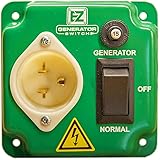

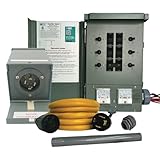

Top 3 picks at a glance
Best generator transfer switches at a glance
| Use case | Suitable switch type | Typical capacity | Operation | Examples or spec class |
|---|---|---|---|---|
| Portable generator and selected household circuits | Prewired load-center transfer switch | 30A; commonly 6–10 circuits | Manual | Reliance Controls Pro/Tran2 306CRK or 31410CRK class |
| Larger portable generator or subpanel backup | Manual service or non-service-rated transfer switch | 60–100A and higher | Manual | Manual double-throw switch or generator subpanel matched to the installation |
| Whole-home standby generator | Automatic transfer switch | 100–200A is common in residential systems | Automatic | Generac RXSW200A3 class, when matched to the generator system |
| Commercial or large residential service | Service-entrance automatic transfer switch | 200–400A or more | Automatic | ASCO Series 300 class or an equivalent listed unit |
Product compatibility matters more than brand familiarity. A switch must be listed for the voltage, phase, pole configuration, neutral arrangement, enclosure location, and generator connection method used in your installation.
Best manual option: a prewired multi-circuit transfer switch
For most portable-generator owners, the best generator transfer switches are manual, prewired units such as the Reliance Controls Pro/Tran2 306CRK or 31410CRK class. These switches connect the generator inlet to selected branch circuits while preventing those circuits from being connected to utility power at the same time.
The main difference is circuit capacity. A six-circuit model is often enough for a furnace, refrigerator, sump pump, lighting circuit, and one or two convenience circuits. A ten-circuit model gives more flexibility, but it does not create more generator capacity. You still need to manage the generator’s wattage and starting surges.
When a manual switch is the better choice
- You already own a portable generator.
- You can reach the electrical panel during an outage.
- You want a lower-cost installation, usually about $400–$900 for the switch, inlet, wiring, and professional labor depending on the panel and region.
- You only need essential circuits rather than every load in the house.
- You are comfortable starting, connecting, and shutting down the generator safely.
A manual switch is not a shortcut around electrical code. The generator should be connected through a listed inlet and transfer arrangement, never through a receptacle-to-receptacle “suicide cord.” Keep the generator outdoors, away from doors, windows, and vents, because carbon monoxide can accumulate indoors even when a garage door is open.
Best automatic option: a matched standby-generator transfer switch
For a permanently installed standby generator, a matched automatic transfer switch is usually the best choice. Units in the Generac RXSW200A3 class are designed for 200-amp residential service applications, but the correct model depends on the generator, service arrangement, voltage, and whether the installation requires service-entrance rating.
An automatic transfer switch monitors utility power, signals the generator to start after an outage, waits for stable generator voltage and frequency, transfers the load, and returns to utility power when service is restored. That makes it useful for homes with medical equipment, heating systems, remote locations, or occupants who cannot manually operate a system.
Automatic-switch trade-offs
- Higher total cost: A complete standby system and installation commonly reaches several thousand dollars, with larger or more complex systems costing substantially more.
- Generator-specific controls: Some switches communicate with compatible generator controllers rather than functioning as universal accessories.
- More installation requirements: The project may involve gas piping, fuel storage, permits, grounding and bonding checks, and load-shedding configuration.
- Transfer delay: Sensitive electronics may still need an uninterruptible power supply because an automatic switch is not a zero-interruption device.
Amperage and circuit capacity: calculate before you buy
The switch’s amperage must be appropriate for the feeder or service it controls, while the generator must be large enough for the loads that will run simultaneously. These are related but different limits.
For a 120/240-volt single-phase generator, a rough running-watt estimate is:
Available watts = volts × amps
A 30-amp, 120/240-volt generator can theoretically provide 7,200 watts, although the continuous rating may be lower. If the generator is rated at 5,500 running watts, use 5,500 watts as the practical budget—not 7,200.
| Load | Typical running watts | Possible starting demand | Include in simultaneous budget? |
|---|---|---|---|
| Gas furnace blower | 400–800W | 800–1,600W | Yes |
| Refrigerator | 100–300W | 600–1,200W | Yes |
| Sump pump | 600–1,000W | 1,800–3,000W | Yes |
| LED lighting and networking | 100–300W | Usually low | Yes |
| Electric water heater | 3,500–5,500W | Similar to running demand | Usually no |
| Electric range or clothes dryer | 4,000–6,000W | Similar to running demand | Usually no |
Example: a furnace at 600W, refrigerator at 200W, sump pump at 800W, lights at 200W, and a networking/PC setup at 400W total 2,200 running watts. If the sump pump and refrigerator start together, their surge could add roughly 2,000–3,000W. A generator with about 5,000–6,000 running watts gives useful headroom; a smaller unit may need load sequencing or manual switching.
Do not place high-demand electric heating, water heating, cooking, and vehicle charging circuits on the same backup plan unless the generator is specifically sized for them. An automatic load-management system can disconnect lower-priority loads when demand rises.
Generator compatibility checklist
Before selecting one of the best generator transfer switches, verify these details on both the generator and the electrical panel:
- Voltage: A 120/240V generator is required for typical two-pole household circuits. A 120V-only generator cannot properly supply a 240V well pump, range, or similar load.
- Amperage and connector: A 30A L14-30 connection is common for portable generators. Larger systems may use 50A or hardwired connections.
- Phase and poles: Residential North American systems are commonly single-phase, but the switch must match the generator and service configuration.
- Neutral switching: Separately derived systems may require a switched neutral; other installations may require a solid neutral. The generator manual and local code determine the correct arrangement.
- Grounding and bonding: Do not remove or add bonding ju
Frequently asked questions
Can I connect a portable generator directly to a household receptacle?
No. The article says a generator should be connected through a listed inlet and transfer arrangement, never through a receptacle-to-receptacle “suicide cord.” A transfer switch prevents selected circuits from being connected to utility power and generator power at the same time. The generator must also remain outdoors, away from doors, windows, and vents, because carbon monoxide can accumulate indoors.
Will an automatic transfer switch keep sensitive electronics from losing power?
No. An automatic transfer switch is not a zero-interruption device. It monitors utility power, starts the generator after an outage, waits for stable voltage and frequency, and then transfers the load. Because this process creates a transfer delay, sensitive electronics may still need an uninterruptible power supply. The switch can automate backup power, but it does not replace uninterrupted-power equipment.
Can a larger transfer switch make a small generator power more appliances?
No. A switch’s circuit capacity and the generator’s available power are different limits. A switch with more circuits provides flexibility, but it does not create additional generator capacity. You must manage running watts and starting surges, and avoid placing high-demand heating, water-heating, cooking, and vehicle-charging circuits on the backup plan unless the generator is sized for them.
Why does the neutral arrangement matter when choosing a transfer switch?
The neutral arrangement must match the generator and installation. Separately derived systems may require a switched neutral, while other installations may require a solid neutral. The article says the generator manual and local code determine the correct arrangement. This is one reason compatibility involves more than amperage: the voltage, phase, pole configuration, neutral arrangement, enclosure location, and connection method must all be appropriate.
What should I do if the generator cannot run every selected circuit at once?
Prioritize essential loads and calculate their combined running watts and starting demand. A furnace, refrigerator, sump pump, lighting, and networking equipment may all be useful, but motors can require substantially more power when starting. High-demand electric heating, water heating, cooking, and vehicle charging are usually excluded from the simultaneous backup plan unless the generator is specifically sized for them or load management is provided.
Related guides


