
Shopping for the best gaming pc under 300 requires balancing budget constraints with entry-level gaming expectations. At this price point, buyers generally seek machines capable of running lightweight esports titles like League of Legends, Valorant, or Minecraft, or a dependable base system that can accept future hardware upgrades. The market is filled with diverse options, ranging from brand-new prebuilt towers with modern aesthetic fans to renewed enterprise desktops equipped with dedicated low-profile graphics cards. The major trade-offs lie between raw processing performance, initial graphics capabilities, and system memory allocations.
By comparing official hardware specifications, component architecture generations, and buyer feedback, we evaluated the top budget desktop configurations available in 2026. The key differentiator between a capable ultra-budget setup and an underperforming PC usually comes down to whether the system includes a dedicated graphics card or relies solely on integrated graphics, alongside having adequate system memory to prevent frame stuttering. Understanding these core specifications ensures you maximize performance without overspending.
As an Amazon Associate we earn from qualifying purchases at no extra cost to you.




Top 3 picks at a glance
Quick Picks
| Product | Best for | Price |
|---|---|---|
| OKAMUS Pre-Built PC | Modern Upgrade Base | $245.99 |
| Desktop Computer Gaming PC | Balanced System Memory | $269.99 |
| Dell Gaming Tower Desktop PC | Out-of-the-Box Dedicated Gaming | $282.79 |
| HP ProDesk Desktop RGB | Ultra-Budget Entry | $179.99 |
| Prebuilt Desktop Gaming PC | Home Office & Light Gaming | $245.99 |
| OKAMUS Prebuilt i7 Desktop | Maximum CPU Power | $299.99 |
| Dell Optiplex PC Bundle | Complete All-in-One Setup | $339.99 |
| Dell PC Treasure Box RGB | Storage & RGB Aesthetics | $209.99 |
How We Picked
Our analysis evaluated these budget desktop computers across four critical categories: graphics rendering capabilities, system memory capacity, storage speed, and expansion potential. We prioritized systems that feature discrete graphics cards for immediate gaming performance, while giving credit to builds featuring modern power supplies and room for low-profile GPU expansion. Memory capacity was evaluated heavily, as multi-tasking and smooth gameplay require sufficient RAM. Finally, buyer feedback regarding long-term system stability and hardware build quality heavily influenced our rankings.
The 8 Best Gaming PC Under 300 in 2026
OKAMUS Pre-Built PC
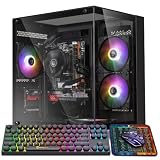
This desktop is designed for buyers looking for a modern starter tower with integrated graphics and a clear upgrade path. Featuring an i5 CPU reaching up to 3.6GHz, 8 GB RAM, and a fast 256 GB M.2 SSD, it handles basic computing and light web games easily. It ships in an attractive chassis featuring 3 RGB fans, Windows 11 Home, and modern wireless connectivity via WiFi 6 and BT 5.3. Powered by a 400W PSU, it offers decent head room for adding a low-power dedicated graphics card later.
- Pro: Modern connectivity with WiFi 6, Bluetooth 5.3, and a decent 400W PSU.
- Pro: Eye-catching design with 3 pre-installed RGB cooling fans.
- Con: Lacks a dedicated graphics card and only includes 8 GB of RAM out of the box.
Skip this model if you want to play demanding 3D games immediately without purchasing an additional dedicated graphics card.
Desktop Computer Gaming PC
Targeted at users who want balanced memory performance without spending extra money upfront, this machine packs an i5 CPU reaching up to 3.6GHz alongside 16GB RAM and a 256GB SSD. The doubled memory capacity helps eliminate system bottlenecks during everyday multi-tasking and browser-based or light esports gaming. While it relies on standard integrated graphics, the generous RAM allocation ensures smooth general operation and better integrated GPU video memory allocation.
- Pro: Generous 16GB RAM capacity improves multitasking and light gaming frame stability.
- Pro: Fast 256GB SSD ensures quick boot times and rapid application loading.
- Con: Uses integrated graphics which limits playback on complex, modern titles.
Skip this build if you require a pre-installed discrete graphics card for higher graphics settings in modern titles.
Dell Gaming Tower Desktop PC
This renewed Dell tower is ideal for gamers who want instant out-of-the-box entry-level 3D performance. Powered by an Intel Core i5-7500 7th Gen processor running at 3.4GHz, 16GB DDR4 RAM, and a 256GB SSD, its main highlight is the dedicated NVIDIA GeForce GT 1030 graphics card. Running Windows 11 Pro, it also includes an RGB keyboard and mouse, along with built-in WiFi, offering a ready-to-play package for popular competitive esports titles.
- Pro: Dedicated GeForce GT 1030 provides superior gaming performance compared to integrated graphics.
- Pro: Comes bundled with an RGB keyboard, mouse, and pre-installed Windows 11 Pro.
- Con: Older 7th Gen Intel processor architecture limits top-tier CPU expansion.
Skip this system if you prefer a brand-new non-renewed computer with full manufacturer warranty coverage.
HP ProDesk Desktop RGB
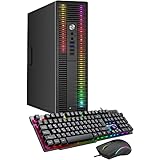
This renewed HP ProDesk setup appeals directly to strict bargain hunters needing the absolute lowest barrier to entry. Powered by an Intel Core i5 6500 processor running at 3.2 GHz, 8GB RAM, and a 256GB SSD, this compact desktop includes custom RGB lighting, an included gaming keyboard and mouse bundle, and Windows 11 Pro. It serves as an affordable office machine or ultra-budget foundation for light indie gaming and retro emulation.
- Pro: Exceptionally low price point for a complete working desktop system.
- Pro: Includes customizable RGB front lighting and gaming peripheral extras.
- Con: Limited to 8GB RAM and integrated graphics out of the box.
Skip this model if you have the extra room in your budget for a machine equipped with 16GB of system memory.
Prebuilt Desktop Computer Gaming PC
Designed for users who need a versatile hybrid computer for business work, learning, and casual gaming, this Core i5 desktop delivers straightforward utility. The clean prebuilt setup offers stable daily processing power for web browsing, office suites, and simple titles. Its straightforward interior layout makes maintenance simple, operating as a clean slate for home offices that occasionally double as casual gaming stations.
- Pro: Versatile design suitable for home office productivity and basic entertainment.
- Pro: Solid value point for a complete prebuilt Core i5 system unit.
- Con: Lacks detailed GPU expansion specs and RGB visual flair.
Skip this option if you are specifically looking for a stylized chassis with pre-installed RGB cooling fans and gaming peripherals.
OKAMUS Prebuilt Desktop Computer
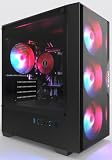
This model suits buyers searching for the highest CPU processing power available under $300. It features an i7 CPU capable of reaching up to 3.9GHz, paired with 16GB RAM and a fast 256GB M.2 SSD. While it relies on integrated graphics, the tower boasts 4 RGB fans for enhanced airflow, a 400W PSU, modern WiFi 6 and Bluetooth 5.3, and Windows 11 Home. The strong CPU and solid power supply make it an excellent candidate for adding a discrete graphics card later.
- Pro: Powerful i7 processor up to 3.9GHz paired with 16GB RAM for high processing speed.
- Pro: Features 4 RGB fans, modern WiFi 6, Bluetooth 5.3, and a capable 400W power supply.
- Con: Integrated graphics limit initial visual gaming performance until upgraded.
Skip this model if you need a pre-installed discrete GPU today and do not plan to install one yourself later.
Dell Optiplex PC Bundle
This renewed Dell Optiplex package is built for buyers who need an all-in-one desktop solution without purchasing extra peripherals. Although priced slightly above the core target at $339.99, it provides substantial overall hardware value by including a full 24-inch monitor, a Core i5 processor, 16G RAM, and a spacious 512G SSD. It delivers immediate full-desktop utility for work, study, and light gaming straight out of the shipping package.
- Pro: Complete desktop package featuring an included 24-inch display panel.
- Pro: Ample storage space with a pre-installed 512G SSD and 16G RAM.
- Con: Total cost exceeds the strict $300 limit.
Skip this setup if you already own a good computer monitor and want to spend your entire budget exclusively on the desktop tower.
Dell PC Treasure Box RGB
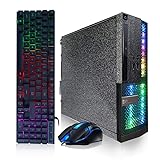
This renewed Dell desktop offers a compelling mix of style, capacity, and extra features for budget conscious users. It packs an Intel Quad Core i5 processor reaching up to 3.6G, 16G RAM, and a large 512G SSD inside a striking Diamond Black chassis with RGB lighting. Complete with WiFi, Bluetooth, a DVD drive, Windows 11 Pro, and an included RGB gaming keyboard and mouse, it offers high storage capacity and flash aesthetic charm.
- Pro: Large 512G SSD storage capacity outperforming smaller 256G standard options.
- Pro: Comes fully equipped with an optical DVD drive, RGB lights, and gaming peripherals.
- Con: Uses integrated graphics, requiring a low-profile GPU addition for heavier 3D titles.
Skip this choice if you prefer modern, minimalist desktop cases without optical disc drives.
Buying Guide
Integrated vs. Dedicated Graphics in Budget PCs
When shopping for ultra-budget desktop computers, understanding graphics hardware is essential. Systems relying on integrated graphics (Intel HD or UHD graphics) share system RAM to process visual data. While integrated GPUs comfortably handle 2D games, older titles, and basic video streaming, they struggle with frame rates in modern 3D games. Conversely, desktops equipped with a dedicated graphics card—like the NVIDIA GeForce GT 1030—possess dedicated video memory. This allows them to render 3D scenes much more efficiently, providing smoother framerates in popular multiplayer games.
System Memory (RAM) Requirements
For modern computing and gaming, 16 GB of RAM has effectively become the practical standard. PCs equipped with only 8 GB of RAM can run into performance bottlenecks when running modern operating systems alongside memory-heavy browser tabs or game launchers. Furthermore, when a desktop relies on integrated graphics, a portion of system RAM is automatically reserved for visual memory. Opting for a build with 16 GB of memory guarantees smoother multi-tasking, minimizes background stuttering, and provides better operational lifespan.
Storage and Future Upgradeability
Solid-state drives (SSDs) are vital for modern systems, as traditional mechanical hard drives lead to sluggish boot times and long loading screens. A 256 GB SSD is acceptable for a starter system, but a 512 GB drive provides significantly more breathing room for installing larger games. Additionally, consider the power supply unit (PSU) and chassis form factor. Prebuilt systems with standard power supplies (such as 400W units) and room for low-profile graphics expansion allow you to drop in a budget dedicated graphics card later down the line.
Our Verdict
For immediate, out-of-the-box gaming, our top recommendation is the Dell Gaming Tower Desktop PC ($282.79) because its dedicated GeForce GT 1030 graphics card and 16GB RAM deliver actual 3D rendering power today. If saving as much money as possible is your primary goal, the HP ProDesk Desktop RGB ($179.99) serves as our budget pick, offering a functional Core i5 foundation at an unbeatable entry point. Finally, if you do not mind adding a graphics card later and want the fastest CPU platform for future upgrades, choose the OKAMUS Prebuilt i7 Desktop ($299.99) for its strong processor, 16GB RAM, and 400W power supply.
FAQ
Can a gaming PC under $300 play modern AAA games?
Sub-$300 gaming PCs generally cannot run demanding modern AAA titles at high settings or resolutions. However, they are well-suited for popular competitive esports titles, indie releases, and retro emulation games when run at modest 720p or 1080p graphics settings.
Is a dedicated graphics card necessary for light gaming?
A dedicated graphics card is not strictly required for simple 2D games, web titles, or older releases. However, having a dedicated GPU dramatically increases frame rates and visual smoothness in modern 3D multiplayer titles compared to basic integrated graphics options.
Why is 16 GB of RAM recommended over 8 GB?
Modern operating systems and background applications consume a significant portion of system memory on their own. Upgrading to 16 GB of RAM prevents performance stuttering during gameplay and ensures integrated graphics chips have sufficient shared memory to operate efficiently.
What is the difference between renewed and new budget PCs?
Renewed desktop PCs are pre-owned or refurbished enterprise towers that have been tested, cleaned, and reconditioned for consumer resale. They typically offer stronger internal hardware specs for the price, whereas new prebuilt PCs offer brand-new chassis designs and updated hardware connectivity standards.


