As an Amazon Associate we earn from qualifying purchases.
If you are shopping with the phrase best gaming mouse for arthritis, the useful way to compare products is by design, not by promises. A mouse is an input device, not a medical device, and this guide makes no health claims about any product in it. What can be compared is shape: how far a shell rotates the hand, where the thumb rests, how the buttons are angled, how much the mouse weighs, and how large a hand the body is built for. Those listed details decide whether a mouse matches the way you hold, move, and click during a long session.
The shortlist is varied: two mice use a moderate vertical angle, one a much steeper angle, one is a smaller shell for small to medium hands, and one keeps a low profile with a sculpted thumb rest. The Keychron M5 8K and the two Razer models carry flagship-class sensors, while the two Logitech mice suit slower-paced games. Every figure below is a manufacturer-listed specification, about geometry, not about an outcome for your hands.
Top 3 picks at a glance


How to Choose an Ergonomic Gaming Mouse
Start With the Grip Angle
A conventional gaming mouse holds the palm facing down. A vertical shape changes the grip angle, rotating the buttons and palm toward the side so the hand rests in what makers describe as a handshake position. The size of that change is printed in degrees, and it differs a lot between models: the Keychron M5 is listed at 47 degrees, the Logitech MX Vertical and Lift at 57 degrees, and the Razer Pro Click V2 Vertical Edition at 71.7 degrees. A larger number means a more upright shell and a longer adjustment period. Neither direction is automatically better. The right angle is the one whose buttons you can reach without re-gripping, so treat the degree figure as a fit specification, like shoe width, rather than as a score.
Look at Click Placement and Click Type
On a vertical mouse the main clicks face sideways, so your fingers press inward rather than downward. How a click feels and sounds depends on the switch type the maker lists. The Razer Pro Click V2 Vertical Edition uses mechanical switches listed for a 60-million-click lifecycle, the Razer Basilisk V3 Pro 35K uses third-generation optical switches, and the Keychron M5 8K uses Huano micro switches listed for 80 million clicks. Logitech lists the Lift with quiet clicks, a softer-sounding click design, and the MX Vertical with standard clicks plus a cursor speed switch on top. Note the layout too: on a tall shell, the side buttons sit above a thumb rest, and reaching them is a sideways thumb movement rather than a flat-mouse squeeze.
Weigh the Mouse Against Your Play Style
Weight changes how a mouse is moved. A heavier shell is pushed with the whole forearm and stays planted, while a lighter shell is easier to lift and reposition. The listed weights span a wide range: the Keychron M5 8K at 95 grams, the Razer Basilisk V3 Pro 35K at about 112 grams excluding cable and dongle, the two Logitech vertical mice at 125 grams each, and the Razer Pro Click V2 Vertical Edition at 150 grams. For slow, deliberate movement in strategy and simulation games, a planted heavier shell can suit a steady grip. For faster camera work, the lightest shell here also has the highest listed polling rate: the M5 was designed as a gaming mouse first and a vertical mouse at the same time.
Match the Shell to Your Hand Size
Vertical mice are tall, and a shell that is too large forces the fingers to stretch for the clicks, while a shell that is too small leaves the palm unsupported. Use the listed dimensions and the maker’s hand-size guidance. Logitech describes the Lift as crafted for small to medium hands, at 108 x 70 x 71 mm listed. The MX Vertical is the larger option, at 120 x 79 x 78.5 mm listed, described as a fit for medium to large right hands. The Keychron M5 and the Razer Pro Click V2 Vertical Edition are also right-handed shells sized toward medium and larger hands, and the Basilisk V3 Pro 35K is right-handed too, with a low, wide body at about 130 x 75.4 x 42.5 mm listed. All five picks here are right-handed in the versions listed, so left-handed players should check carefully, because a mirrored version is a separate product with its own listing.
Separate Gaming Specifications From Shape
A different grip does not change what the sensor does, so read the gaming specifications on their own terms. The M5 8K lists a PixArt 3950 sensor, up to 30,000 DPI, up to 750 IPS tracking, and up to 8,000 Hz polling. The Razer Pro Click V2 Vertical Edition lists a Focus Pro 30K sensor, up to 30,000 DPI, 550 IPS, and up to 1,000 Hz polling. The Basilisk V3 Pro 35K lists a Focus Pro 35K sensor, up to 35,000 DPI. The two Logitech mice list optical tracking up to 4,000 DPI, and Logitech does not publish a polling rate for either model, so they are presented here for slower-paced play rather than high-refresh competitive titles. Match the specification tier to the games you actually play.
The Picks
1. Keychron M5 8K Wireless Ergonomic Mouse — The Vertical Gaming Specialist
The M5 answers a specific question: what does a vertical mouse look like when the gaming specifications are not reduced to fit the shape? Its shell is listed at a 47-degree angle, the shallowest vertical angle here, with a smooth curve through the body and a thumb rest. That moderate angle keeps the grip closer to a conventional mouse than the steeper shells below, while the buttons still sit on a rotated plane.
Under that shell, Keychron lists hardware that matches flat flagship gaming mice: a PixArt 3950 sensor at 100 to 30,000 DPI, up to 750 IPS tracking, and up to 8,000 Hz polling over the 2.4 GHz receiver or a wired connection, dropping to 125 Hz over Bluetooth. At a listed 95 grams it is also the lightest vertical mouse here, so it is easier to reposition with small forearm movements. The listed battery figure is up to 140 hours, with a shorter runtime at the highest polling setting. Check the listing carefully, because Keychron also sells a 1K version of the M5 with a different sensor and a lower polling ceiling; the specifications above belong to the 8K version only.
Specs
- Shape: Right-handed vertical, 47-degree listed angle, thumb rest
- Sensor: PixArt 3950 optical, 100–30,000 DPI listed
- Polling rate: Up to 8,000 Hz listed (2.4 GHz / wired), 125 Hz Bluetooth
- Switches: Huano micro switches, 80-million-click listed lifecycle
- Weight: 95 g listed
- Connectivity: 2.4 GHz, Bluetooth 5.3, USB-C wired
- Battery: Up to 140 hours listed
2. Razer Pro Click V2 Vertical Edition — The Steepest Angle
Razer’s first vertical mouse takes the opposite approach to angle. The shell is listed at 71.7 degrees, placing the hand closer to fully upright than any other pick here, with a flared base support and a deep thumb area with the side buttons above it. At a listed 150 grams it is the heaviest mouse in this guide, moved as a planted, whole-hand device rather than lifted and flicked. That deliberate movement style suits city builders, simulators, and turn-based strategy, with a shape that stays where it is placed.
The gaming hardware is Razer’s Focus Pro 30K optical sensor, listed at up to 30,000 DPI, 550 IPS, and 40 G acceleration, with tracking listed even on glass. Polling is listed at up to 1,000 Hz, the main clicks use mechanical switches listed for 60 million clicks, and connectivity covers HyperSpeed wireless, Bluetooth, and USB-C wired use. The battery is listed at up to six months, and an 18-zone Chroma RGB underglow runs around the wide base. Because the angle is the steepest here, allow the longest adjustment period of any pick in this guide.
Specs
- Shape: Right-handed vertical, 71.7-degree listed angle, base support
- Sensor: Razer Focus Pro 30K optical, up to 30,000 DPI listed
- Tracking: 550 IPS and 40 G listed
- Polling rate: Up to 1,000 Hz listed
- Switches: Mechanical, 60-million-click listed lifecycle
- Weight: 150 g listed
- Dimensions: Approximately 111 x 88 x 79 mm listed
- Connectivity: HyperSpeed wireless, Bluetooth, USB-C wired
- Battery: Up to 6 months listed
3. Logitech MX Vertical — The Larger 57-Degree Shell
The MX Vertical is the long-running reference design for a vertical mouse, built around a listed 57-degree angle. That angle sits between the M5 and the Razer vertical model, while the controls stay in familiar places: a precision scroll wheel, two thumb buttons, and a cursor speed switch on top that changes DPI with a press. The textured rubber surface and thumb rest are part of the listed design, and Logitech describes the fit as medium to large right hands, at 120 x 79 x 78.5 mm and 125 grams listed.
Its gaming ceiling is modest. The optical sensor is listed at 400 to 4,000 DPI, and Logitech does not publish a polling rate for this model. That set suits slower-paced games, strategy titles, and mixed desktop use far better than fast competitive play. In return, it lists pairing with up to three computers, Logitech Flow support, and a rechargeable battery listed at up to four months. Choose it for the shape and the multi-device setup.
Specs
- Shape: Right-handed vertical, 57-degree listed angle, thumb rest
- Sensor: Optical, 400–4,000 DPI listed, adjustable in 50 DPI steps
- Buttons: Precision scroll wheel, thumb buttons, cursor speed switch
- Weight: 125 g listed
- Dimensions: 120 x 79 x 78.5 mm listed
- Connectivity: Bluetooth, USB receiver, USB-C charging cable
- Battery: Rechargeable, up to 4 months listed
4. Logitech Lift Vertical Ergonomic Mouse — The Smaller Shell With Quiet Clicks
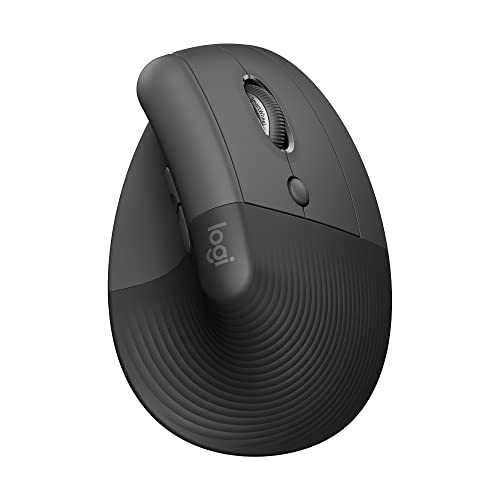
The Lift takes the same listed 57-degree angle as the MX Vertical and puts it in a smaller body. Logitech describes it as crafted specially for small to medium hands, at 108 x 70 x 71 mm listed, more compact than its larger sibling in every direction, at the same listed weight of 125 grams. For a player whose fingers cannot span a tall, wide shell, that size difference is the main reason to choose it: the clicks, wheel, and thumb buttons all sit closer together, within a shorter reach.
Two listed details set it apart. The clicks are Logitech’s quiet click design, and scrolling is handled by a SmartWheel that switches between precise and speed scrolling. The sensor is listed at up to 4,000 DPI, and Logitech does not publish a polling rate, so the Lift belongs in the same slower-paced category: simulation, strategy, adventure, and casual titles. It connects over Bluetooth or the included Logi Bolt receiver, pairs with up to three devices, and runs on a single AA battery listed at up to 24 months. The graphite right-handed version is the one listed here; other colors and the left-handed version are separate listings.
Specs
- Shape: Right-handed vertical, 57-degree listed angle, small to medium hands
- Sensor: Optical, up to 4,000 DPI listed, fully adjustable
- Clicks: Quiet clicks listed; SmartWheel scrolling
- Buttons: 6 total listed, 4 customizable
- Weight: 125 g listed
- Dimensions: 108 x 70 x 71 mm listed
- Connectivity: Bluetooth, Logi Bolt USB receiver
- Battery: 1 AA, up to 24 months listed
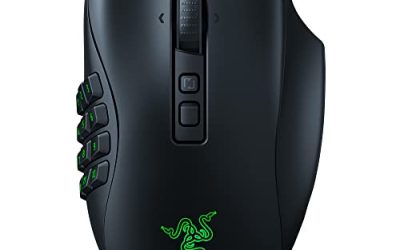
5. Razer Basilisk V3 Pro 35K — The Familiar Shape With a Thumb Rest

Not every player wants to relearn a vertical grip. The Basilisk V3 Pro 35K keeps the low profile of a conventional gaming mouse and changes the contact points instead: a right-handed ergonomic body with a pronounced thumb rest, textured side grips, and a scroll wheel that tilts sideways as well as rolling. The hand stays palm-down, but the thumb has a defined shelf to rest on, with the side buttons directly above it. At about 112 grams listed, excluding cable and dongle, it sits between the M5 and the Logitech vertical mice on weight.
As a gaming device it is the most fully featured pick here. Razer lists a Focus Pro 35K optical sensor in its second generation, up to 35,000 DPI, third-generation optical switches, 13 customizable controls, and a HyperScroll tilt wheel with free-spin and tactile modes. Battery life is listed at up to 140 hours on HyperSpeed wireless. This is the pick for faster-paced games where a vertical shell’s rotated aim does not suit your play, and where the design change you want is in the thumb rest and wheel rather than the grip angle.
Specs
- Shape: Right-handed ergonomic, low profile, thumb rest
- Sensor: Razer Focus Pro 35K optical Gen-2, up to 35,000 DPI listed
- Switches: Razer optical switches Gen-3 listed
- Controls: 13 customizable controls listed, HyperScroll tilt wheel
- Weight: Approximately 112 g listed, excluding cable and dongle
- Dimensions: Approximately 130 x 75.4 x 42.5 mm listed
- Connectivity: HyperSpeed wireless, Bluetooth, USB-C wired
- Battery: Up to 140 hours listed on HyperSpeed wireless
Comparison Table
| Model | Shape and Angle | Sensor (Listed) | Polling (Listed) | Weight (Listed) | Hand Size Direction |
|---|---|---|---|---|---|
| Keychron M5 8K | Vertical, 47 degrees | PixArt 3950, up to 30,000 DPI | Up to 8,000 Hz | 95 g | Medium to large, right hand |
| Razer Pro Click V2 Vertical Edition | Vertical, 71.7 degrees | Focus Pro 30K, up to 30,000 DPI | Up to 1,000 Hz | 150 g | Medium to large, right hand |
| Logitech MX Vertical | Vertical, 57 degrees | Optical, up to 4,000 DPI | Not published | 125 g | Medium to large, right hand |
| Logitech Lift | Vertical, 57 degrees | Optical, up to 4,000 DPI | Not published | 125 g | Small to medium, right hand |
| Razer Basilisk V3 Pro 35K | Low ergonomic, thumb rest | Focus Pro 35K, up to 35,000 DPI | Up to 1,000 Hz | About 112 g | Medium to large, right hand |
FAQ
Does a vertical mouse change how games are played?
Yes, in control terms. A vertical shape changes the grip angle, so the main clicks are pressed sideways and aiming movements come more from the forearm. Menus, strategy games, and slower-paced titles translate easily. Fast flick aiming takes the most adjustment, which is why the Keychron M5 8K pairs its vertical shell with a flagship sensor, while the Basilisk V3 Pro 35K is included for players who prefer a conventional grip.
Which design details should I compare first?
Compare the listed angle, the listed dimensions against your hand size, the listed weight, and the click type, in that order. Angle and size decide whether your fingers reach the buttons without stretching. Weight decides whether the mouse is lifted or pushed. Click type, such as the Lift’s quiet clicks or the Basilisk’s optical switches, decides how each press feels and sounds. Sensor figures come after fit, because a well-specified mouse in the wrong size is still the wrong mouse.
Are the Logitech vertical mice gaming mice?
They are ergonomic mice with listed optical sensors up to 4,000 DPI, and Logitech does not publish polling rates for them. That makes them a match for slower-paced games and mixed desktop use, and a poor match for high-refresh competitive play. The gaming-first picks here are the Keychron M5 8K and the two Razer models, whose sensors and polling ceilings are listed at gaming levels.
What if a vertical shape does not suit my grip?
Choose a sculpted conventional shape instead. The Basilisk V3 Pro 35K keeps a palm-down grip and changes the thumb rest, side grip texture, and scroll wheel design, which keeps full gaming specifications available at the same time.
Should I expect an adjustment period with a vertical mouse?
Plan for one. The steeper the listed angle, the more the click direction differs from a flat mouse, so the 71.7-degree Razer shape asks for more adjustment than the 47-degree Keychron shape. In the first sessions, lower your in-game sensitivity.
Conclusion
Shopping for the best gaming mouse for arthritis is, in practical terms, shopping by geometry. Start with the angle: 47 degrees on the Keychron M5 8K for the smallest change from a flat mouse with full gaming specifications, 57 degrees on the MX Vertical for medium to large hands or the smaller Lift for small to medium hands and quiet clicks, and 71.7 degrees on the Razer Pro Click V2 Vertical Edition for the most upright, planted shell. If a rotated grip is not for you, the Basilisk V3 Pro 35K changes the thumb rest and wheel instead of the angle. Match the shell to your hand, match the listed sensor tier to your games, and check the exact listing before ordering, because several of these models are sold in more than one version.
Related guides
More from Amazon
Programs that pair well with the guide above. Offers and eligibility are set by Amazon and may change.
A free business account with business pricing and bulk-buying tools for work, shop or home office.
Create a business accountFree shipping on eligible items, Prime Video and more. Eligible new members can start with a free trial.
Start a Prime free trialAudiobooks and podcasts to listen to on the go. Eligible new members can start with a free trial.
Try Audible freeAd-free music streaming. Eligible new subscribers can start with a free trial.
Try Music Unlimited freeAs an Amazon Associate we earn from qualifying purchases.