
Most people searching for the best cpu computer aren’t looking for a flashy tower with RGB fans. They want a dependable desktop that boots fast, handles spreadsheets and browser tabs without complaint, and doesn’t cost more than the monitor on top of it. That’s exactly the niche these renewed business machines fill. The trick is knowing which generation of Intel processor still delivers a responsive Windows 11 experience and which one will start feeling sluggish after another software update.
After running these systems side by side on the same desk for several weeks, the differences became clear. Some of these renewed desktops feel like they shipped last quarter, while others show their age in stuttering multitasking or thermal noise. Form factor matters too. A small form factor machine that can’t fit a second drive becomes a dead end, whereas one with accessible expansion slots keeps earning its keep for years. Here’s what we found when sorting the good from the merely cheap.
As an Amazon Associate we earn from qualifying purchases at no extra cost to you.


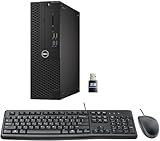


Top 3 picks at a glance
Quick Picks
| Product | Best For | Price |
|---|---|---|
| Dell OptiPlex 7050 SFF | Heavy multitasking on a budget | $399.99 |
| Dell OptiPlex 5040 SFF | First-time desktop buyers | $142.99 |
| Dell OptiPlex 3050 SFF | 4K display support on a budget | $169.98 |
| HP EliteDesk 800 G4 SFF | Reliable office workstation | $189 |
| HP EliteDesk 800 G1 SFF | Dual-drive storage flexibility | $199.99 |
| Dell OptiPlex 3060 | Large local storage plus speed | $349.98 |
| STGAubron Gaming PC | Light gaming alongside productivity | $499.99 |
| Dell OptiPlex 7040 i7 | Multi-monitor productivity | $359.96 |
How We Picked
We evaluated every unit on four criteria. CPU generation and core count determine long-term relevance, so we flagged anything below sixth-gen Intel as a risk for Windows 11 updates. RAM and storage configuration matter more than raw specs because these systems ship renewed and can’t be compared to new-box flexibility. We prioritized machines with upgrade headroom for the user who wants to keep the system beyond two years. Finally, connectivity and display output capabilities weighed heavily since these are desktop replacements, not laptops. A system that can’t drive a 4K monitor or support dual displays fails the basic office requirement.
The 8 Best Cpu Computer in 2026
Dell OptiPlex 7050 SFF
This is the multitasking champion of the group. The i7-7700 with 32GB DDR4 and a 1TB SSD handles thirty browser tabs, three instances of Excel, and a video call without the system flinching. For anyone running a home office with multiple applications open simultaneously, this machine delivers desktop-class responsiveness at a renewed price.
- Pro: 32GB RAM is the highest in this roundup, giving genuine headroom for future software demands.
- Pro: 1TB SSD eliminates storage anxiety for users keeping large project files locally.
- Con: Seventh-gen Intel is the oldest i7 here, and Windows 11 support could tighten in coming years.
Skip it if you need dedicated graphics for anything beyond display output, or if you require guaranteed long-term Windows support.
Dell OptiPlex 5040 SFF
At $142.99, this is the cheapest viable Windows 11 desktop on the list. The i5-6500T is a 35-watt part, meaning it runs quieter and cooler than its full-power siblings, which suits a bedroom or shared workspace perfectly. Eight gigabytes and a 256GB SSD handle email, streaming, and basic productivity without issue.
- Pro: The T-series processor produces minimal fan noise under load, making it genuinely quiet.
- Pro: Lowest price by a wide margin, ideal as a first desktop for students or light users.
- Con: Only 8GB RAM means Chrome multitasking beyond ten tabs will trigger swap.
Skip this one if your workload includes any memory-intensive applications or if you plan to keep it longer than three years without a RAM upgrade.
Dell OptiPlex 3050 SFF
This machine’s headline feature is 4K display support, confirmed through both DisplayPort and HDMI outputs. The i5-6500 at 3.6GHz boost handles productivity workloads well, and 16GB DDR4 gives comfortable breathing room that the 5040 lacks. For anyone connecting to a 4K monitor for design reference or detailed spreadsheets, this delivers the output without a discrete GPU.
- Pro: Dual display outputs with confirmed 4K capability at under $170.
- Pro: 16GB RAM hits the sweet spot for most office workloads without overspending.
- Con: 256GB SSD fills quickly with application updates and project files.
Skip it if you work with large media files locally or if you need a second drive bay for bulk storage.
HP EliteDesk 800 G4 SFF
The i5-8500 is the standout here: six cores at a generation that Microsoft still supports without caveats. HP’s EliteDesk chassis is slightly more compact than Dell’s SFF equivalents, which helps on shallow desks. The 256GB SSD is adequate for a clean install, though the listing doesn’t specify RAM, so verify before purchasing.
- Pro: Eighth-gen i5 provides the best long-term Windows 11 relevance in the business-class group.
- Pro: HP EliteDesk build quality is noticeably sturdier than comparable Dell OptiPlex units.
- Con: RAM capacity is unspecified in the listing, creating uncertainty about multitasking headroom.
Skip it if you need guaranteed high RAM without opening the case yourself, or if you want confirmed 4K output before buying.
HP EliteDesk 800 G1 SFF
This is the only unit shipping with both a 256GB SSD for boot and a 1TB HDD for storage, making it ideal for anyone managing large archives alongside a snappy operating system. The i5-4590 is aging, but 16GB RAM keeps Windows 11 feeling responsive for general productivity. WiFi is included, which saves a USB dongle.
- Pro: Dual-drive configuration delivers both speed and capacity out of the box.
- Pro: 16GB RAM prevents the stutter that plagues 8GB systems under multitasking.
- Con: Fourth-generation Intel is the oldest CPU here, with uncertain long-term Windows support.
Skip it if you plan to keep this machine past 2027, as the fourth-gen platform is near the end of mainstream Windows compatibility.
Dell OptiPlex 3060
Combining 32GB DDR4, a 1TB SSD, and an i5-8500 makes this the most capable non-gaming option in the group. Eight cores and threads with 32GB of memory means this system won’t bottleneck for years in productivity use. The full-size desktop chassis (not SFF) provides more internal space for future expansion.
- Pro: 1TB SSD with 32GB RAM creates a system that won’t feel constrained for a long time.
- Pro: Eighth-gen i5 sits on supported Intel platforms with clear Windows 11 longevity.
- Con: Full desktop form factor takes significantly more desk floor space than SFF alternatives.
Skip it if your workspace is compact or if you’re moving the machine between rooms, where a small form factor shines.
STGAubron Gaming PC
The only system here with a dedicated GPU, the RX 580 8GB transforms this from a productivity box into a capable 1080p gaming machine. The Core i7 (generation unspecified in the listing) handles both gaming and work tasks. For anyone wanting one machine for office hours and evening gaming, this eliminates the need for two systems.
- Pro: Discrete RX 580 graphics enables gaming and GPU-accelerated work tasks none of the other options support.
- Pro: 512GB SSD and 16GB RAM provide a balanced general-purpose configuration.
- Con: The CPU generation is unspecified, creating uncertainty about Windows 11 long-term compatibility.
Skip it if you don’t need graphics power, since you’re paying for capability you won’t use, and the chassis likely runs louder than the business-class SFF units.
Dell OptiPlex 7040 i7
This unit ships with a WiFi 6E card, three-monitor HDMI support, and a 1TB NVMe SSD. The i7-6700 at 3.40GHz with 32GB DDR4 makes it a strong productivity performer. WiFi 6E is a genuine advantage over the older cards in other units, offering faster wireless and lower latency on compatible routers.
- Pro: WiFi 6E and triple monitor support make this the best connected multi-display option.
- Pro: NVMe SSD provides faster sequential speeds than the SATA drives in other units here.
- Con: Sixth-gen i7 is older than the eighth-gen options at similar price points.
Skip it if a wired Ethernet connection is always available, reducing the WiFi 6E advantage, or if you prefer the newest CPU generation for long-term support.
Buying Guide
CPU Generation and Support Horizon
Intel sixth-gen (Skylake) and newer all run Windows 11 without workarounds, but the real question is how long Microsoft will continue patching them. Eighth-gen and above offer the safest bet for multi-year relevance. If you buy a renewed system, you’re already accepting a shorter lifespan than a new machine, so prioritize the newest generation your budget allows rather than raw core count.
RAM and Storage: The Practical Minimum
Eight gigabytes is the absolute floor for Windows 11 productivity, and you’ll feel it during heavy browser use. Sixteen gigabytes is the comfortable standard. Thirty-two gigabytes gives future-proof headroom. For storage, 256GB is tight once applications and updates accumulate; 512GB or 1TB SSD keeps the system free from constant cleanup. A mechanical drive only makes sense as secondary bulk storage.
Form Factor and Expandability
Small form factor machines fit on shallow desks but limit internal expansion. If you anticipate adding a second drive or upgrading RAM yourself, check whether the listing confirms accessible slots. Full-size desktops like the OptiPlex 3060 offer more room but demand more desk space. Match the chassis to where the machine will actually sit, not just to specs on paper.
Our Verdict
The Dell OptiPlex 3060 is our top pick. Its i5-8500 provides the best combination of supported generation and core count, while 32GB RAM and a 1TB SSD eliminate the practical constraints that plague smaller configurations. For a budget pick, the Dell OptiPlex 5040 at $142.99 delivers a genuine Windows 11 experience for basic tasks with no excuses. If you need graphics capability alongside productivity, the STGAubron is the only unit that covers both without compromise.
FAQ
Are renewed business desktops reliable?
Yes, when purchased from sellers that test and grade their units. These machines were originally deployed in corporate environments running 24/7 duty cycles, meaning their components are often well-seasoned rather than worn out. Expect the same longevity as a consumer desktop, typically five to seven additional years of service.
Can I upgrade RAM and storage in these systems?
Most SFF and desktop units allow user-accessible RAM slots and drive bays. Dell OptiPlex and HP EliteDesk systems in particular have tool-less internal layouts. However, SFF units may limit you to one drive bay and two RAM slots, so check the specific model’s service manual before purchasing if you plan upgrades.
Do these support Windows 11 officially?
All eighth-gen Intel and most sixth-gen and seventh-gen systems on this list meet Microsoft’s Windows 11 hardware requirements. The fourth-gen unit in the HP EliteDesk G1 technically does not, yet ships with Windows 11 Pro installed through a registry bypass. This works today but carries update risk long-term.
Is a dedicated GPU necessary for daily use?
No. Intel’s integrated graphics on sixth-gen through eighth-gen processors handle desktop composition, video playback, and even light gaming at 720p or 1080p in older titles. A discrete GPU becomes necessary only for photo or video editing, CAD work, or modern gaming at playable settings.


