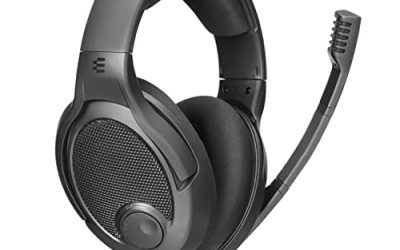
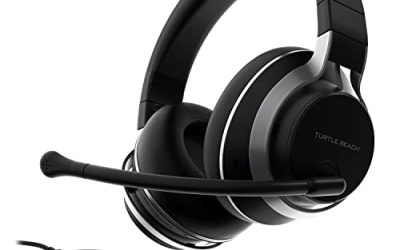
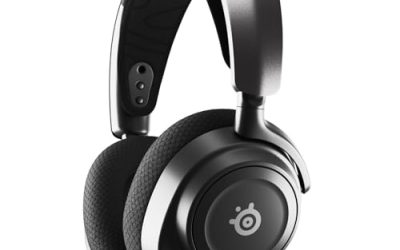
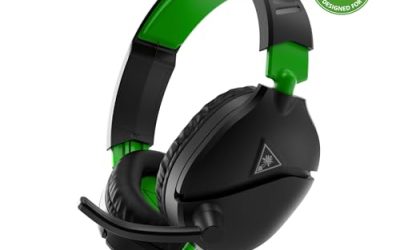
For most players, the best affordable gaming headset is a wired model with 50mm drivers and a detachable microphone, such as the Razer BlackShark V2 X or the HyperX Cloud Stinger 2. If you want to cut the cable, the Logitech G435 is the lightweight wireless option. Buy for the platform you play on and the comfort you can handle for three hours, not for surround-sound or RGB claims.
As an Amazon Associate we earn from qualifying purchases at no extra cost to you.


Our Top Picks
Top 3 picks at a glance
Quick comparison of affordable gaming headset picks
| Pick | Best for | Key specs (per manufacturer) | Price tier |
|---|---|---|---|
| Razer BlackShark V2 X | Best overall wired, competitive shooters | 50mm TriForce drivers, 3.5mm, about 240g, cardioid mic | Budget |
| Logitech G435 Lightspeed | Best wireless, light weight | 40mm drivers, USB dongle plus Bluetooth, about 165g, up to 18 hours rated | Budget |
| SteelSeries Arctis Nova 1 | Best for long sessions and multi-platform | 40mm drivers, 3.5mm, retractable mic, suspension headband | Budget to lower mid-range |
| HyperX Cloud Stinger 2 | Best for strong bass on a tight budget | 50mm drivers, 3.5mm, swivel-to-mute mic, on-ear-cup controls | Budget |
| Logitech G335 | Best for glasses wearers and small heads | 40mm drivers, 3.5mm, about 240g, foam-free suspension band | Budget |
Prices move often and vary by region and sale, so treat the tiers as a guide. Specs above come from the manufacturers’ published spec sheets; check the current listing before buying, because makers revise models quietly.
Best overall: Razer BlackShark V2 X
The BlackShark V2 X is a wired 3.5mm headset built around 50mm drivers. It has a clear, controlled sound profile that makes footsteps and directional cues easy to pick out in shooters. The cardioid mic rejects a fair amount of keyboard and room noise. It suits PC, console and mobile through a single TRRS plug.
Main trade-off: there is no USB connection or onboard EQ, so tuning depends on your platform. The “7.1” surround feature needs Razer’s software on PC and is better left off for competitive play, since virtual surround can blur positional cues.
Best wireless: Logitech G435 Lightspeed
At roughly 165g, the G435 is among the lightest gaming headsets you can buy, which matters more than driver size if you play for long stretches. It connects through a low-latency USB dongle on PC, PlayStation and Switch, and also over Bluetooth for phones. Logitech rates battery life at up to 18 hours.
Main trade-off: the built-in mics are small and pick up more room noise than a boom mic, and the dongle does not support Xbox consoles. Bass is moderate, and the light plastic build has less clamping and isolation.
Best for long sessions: SteelSeries Arctis Nova 1
The Nova 1 uses a suspension-style headband and a retractable mic, and its tuning is balanced rather than bass-heavy. It’s a good fit if you switch between PC and console and want a neutral signature that does not tire your ears. Main trade-off: it is wired only, and you pay slightly more than for the simplest budget models.
Best bass for the money: HyperX Cloud Stinger 2
The Cloud Stinger 2 has 50mm drivers, a swivel-to-mute mic and simple ear-cup controls. It leans toward a warm, bass-forward sound, which suits action games and cinematic titles. Main trade-off: the mic is acceptable rather than great, and the heavier bass can mask fine detail in competitive shooters.
Best for glasses and smaller heads: Logitech G335
The G335 uses a suspension band with soft ear pads and has a fairly low clamping force. It is a sensible choice if glasses arms press uncomfortably under heavier pads. Main trade-off: the mic is a basic flip-to-mute design, and the sound is mildly bright, so check that treble does not bother you.
How to choose: decision criteria with numbers
1. Match the connection to your platform
| Your setup | What works | What to avoid |
|---|---|---|
| PC with one combo jack or USB only | Single 3.5mm TRRS or USB/dongle headset | Separate mic/headphone plugs without a splitter |
| PC with separate green and pink jacks | Headset plus a splitter, or USB | Single TRRS plug straight into the green jack (no mic) |
| PS5 or PS4 | 3.5mm into the controller, or a PlayStation-compatible USB dongle | Xbox-only wireless headsets |
| Xbox Series X|S | 3.5mm into the controller | USB dongle models that exclude Xbox, like the G435 |
| Switch / handheld | 3.5mm or Bluetooth | Bluetooth for rhythm or fast-reaction games (added delay) |
| Phone and PC together | Dongle plus Bluetooth model | Wired-only with no phone mic support |
2. Work out real battery life if you go wireless
Rated battery life is measured under favorable conditions, usually moderate volume and lighting off. A practical estimate is to derate the claim by about 30 percent. For the G435’s 18-hour rating, that gives 18 × 0.7 ≈ 12.6 hours. If you play 3 hours a day, you get about 4.2 days between charges (12.6 ÷ 3), so plan to charge every four days, or leave it on the cable overnight. At 6 hours a day on weekends, the same headset needs a charge after roughly two days. If that routine sounds annoying, a wired headset removes the problem entirely.
3. Use weight as a comfort filter
Under about 250g is comfortable for most people over three hours. Above 300g, headband pressure becomes the common complaint, particularly with larger drivers and thick padding. Within the budget class, lighter plastic builds are more comfortable but less durable and offer less isolation. Heavier ones feel sturdier but tire faster.
4. Prioritize the mic if you talk a lot
A boom mic sits roughly 2 to 4 cm from your mouth and captures far more voice relative to room noise than a mic embedded in the ear cup. If you voice chat nightly, choose a boom mic, and ideally a detachable one. If you only listen and occasionally talk, built-in mics are fine.
5. Ignore virtual surround and marketing frequency ranges
“7.1 surround” on a budget headset is a software effect applied to two drivers. A published range of 20 Hz to 20 kHz covers the limits of human hearing but says nothing about how flat or clear the sound is. Judge instead by driver size, whether the tuning is described as balanced or bass-boosted, and what independent reviewers say about the frequency response.
What to skip at this price
- Headsets with a permanently attached, non-removable mic, if you want to use them as headphones for music.
- Models sold mainly on RGB or “gaming” looks with no driver or mic details.
- Wireless sets with no stated battery rating or latency approach (2.4GHz dongle versus Bluetooth).
- Very heavy designs if you wear glasses or have a smaller head.
Frequently Asked Questions
Are wired or wireless affordable gaming headsets better?
Wired headsets usually offer better sound and mic quality for the same price, and they never need charging. Wireless models are worth it if cable drag bothers you or you sit far from your PC. For competitive play, a 2.4GHz dongle is preferable to Bluetooth because of lower latency.
Do I need a separate microphone if I buy a budget headset?
Not necessarily. A decent boom mic on a budget headset is enough for party chat and in-game comms. A standalone USB mic only becomes worthwhile if you stream or record and want fuller voice quality.
Will a 3.5mm gaming headset work on my PC?
Yes, but check the ports. Laptops and many newer motherboards have a single combo jack that supports a four-pole TRRS plug. Desktops with separate green and pink jacks need a splitter or a USB adapter to enable the mic.
Is Bluetooth acceptable for gaming?
For casual and story-driven games it is fine. Bluetooth adds noticeable delay in fast shooters and rhythm games, so use a dongle or a wired connection for those. Many dual-mode headsets let you use the dongle on PC and Bluetooth on your phone.
How long should a budget gaming headset last?
With normal care, two to four years is realistic. The usual failures are worn ear pads, cable strain near the plug and, on wireless models, battery capacity declining. Detachable cables and replaceable ear pads extend lifespan considerably, so favor models that offer them.
Is a bigger driver always better?
No. Driver size affects how much air a driver can move, which often means stronger bass, but tuning and enclosure design matter more for clarity. A well-tuned 40mm driver can beat a poorly tuned 50mm one, so read independent frequency-response measurements where available.
Related guides
More from Amazon
Programs that pair well with the guide above. Offers and eligibility are set by Amazon and may change.
A free business account with business pricing and bulk-buying tools for work, shop or home office.
Create a business accountFree shipping on eligible items, Prime Video and more. Eligible new members can start with a free trial.
Start a Prime free trialAudiobooks and podcasts to listen to on the go. Eligible new members can start with a free trial.
Try Audible freeAd-free music streaming. Eligible new subscribers can start with a free trial.
Try Music Unlimited freeAs an Amazon Associate we earn from qualifying purchases.