The best headphones for film production are closed-back studio monitors with a flat, honest tonal balance, such as the Sony MDR-7506, Audio-Technica ATH-M50x or Beyerdynamic DT 770 Pro. Choose closed-back for location work and noisy edit bays, open-back only for quiet rooms where you do final mixing checks. Comfort over 8-hour days and a detachable cable matter as much as frequency response.
Quick comparison of film production headphones
| Pick | Best for | Key specs | Price range |
|---|---|---|---|
| Sony MDR-7506 | Location sound and dialogue monitoring | Closed-back, 40 mm drivers, 63 ohm, folding, coiled cable | Usually $90–$120 |
| Audio-Technica ATH-M50x | All-round editing and travel | Closed-back, 45 mm drivers, 38 ohm, 3 detachable cables | Usually $130–$170 |
| Beyerdynamic DT 770 Pro (80 ohm) | Long edit sessions and mixing | Closed-back, 80 ohm, velour pads, strong isolation | Usually $140–$180 |
| Sennheiser HD 280 Pro | Loud sets and budget isolation | Closed-back, 64 ohm, up to roughly 32 dB passive isolation per the maker | Usually $80–$110 |
| Sennheiser HD 560S | Final mix checks in a quiet room | Open-back, 120 ohm, neutral target | Usually $150–$200 |
What “film production” actually demands from headphones
Film work splits into three jobs with different needs. On set, you are listening for rustle, wind, plosives and clipping, so isolation and a revealing midrange matter. In the edit bay, you spend hours judging dialogue levels, cuts and room tone, so comfort and a neutral response matter. In the mix or color review stage, you check translation, so you want a reference-style tone plus a second pair that sounds like consumer gear.
That is why the same few studio models appear in nearly every post-production room. They do not flatter the sound. A bass-heavy gaming headset makes dialogue sound fuller than it is, and you then under-correct low-end rumble that audiences will hear in a theater or on a laptop.
Best overall: Audio-Technica ATH-M50x
The ATH-M50x is the safest single pair for a mixed workload. It folds flat, ships with straight and coiled cables, and is easy to drive from a camera, recorder, laptop or audio interface without an amplifier. At 38 ohm it reaches usable volume from almost anything.
The trade-off is tuning. It has a mild bass and treble lift compared with a strictly flat reference, so you should cross-check critical dialogue EQ on speakers or another pair. The pads also run warm during long sessions, though they are replaceable, and many editors swap in third-party velour pads for comfort.
Best for location sound: Sony MDR-7506
The MDR-7506 has been a production-sound staple for decades, and it is still sold. Its slightly forward upper midrange makes problems like hiss, mic bumps and clothing noise easy to hear, which is the point when you are monitoring a boom operator’s feed. It folds small and weighs little.
The trade-offs are a fixed coiled cable on the classic version, a tight clamp on larger heads, and a treble peak that some people find fatiguing over a full edit day. Treat it as a monitoring tool rather than a comfort pick.
Best for long edit sessions: Beyerdynamic DT 770 Pro
The DT 770 Pro is built around comfort and isolation. The velour pads breathe better than leatherette, and the headband spreads weight well. It is offered in 32, 80 and 250 ohm versions; the 80 ohm model is the practical middle for use with a laptop, an interface or a small headphone amp.
The trade-off is a pronounced treble peak and a heavier, less portable build. It is also bigger than the Sony or Audio-Technica, so it lives better on a desk than in a camera bag.
Best budget for loud environments: Sennheiser HD 280 Pro
If you spend time next to generators, crowds or traffic, passive isolation protects both your ears and your judgment. The HD 280 Pro is a low-cost closed-back with strong attenuation per the manufacturer, a collapsible frame and a fairly neutral sound. It lacks the detail of pricier models and the stock pads wear out, but it is a sensible spare pair for a crew.
Best open-back for quiet final checks: Sennheiser HD 560S
Open-back headphones leak sound both ways, so they are unsuitable on set or near a live microphone. In a quiet room, though, the HD 560S gives a wider, more natural stage and a neutral target that helps when judging reverb tails and the overall balance of a mix. Because it is 120 ohm, it benefits from a proper headphone output rather than a phone-grade jack.
Worked example: does your source drive the headphones?
Headphone volume depends on both impedance and the output voltage of your source. A simple check uses power into the load: P = V² / R. Suppose a laptop headphone jack delivers about 1 V RMS.
- Into 38 ohm (ATH-M50x): 1 × 1 / 38 = about 26 mW. Plenty for monitoring.
- Into 63 ohm (MDR-7506): about 16 mW. Fine, as these headphones are efficient.
- Into 120 ohm (HD 560S): about 8 mW. Workable for quiet rooms, but you will run out of headroom on dynamic material.
- Into 250 ohm (DT 770 Pro 250 ohm): about 4 mW. Too little for comfortable, clean level from most laptops.
The practical lesson is to match impedance to your source. A camera or field recorder with a weak output favors the 32–64 ohm models; a desk with an audio interface lets you use the 80–120 ohm models.
Decision matrix: which pair fits your workflow
| Your situation | Choose | Why |
|---|---|---|
| Solo shooter, one pair for everything | ATH-M50x | Detachable cables, easy to drive, travel-friendly |
| Boom operator or sound mixer | MDR-7506 or HD 280 Pro | Isolation, folding, revealing mids |
| Full-time editor at a desk | DT 770 Pro 80 ohm | Comfort across 6–10 hour sessions |
| Home studio with a quiet room | HD 560S plus a closed-back | Open-back for mix checks, closed-back for tracking |
| Weak output (camera, phone) | 32–64 ohm closed-back | Reaches volume without an amplifier |
How to choose with numbers
- Check impedance against your source. Stay under 64 ohm for cameras and laptops; go up to 80–120 ohm if you own an interface or amp.
- Prefer detachable cables. A cable failure on set should cost you ten dollars, not a headset.
- Prioritize pad material. Leatherette isolates a little better; velour is cooler. Both can be swapped on these models.
- Keep a reference. Compare your mix on the headphones, on laptop speakers and on earbuds. Differences larger than a few dB in dialogue tell you where to fix levels.
- Set safe listening levels. Long exposure above roughly 85 dB SPL raises hearing-risk, so lower the volume and use isolation rather than turning up over noise.
Gaming headsets versus studio headphones
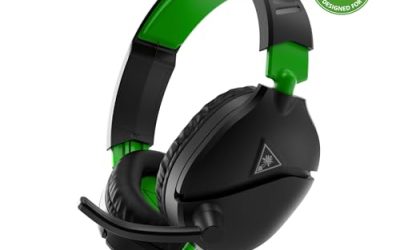
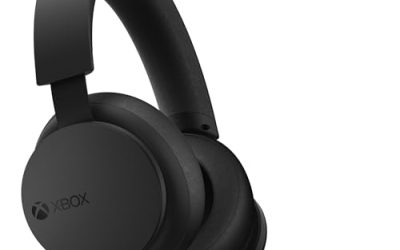
Many creators ask whether their existing gaming headset is good enough. For casual rough cuts, yes. For decisions about dialogue, EQ or noise reduction, a gaming headset usually shapes the sound with boosted bass and a treble sparkle, plus virtual surround processing that alters the stereo image. A wired studio pair is cheaper than most premium gaming headsets and gives a more truthful starting point.
Frequently Asked Questions
Are wireless headphones okay for film editing?
Generally no for critical work. Bluetooth adds latency that can throw off lip-sync judgment and applies compression that changes the sound. Use wired headphones for editing and mixing, and keep wireless pairs for casual playback checks.
Closed-back or open-back for video editing?
Closed-back is the default because it isolates noise and does not bleed into microphones. Open-back models sound more spacious and are good for final mix checks in a quiet room, but they are a poor fit in shared offices or on set.
Do I need a headphone amplifier?
Not for headphones under about 64 ohm, which run fine from laptops, cameras and recorders. For 80 ohm and higher models, an audio interface or small amplifier gives cleaner headroom, as the power calculation above shows.
How much should I spend?
Most professionals use models in the $80–$200 range. Past that, you mainly pay for comfort and finish rather than for a clearly more accurate sound.
Can I use these headphones for gaming too?
Yes, with a separate microphone or a clip-on boom mic, since these models do not include one. Many players actually prefer the accurate imaging for hearing footsteps, though they lack the surround processing of dedicated gaming headsets.
Related guides
More from Amazon
Programs that pair well with the guide above. Offers and eligibility are set by Amazon and may change.
A free business account with business pricing and bulk-buying tools for work, shop or home office.
Create a business accountFree shipping on eligible items, Prime Video and more. Eligible new members can start with a free trial.
Start a Prime free trialAudiobooks and podcasts to listen to on the go. Eligible new members can start with a free trial.
Try Audible freeAd-free music streaming. Eligible new subscribers can start with a free trial.
Try Music Unlimited freeAs an Amazon Associate we earn from qualifying purchases.