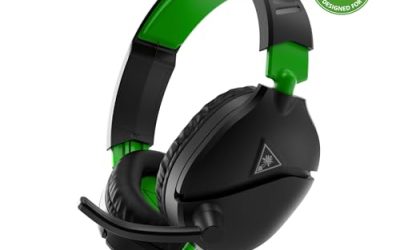
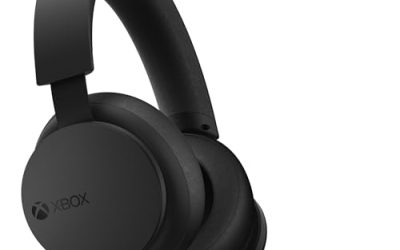
For roughly $120, the best gaming headset is the HyperX Cloud III for wired comfort and sound, with the Corsair HS80 Max Wireless class and SteelSeries Arctis Nova line as strong alternatives when you want wireless or a better microphone. At this price you are paying for comfort, a clear boom or detachable microphone, and a tuned sound signature rather than gimmicks like virtual surround.
This guide interprets the search as “best gaming headsets around $100 to $150”. It gives a comparison table, picks by use case, a worked example for choosing between wired and wireless, and a checklist for fit and microphone quality.
Quick comparison of gaming headsets near $120
| Pick | Best for | Key specs | Typical price range |
|---|---|---|---|
| HyperX Cloud III | Best overall wired | 53 mm drivers, memory-foam pads, detachable mic, about 310 g, 3.5 mm and USB | $90-$130 |
| SteelSeries Arctis Nova 3 / Nova 5 class | Best for multi-platform and software EQ | 40 mm drivers, retractable mic, lightweight frame | $60-$130 |
| Corsair HS80 Max Wireless class | Best wireless | 50 mm drivers, 2.4 GHz plus Bluetooth, around 60+ hours listed battery | $110-$150 |
| Razer BlackShark V2 X / V2 class | Best for competitive shooters | 50 mm drivers, cardioid mic, around 240-262 g | $50-$100 |
| Logitech G435 class | Best lightweight budget wireless | Around 165 g, Bluetooth and 2.4 GHz, no cable | $50-$80 |
Prices are general market ranges. Driver sizes, weights and battery claims follow manufacturer spec sheets and can vary by revision and region.
Best overall: HyperX Cloud III
The Cloud III is the benchmark for value in this band. It combines a well-tuned sound signature with a strong frame, thick memory-foam ear cushions and a detachable microphone. It works on PC, console and mobile through a 3.5 mm cable, and a USB-C DAC cable adds DTS Headphone:X spatial audio on supported systems.
The trade-off is that it is wired only and moderately heavy at around 310 g. If you want to roam from your desk, look at a wireless model. For a stable, comfortable and repairable headset, the Cloud III is the safest choice.
Best for software control and clean design: SteelSeries Arctis Nova line
The Arctis Nova range is known for a light, comfortable suspension band and a retractable microphone that disappears when not in use. Lower models such as the Nova 3 sit well under $120 and use a USB-C or 3.5 mm connection with the Sonar or companion app for EQ presets. Stepping up the family brings wireless and dual-battery options, though those cost more than $120. This line is ideal when you want a stylish headset you can wear for long sessions.
Best wireless: Corsair HS80 Max Wireless class
Wireless headsets near $120 involve compromises, and the HS80 Max class gets the balance right with 2.4 GHz low-latency connectivity, Bluetooth for a phone, and long battery life per the manufacturer’s spec sheet. The headband is comfortable, with a broadcast-style microphone that sounds fuller than most gaming booms. You will pay near the top of this price band, and wireless always adds some latency and a charging routine.
Best for competitive shooters: Razer BlackShark V2 class
The BlackShark V2 and V2 X emphasise positional clarity, with a cardioid microphone that rejects room noise and a lighter frame at around 240 to 262 g. The sound is tuned toward footsteps and midrange detail rather than bass. Both are wired. The trade-off is less bass impact for single-player games and movies. Pair it with a good sound card or the USB sound card some bundles include.
Best lightweight budget wireless: Logitech G435 class
At about 165 g, this is among the lightest wireless gaming headsets. It connects via Bluetooth and 2.4 GHz and is a good pick for kids, small heads and travel. The microphone is built-in beamforming rather than a boom, so voice quality is acceptable but not the best, and the battery is shorter than larger headsets. It is cheaper than $120, which leaves room in your budget for a separate USB microphone if you stream.
How to choose with numbers
Wired or wireless: a worked comparison
Suppose you have $120 to spend. Wireless headsets add a transmitter, battery and radio, and that cost comes out of the driver, microphone and build quality budget. A rough rule is that a wired headset at $100 typically matches a wireless headset at $150 on sound and mic quality.
- Wired at $100: 53 mm drivers, detachable mic, no charging, no latency.
- Wireless at $120: lower-cost drivers or thinner mic, battery life of 20 to 60+ hours, about 15 to 30 ms extra latency over 2.4 GHz in many designs.
- If you game at a fixed desk, the wired choice gives more audio quality per dollar.
Decision matrix
| Your situation | Choose | Reason |
|---|---|---|
| Long desk sessions, best value | HyperX Cloud III | Comfort and sound for the price |
| Competitive shooters | BlackShark V2 class | Clear positional audio, good mic |
| Move around the room | Corsair HS80 Max class | Long battery, reliable 2.4 GHz |
| Small head or glasses wearer | SteelSeries Arctis Nova or Logitech G435 class | Lighter clamp and softer fit |
| Console and PC together | 3.5 mm headset with detachable mic | Works on both without dongles |
Checklist before buying
- Weight and clamping force. Anything above about 350 g tires many users after two hours. Check glasses compatibility.
- Microphone type. A detachable boom with a cardioid pattern generally beats built-in microphones for voice clarity.
- Connection types. A 3.5 mm plug gives the widest compatibility. USB-C adds software features but may not work on every console.
- Ear pad material. Leatherette seals bass but runs warm. Fabric is cooler but leaks more sound.
- Replaceable parts. Detachable cables and pads extend life.
Settings to improve any headset
- Turn off any virtual 7.1 surround for competitive shooters and use stereo, because stereo gives more precise cues in most games.
- Set Windows to 24-bit, 48,000 Hz for output to avoid resampling.
- Reduce microphone gain until your peaks stay around -12 dB to -6 dB in a recorder, and enable noise suppression only if your room is noisy.
- Use a modest EQ lift of 1 to 3 dB around 2 to 4 kHz if footsteps feel hard to hear, but do not overdo it.
Frequently Asked Questions
Is a $120 gaming headset worth it over a $50 one?
Usually yes, because the gains show up in comfort, microphone quality and build. Drivers and tuning also improve. However, a good $60 model can be enough if you only play casually.
Are wireless gaming headsets as good as wired ones?
Modern 2.4 GHz models have low enough latency for most games, but at the same price a wired headset generally has better drivers and microphone. Choose wireless for convenience, not for sound quality.
Do I need 7.1 surround sound?
Not for most games. Stereo is easier for the brain to localise, and virtual surround can blur positional cues. It can be fun for single-player cinematic titles, and it is often a toggle.
Will these headsets work on PS5 and Xbox?
Headsets with a 3.5 mm plug work on both consoles’ controllers. Wireless dongles are platform-specific, so check whether the dongle supports your console on the spec sheet before buying.
How long should a gaming headset last?
With reasonable care, three to five years. Ear pads wear first, so choose models with replaceable cushions and a detachable cable to extend life.
Related guides
More from Amazon
Programs that pair well with the guide above. Offers and eligibility are set by Amazon and may change.
A free business account with business pricing and bulk-buying tools for work, shop or home office.
Create a business accountFree shipping on eligible items, Prime Video and more. Eligible new members can start with a free trial.
Start a Prime free trialAudiobooks and podcasts to listen to on the go. Eligible new members can start with a free trial.
Try Audible freeAd-free music streaming. Eligible new subscribers can start with a free trial.
Try Music Unlimited freeAs an Amazon Associate we earn from qualifying purchases.