
The RTX 4070 Ti is far faster than the newer RTX 5060. Benchmark data puts it roughly 35-55% ahead, with more VRAM (12 GB vs 8 GB), so swapping a 4070 Ti for a 5060 would be a significant downgrade. The RTX 5060 is the right buy only for a budget 1080p build where its $299 price, 145 W power draw, and DLSS 4 Multi Frame Generation matter more than raw speed. Anyone gaming at 1440p, or able to find a used 4070 Ti at a fair price, should choose the 4070 Ti.
As an Amazon Associate we earn from qualifying purchases at no extra cost to you.
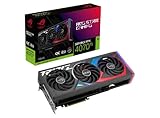
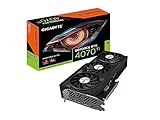


Our Top Picks
 ASUS TUF Gaming GeForce RTX 5060 8GB GDDR7RTX5060|8GB|OC11.9 x 5.3 x 2.4 inches2.5 poundsCheck on Amazon

Top 3 picks at a glance
Different Tiers, Not a Generational Upgrade
It is easy to assume a newer series number means a better card, but the tier matters more than the generation here. The RTX 4070 Ti launched in January 2023 at $799 as an upper-midrange Ada Lovelace card. It has 7,680 CUDA cores, 12 GB of GDDR6X on a 192-bit bus, and a 285 W rating. The RTX 5060 launched in May 2025 at $299 as Blackwell’s mainstream 1080p card, with 3,840 CUDA cores (exactly half), 8 GB of GDDR7 on a 128-bit bus, and a 145 W rating. Blackwell’s architectural gains and faster GDDR7 memory cannot make up for half the shader count.
Specifications
| Spec | RTX 4070 Ti | RTX 5060 |
|---|---|---|
| Architecture | Ada Lovelace | Blackwell 2.0 |
| Release date | 3 January 2023 | 19 May 2025 |
| Launch MSRP | $799 | $299 |
| CUDA cores | 7680 | 3840 |
| Boost clock | 2610 MHz | 2497 MHz |
| Process | 4 nm | 5 nm |
| VRAM | 12 GB GDDR6X | 8 GB GDDR7 |
| Memory bus | 192-bit | 128-bit |
| Bandwidth | 504.2 GB/s | 448.0 GB/s |
| L2 cache | 48 MB | 32 MB |
| TDP | 285 W | 145 W |
| Power connector | 1x 16-pin (12VHPWR) | 1x 8-pin |
| Interface | PCIe 4.0 x16 | PCIe 5.0 x8 |
| Length / width | 285 mm, 2-slot | 241 mm, 2-slot |
| Outputs | 1x HDMI 2.1, 3x DP 1.4a | 1x HDMI 2.1b, 3x DP 2.1b |
Bandwidth is the only spec where the two are close. GDDR7 lets the 5060’s narrow 128-bit bus reach 448 GB/s, close to the 4070 Ti’s 504 GB/s. Every other spec favours the 4070 Ti by a wide margin.
Gaming Benchmarks Summarized
Most aggregate sources show a large gap. PassMark’s G3D scores and several aggregate comparison sites put the RTX 4070 Ti roughly 50-55% ahead on average. GamersNexus’s RTX 5060 review measured the RTX 4070 about 28% ahead of the 5060 and placed the RX 9070, a card in the 4070 Ti’s performance range, about 34% ahead. That points to a 4070 Ti lead in the 30-40% range in that test suite. One comparison site testing at 1440p reported a smaller average lead of around 19%, with individual games ranging from 9% to 37%.
A fair summary is that the RTX 4070 Ti is roughly 35-55% faster, depending on resolution and game. The lowest figures come from CPU-limited 1080p testing, and the highest from 1440p and 4K.
- 1080p: The 5060 is a capable card, typically around 60-100 fps at high settings in demanding current games. The 4070 Ti usually exceeds 100 fps and is often CPU-limited.
- 1440p: The 4070 Ti is in its element, commonly around 80-130 fps at high to ultra settings. The 5060 needs DLSS or lower settings to stay comfortably above 60 fps in heavy games.
- 4K: The 4070 Ti handles 4K with DLSS. The 5060 is not a 4K gaming card.
All frame rates are approximate and vary with settings, CPU, and game patch.
Ray tracing
The 4070 Ti’s ray-tracing lead is at least as large as its raster lead. It has twice the RT cores and more VRAM to hold RT data structures. Path tracing with DLSS Frame Generation is viable on the 4070 Ti at 1440p, while on the 5060 heavy RT generally requires aggressive upscaling and lower settings.
DLSS 4: Multi Frame Generation vs Frame Generation
Both cards support DLSS 4 super resolution, Ray Reconstruction, Reflex, and DLSS Frame Generation. The 5060 adds Multi Frame Generation, which can generate up to three frames per rendered frame instead of one. In supported games this lets the 5060 show displayed frame rates that look competitive with a 4070 Ti using standard frame generation.
There are limits to this. Generated frames make motion look smoother but do not reduce input latency. Responsiveness follows the real rendered frame rate, which stays much lower on the 5060. Frame generation also uses extra VRAM, and on an 8 GB card that can push heavier games over the limit. Multi Frame Generation is a real convenience for single-player games on high-refresh monitors, but it does not close a 35-55% performance gap.
VRAM: 12 GB vs 8 GB
This is the 5060’s most criticized limitation. At 1080p with high textures, 8 GB works in most games, but a growing list of recent releases need medium textures to avoid stutter. With frame generation enabled, memory pressure gets worse. The 4070 Ti’s 12 GB covers 1440p high and ultra settings in nearly every current game, and only a few titles at 4K with maximum textures and path tracing exceed it. The 5060’s PCIe 5.0 x8 link also matters when VRAM overflows. On PCIe 3.0 boards it runs at Gen 3 x8 speed, and overflow stutter gets worse.
Power, PSU, and Size
The 4070 Ti is rated at 285 W and uses a 16-pin 12VHPWR connector, usually with an adapter included. The 5060 is rated at 145 W with a single 8-pin. PSU sizing using GPU TDP + CPU + about 150 W of headroom:
- RTX 5060 + 65 W CPU: 145 + 65 + 150 = 360 W, so any quality 450-550 W unit works.
- RTX 4070 Ti + 125 W CPU: 285 + 125 + 150 = 560 W, so a quality 650-750 W unit, ideally ATX 3.0/3.1 with a native 16-pin cable.
The listed reference lengths are 285 mm for the 4070 Ti and 241 mm for the 5060, both two slots wide. Many partner 4070 Ti cards are larger, at 2.5-3 slots and over 300 mm, while numerous 5060 models are compact dual-fan designs suited to small cases. Leave room for the 4070 Ti’s 16-pin cable to bend gently.
Cost per Performance
At launch MSRPs, $799 against $299, the 4070 Ti cost about 2.7 times as much for roughly 1.35-1.55 times the performance. The 5060 therefore delivered around 70-100% more performance per dollar at launch prices. On today’s used market, RTX 4070 Ti cards usually sell for around $450-$550. At about $500 used against a $299 new 5060, the 4070 Ti costs roughly 67% more for about 35-55% more performance. That works out to slightly worse cost per frame on paper, but you get 50% more VRAM and real 1440p capability. For many buyers, that settles it.
Pick This If…
| Situation | Choose |
|---|---|
| Already own an RTX 4070 Ti | Keep it. The 5060 is a big step down. |
| 1440p high-refresh gaming | RTX 4070 Ti |
| Budget 1080p build around $300 | RTX 5060 |
| Ray tracing or path tracing | RTX 4070 Ti |
| Small case, 450-550 W PSU | RTX 5060 |
| Single-player games where Multi Frame Generation helps | RTX 5060 |
| Longevity with modern texture settings | RTX 4070 Ti (12 GB) |
If a new card with 4070 Ti-like speed is the goal, the RTX 5070 is the closest current-generation equivalent and is worth pricing against a used 4070 Ti.
Frequently Asked Questions
Is the RTX 5060 better than the RTX 4070 Ti?
No. The RTX 4070 Ti is roughly 35-55% faster in games according to published benchmarks and aggregate data, and it has 12 GB of VRAM against 8 GB. The RTX 5060’s advantages are its lower price, lower power use, and Multi Frame Generation support.
Can Multi Frame Generation make the RTX 5060 as fast as a 4070 Ti?
It can raise displayed frame rates in supported games, sometimes beyond a 4070 Ti using standard frame generation. Input latency still follows the real rendered frame rate, which is much lower on the 5060. It improves smoothness, not responsiveness.
Is 8 GB of VRAM enough on the RTX 5060?
For 1080p at sensible texture settings, it works in most games. Some recent releases at high or ultra textures, especially with frame generation enabled, exceed 8 GB and stutter. The 4070 Ti’s 12 GB gives much more headroom.
What PSU does an RTX 4070 Ti need?
A quality 650-750 W power supply is a sensible target with a mainstream to high-end CPU. The card uses a 16-pin 12VHPWR connector, so an ATX 3.0 or 3.1 unit with a native cable is the cleanest option, though an adapter is usually included.
Does the RTX 4070 Ti support DLSS 4?
Yes, partly. It supports DLSS 4 super resolution with the transformer model, Ray Reconstruction, and DLSS Frame Generation with one generated frame. Multi Frame Generation is exclusive to RTX 50 series cards such as the RTX 5060.

