
Top 3 picks at a glance
Best Japanese Teppanyaki Grills for Home Cooking
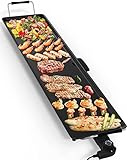
The best Japanese teppanyaki grill for most homes is the Zojirushi EA-DCC10 Gourmet Sizzler, while the Panasonic NF-W300-S is the better choice if you want a larger, multi-plate Japanese hot-plate setup and the easiest way to switch between grilling, griddling, and shallow cooking.
Japanese home “teppanyaki” appliances are usually electric hot plates rather than restaurant-style steel counters. The useful differences are cooking-surface size, how evenly the plate heats, whether the thermostat holds a stable temperature, how grease is collected, and whether the appliance can be stored without taking over a cupboard.
As an Amazon Associate we earn from qualifying purchases at no extra cost to you.



Quick comparison
| Model or type | Cooking area | Power and temperature | Best for | Main compromise |
|---|---|---|---|---|
| Zojirushi EA-DCC10 Gourmet Sizzler | Approximately 19 x 12.5 inches | 1,350 W; approximately 176–400°F | Balanced everyday teppanyaki cooking | Large for a cupboard, but not wide enough for a large party |
| Panasonic NF-W300-S | Large Japanese hot-plate format; roughly 12 x 20 inches of usable plate area, depending on the plate configuration | Approximately 1,300 W; adjustable heat up to about 250°C | Families, multiple plates, and varied Japanese cooking | More parts to wash and more storage space required |
| Tiger multi-plate hot plate, such as the CRV-G300 series | Large family-size format, commonly around 12 x 20 inches | Approximately 1,300 W; thermostatic electric control | Okonomiyaki, yakiniku-style meals, and group cooking | Availability and voltage vary by market |
| Japanese-style compact hot plate | Approximately 10–14 inches wide | 1,000–1,300 W; usually 200–250°C maximum | Small kitchens, couples, and countertop storage | Temperature recovery slows when cooking several servings |
1. Zojirushi EA-DCC10 Gourmet Sizzler: best overall
The EA-DCC10 is the easiest recommendation for most households because its cooking surface is large enough for dinner but still shaped like a single appliance rather than a full tabletop station. Its approximately 19-by-12.5-inch plate gives two to four people room for steak, vegetables, seafood, or pancakes without forcing every ingredient into the center.
Its strongest feature is temperature control. The thermostat covers a useful range from gentle warming and shallow cooking to a high setting around 400°F. That makes it more versatile than a grill that is permanently optimized for searing. Use the lower settings for tamagoyaki-style cooking, warming sauces, or keeping cooked food hot; use the upper range for beef, pork, seafood, and fried rice.
Heat distribution and grease handling
The thick cooking plate and enclosed heating design help reduce the cold strips often found on inexpensive griddles. The surface is still not identical to a commercial steel teppan: adding a large amount of refrigerated food will lower the temperature temporarily. Preheat for about 10 minutes, then cook in batches instead of covering the entire plate with cold ingredients.
The included lid is useful for finishing thicker food, but it also traps moisture. Leave it off when you want browning and use it when you want vegetables or dumplings to cook through. A surrounding moat and removable plate make grease management less messy than cooking directly in a frying pan, although very fatty meat can still require an occasional wipe during the meal.
2. Panasonic NF-W300-S: best for families and plate flexibility
The Panasonic NF-W300-S suits households that want a Japanese hot plate for more than teppanyaki. Its larger format and interchangeable cooking surfaces are useful for okonomiyaki, pancakes, yakisoba, grilled meat, and shallow hot-pot-style cooking, depending on the included configuration and local version.
The main advantage is not simply the extra surface area. It is the ability to assign different tasks to different plates. A flat plate is best for batter and vegetables, while a ridged or shaped plate can let fat run away from meat. This reduces the common problem of trying to cook oily beef and delicate pancakes on the same surface.
When the larger format is worth it
Choose this size if three or more people regularly eat at the table, or if you want to cook a complete meal without serving food in waves. The trade-off is storage: the base, lid, thermostat, and plates may need a shelf roughly 24 inches wide and 16 inches deep, with additional vertical clearance. Measure the cupboard before buying rather than relying on the cooking-area dimensions.
3. Tiger CRV-G300 series: best large Japanese family hot plate
Tiger’s CRV-G300 series represents the large Japanese hot-plate approach: a broad tabletop appliance intended for shared meals, with a flat cooking plate and additional configurations depending on the regional package. It is a strong fit for okonomiyaki parties, yakiniku-style dinners, and households that want to cook several portions at once.
Large appliances have one important heat advantage: food can be spread over a wider area instead of being piled together. That matters for browning. However, a larger plate does not automatically mean faster cooking. A 1,300 W appliance spread across about 240 square inches has less nominal power density than a smaller 1,350 W grill.
For example, a 1,350 W grill with a 19-by-12.5-inch surface has about 5.7 watts per square inch. A 1,300 W grill with a 20-by-12-inch surface has about 5.4 watts per square inch. The difference is small, but it explains why the larger model can need more preheating and may recover more slowly after adding a full batch of cold meat.
Choosing by your cooking situation
| Your situation | Recommended class | Why |
|---|---|---|
| One or two people, limited storage | Compact 1,000–1,300 W hot plate | Uses less counter and cupboard space; faster to preheat for small batches |
| Two to four people and mixed recipes | Zojirushi EA-DCC10 | Good balance of area, control, removable parts, and manageable cleanup |
| Four or more people | Panasonic NF-W300-S or Tiger CRV-G300-series appliance | More usable area and less crowding during shared meals |
| Mostly fatty meat or yakiniku | Ridged or sloped plate with a grease channel | Moves rendered fat away from the food and reduces shallow frying |
| Mostly pancakes, okonomiyaki, and fried rice | Broad flat plate | Provides consistent contact and makes turning food easier |
| Frequent cupboard storage | Single-plate model with detachable thermostat | Fewer loose parts and a simpler storage footprint |
Temperature control: what the numbers mean in practice
A wide temperature dial is useful only if the grill can hold heat after food is added. For high-temperature searing, preheat at the maximum setting, then wait until the heating indicator cycles once or twice. Add dry food in a single layer and avoid moving it for the first minute or two. If the indicator remains on continuously after adding food, the plate is recovering; do not add another batch yet.
- 250–300°F: warming, gentle vegetables, and keeping cooked food hot.
- 325–350°F: pancakes, eggs, sliced vegetables, and many batter-based dishes.
- 375–400°F: browning beef, pork, seafood, fried rice, and yakisoba.
These are surface-temperature targets rather than guarantees from every thermostat. Actual plate temperature varies with the probe location, room temperature, food moisture, and whether a lid is fitted.
Cleanup and grease management
Look for a removable plate, a detachable temperature controller, and a grease channel or moat. Those features matter more than a decorative ridged pattern. A ridged plate can reduce contact with rendered fat, but a flat plate is usually easier to scrape clean and is better for batter.
Let the plate cool until it is warm rather than hot, then wipe away oil with paper towels before washing. Do not pour cold water onto a hot nonstick plate: the thermal shock can warp it and may damage the coating. Avoid metal spatulas unless the manufacturer specifically permits them. A plastic or wooden scraper is more useful for lifting cooked-on starch without scratching the surface.
Countertop and electrical planning
A 1,300–1,350 W grill draws about 11–11.25 amps on a 120 V circuit:
1,350 W ÷ 120 V = 11.25 A
That leaves little spare capacity on a 15-amp circuit if the same circuit is also powering a kettle, toaster, or microwave. Plug the grill directly into a suitable wall outlet rather than using a lightweight extension lead. On 230 V power, the same 1,350 W load is about 5.9 amps, but the appliance must be designed for the local voltage; a plug adapter does not convert voltage.
Allow at least 4 inches of clearance around the appliance, keep the cord away from the hot plate, and use a heat-resistant, stable surface. Large Japanese hot plates are often awkward to store because their lids and plates do not nest neatly, so measure the complete packed appliance—not just the cooking surface.
Frequently asked questions
Can I use a Japanese hot plate for foods other than teppanyaki?
Yes, these appliances can handle a range of foods beyond teppanyaki. The article describes using them for pancakes, eggs, vegetables, fried rice, yakisoba, okonomiyaki, seafood, and warming food. Some larger models have interchangeable plates for different tasks, and a lid can help cook vegetables or dumplings through.
Should I cook with the lid on or off?
Leave the lid off when you want food to brown, and use it when you want vegetables or dumplings to cook through. The article notes that the lid traps moisture, so covering the grill is less suitable when browning is the goal.
How long should I preheat a teppanyaki grill?
Preheat for about 10 minutes before cooking, then wait for the heating indicator to cycle once or twice before adding food for high-temperature searing. If the indicator stays on continuously after food goes on, the plate is recovering; wait before adding another batch.
Is a ridged plate always better for grilling meat?
No. A ridged or sloped plate can move rendered fat away from meat, but a broad flat plate is better for batter and easier to scrape clean. Choose the plate based on what you cook most, rather than assuming ridges are best for every meal.
Can I rinse the cooking plate while it is still hot?
No. Let the plate cool until it is warm rather than hot, and wipe away oil before washing. Pouring cold water onto a hot nonstick plate can cause thermal shock, warp the plate, or damage its coating.
Final verdict
For the best balance of cooking area, heat control, heat distribution, grease management, and storage, choose the Zojirushi EA-DCC10 Gourmet Sizzler. Choose the Panasonic NF-W300-S or a comparable large Tiger multi-plate model when shared meals and interchangeable cooking surfaces matter more than compact storage. If your priority is a small kitchen, select a compact Japanese-style hot plate and accept smaller batches and slower recovery when the entire surface is loaded.


