
The best red light therapy masks for home use are the CurrentBody LED Face Mask Series 2 for broad, high-output facial coverage, the Omnilux Contour Face for a lightweight flexible fit and simple routine, and the Therabody TheraFace Mask if you want red, near-infrared, and blue-light modes in one device.
Red-light masks are not interchangeable: wavelength selection, irradiance, treatment area, eye protection, mask fit, and power design all affect whether you can use one consistently enough to matter. The comparisons below focus on those practical differences rather than treating the largest LED count as the best specification.
As an Amazon Associate we earn from qualifying purchases at no extra cost to you.
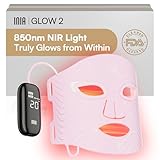


Top 3 picks at a glance
Best red light therapy masks compared
| Mask | Light wavelengths | Typical treatment | Power and fit | Best for |
|---|---|---|---|---|
| CurrentBody LED Face Mask Series 2 | Red around 633 nm; near-infrared around 830 nm and 1072 nm | About 10 minutes | Flexible silicone mask; controller and rechargeable operation | Maximum facial coverage and a multi-wavelength anti-aging routine |
| Omnilux Contour Face | Red around 633 nm; near-infrared around 830 nm | About 10 minutes, several times weekly | Soft flexible mask; wired controller; lightweight | Comfort, portability, and a straightforward red/NIR treatment |
| Therabody TheraFace Mask | Red around 633 nm; near-infrared around 830 nm; blue around 415 nm | About 9 minutes for the programmed cycle | Rigid molded mask; built-in rechargeable battery | Users who want blue-light acne mode and hands-free use |
| Dr Dennis Gross DRx SpectraLite FaceWare Pro | Red and near-infrared modes; blue-light mode | About 3 minutes per programmed treatment | Rigid mask; rechargeable battery; compact session | The shortest scheduled treatment |
| HigherDose Red Light Face Mask | Red around 630 nm; near-infrared around 830 nm | About 10 minutes | Flexible mask with rechargeable controller | A simple red/NIR routine with a softer, more adaptable fit |
Exact irradiance, diode layout, treatment modes, and included accessories can change between product generations and regional versions. Check the manufacturer’s current technical sheet before buying, especially if a listed wavelength or output specification is important to you.
Our picks by shopper and routine
Best overall: CurrentBody LED Face Mask Series 2
The CurrentBody Series 2 is the strongest all-round choice when treatment coverage and wavelength variety matter more than having the lightest mask. Its flexible construction can sit close to the face, while its red and near-infrared combination targets both surface-level and somewhat deeper tissue exposure. The additional near-infrared band is a useful distinction on paper, although more wavelengths do not automatically mean better results if the mask fits poorly.
Choose it if you can commit to roughly 10 minutes per session and want a mask that covers the forehead, cheeks, nose area, and chin without requiring separate panels. It is usually positioned in the premium category, commonly around $400–$600 depending on promotions and the included kit.
Best for comfort and simplicity: Omnilux Contour Face
The Omnilux Contour Face uses the familiar red-and-near-infrared pairing without adding a blue-light acne mode or a complicated control system. Its soft mask is relatively easy to pack and less bulky than many rigid alternatives. That matters because a theoretically excellent mask that gets left in a drawer has a practical dose of zero.
It is a good fit for someone whose main goal is a repeatable red/NIR skincare routine rather than treating occasional breakouts. The cable-connected controller gives it less freedom of movement than a fully self-contained mask, but the low-complexity design can also mean fewer distractions during a session. It generally sells in the roughly $300–$400 range.
Best multi-mode option: Therabody TheraFace Mask
The TheraFace Mask stands out for combining red light, near-infrared light, and blue light in a rigid, cordless format. Blue light is intended for acne-related use, while red and near-infrared modes are used for cosmetic skin goals. This makes the mask more versatile, but it also means shoppers should select the correct mode rather than assuming every session should use every wavelength.
The rigid shell holds its geometry consistently and the built-in battery avoids a dangling controller. The trade-off is weight and fit: a molded mask may press on the nose or cheekbones more noticeably than flexible silicone. It is typically a premium purchase, often around $500–$700.
Best for the shortest session: Dr Dennis Gross DRx SpectraLite FaceWare Pro
The DRx SpectraLite FaceWare Pro is designed around a very short programmed cycle of about three minutes. That is its practical advantage, particularly for a morning routine where a 10-minute session feels inconvenient. It also offers red, near-infrared, and blue-light functions in a rigid cordless design.
A short session does not reveal the complete dose by itself. Dose depends on irradiance and time, so compare the manufacturer’s irradiance specification rather than assuming three minutes is automatically more powerful than 10 minutes. The mask is commonly priced around $400–$500.
How to compare the specifications that actually matter
1. Wavelengths
For cosmetic red-light use, look for a red band near red 630–660 nm and a near-infrared band around 810–850 nm. Red light is more surface-oriented; near-infrared light penetrates farther, although penetration is not unlimited and published claims should not be interpreted as a guarantee of a particular result.
Blue light, usually near 415 nm, is a separate feature aimed at acne-related routines. It can be useful for some people, but it is not a substitute for red light and may be unsuitable for users with photosensitivity or medications that increase light sensitivity. Follow the manufacturer’s safety guidance.
2. Irradiance and dose
Irradiance is optical power delivered per area, normally shown in milliwatts per square centimeter (mW/cm²). Fluence, or energy dose, is calculated as:
Dose in J/cm² = irradiance in W/cm² × time in seconds
For example, a mask delivering 30 mW/cm² for 10 minutes provides:
0.030 W/cm² × 600 seconds = 18 J/cm²
A mask delivering 50 mW/cm² for three minutes provides:
0.050 W/cm² × 180 seconds = 9 J/cm²
The second mask has higher irradiance but half the total energy in that scheduled session. This is why treatment time, output, and wavelength must be assessed together. Do not extend sessions to compensate for an unclear specification; excessive exposure can increase irritation without improving the outcome.
3. Coverage and distance
A mask should illuminate the central face, forehead, cheeks, chin, and the skin beside the nose with minimal gaps. LEDs mounted farther from the skin may produce less even exposure, while an extremely close mask can create pressure points. A small gap is not automatically a problem, but a mask that floats above the cheeks or leaves the jaw uncovered may not deliver the coverage you expect.
Look for a published irradiance map or at least a clear statement of the measurement distance. A single peak-output number measured directly against an LED is less useful than an average output measured across the treatment area.
4. Fit, eyes, and comfort
Flexible silicone masks usually conform better to different face shapes and can be worn while walking around. Rigid masks hold their LED position and often feel more substantial, but they may be less comfortable for narrow noses or prominent cheekbones. Adjustable straps, nose spacing, ventilation, and eye shielding are more important to daily use than decorative LED counts.
Never stare into exposed LEDs, and use the supplied eye protection when the manufacturer recommends it. Stop if you experience persistent eye discomfort, headache, skin burning, or unusual irritation.
5. Battery life
Battery specifications are often less useful than session math. If a controller provides 60 minutes of usable treatment time, that equals approximately six 10-minute sessions or twenty 3-minute sessions before recharging. A mask with a nominal 90-minute battery supports about nine 10-minute sessions, assuming the quoted capacity reflects actual treatment output rather than standby time.
For a daily user, choose a device that can complete at least one week of sessions between charges, or choose a wired-controller model that does not make battery level part of the routine. Rechargeable masks are more convenient for travel, but a non-removable battery eventually becomes a service-life limitation.
Decision matrix: which mask suits your situation?
| Your priority | Most suitable direction | Why | What to compromise on |
|---|---|---|---|
| Maximum coverage and multiple NIR bands | CurrentBody LED Face Mask Series 2 | Broad flexible facial design and red/NIR combination | Premium price and a longer session |
| Lightweight, uncomplicated red-light routine | Omnilux Contour Face | Simple two-band treatment and flexible fit | Wired controller and no blue-light mode |
| Acne mode plus red/NIR in one mask | Therabody TheraFace Mask or DRx SpectraLite FaceWare Pro | Dedicated blue-light functionality and cordless operation | Rigid fit and higher weight |
| Fastest scheduled treatment | DRx SpectraLite FaceWare Pro | Approximately three-minute programmed cycle | Less flexibility over dose and mode timing |
| Portability with a softer construction | Omnilux Contour Face or HigherDose Red Light Face Mask | Flexible masks pack more easily and adapt to face shape | May require a separate controller or cable |
How to use a red-light mask effectively
- Clean and dry your face. Oils, makeup, and sunscreen can interfere with light reaching the skin.
- Check the strap and position the mask so the LEDs sit evenly over the face without pressing hard on the eyelids.
- Use the manufacturer’s starting schedule, commonly around 5–10 minutes several times per week. Do not add extra sessions because a result is not immediate.
- Apply skincare products after treatment unless the device documentation specifically permits a compatible product beforehand.
- Take a baseline photo in the same lighting every few weeks rather than judging changes from day to day.
Before use, check with a clinician if you have a photosensitive condition, take light-sensitizing medication, have an eye condition, or are treating active skin disease. Red-light masks are cosmetic devices for many home users, not a replacement for diagnosis or prescribed treatment.
Frequently asked questions
How often should I use a red-light mask?
Follow the treatment schedule specified by the mask’s manufacturer. The article describes several masks as using sessions of about 10 minutes and notes that the Omnilux Contour Face is used several times weekly, while other models have different programmed session lengths. Avoid extending sessions to make up for unclear output specifications, since excessive exposure can increase irritation without improving results.
Can I use blue light and red light in the same session?
The article does not say that every session should use every wavelength. Blue light is described as a separate mode intended for acne-related use, while red and near-infrared modes are used for cosmetic skin goals. Choose the mode that fits your routine and follow the manufacturer’s safety guidance; blue light may be unsuitable with photosensitivity or medications that increase light sensitivity.
Will a red-light mask treat my neck?
Not necessarily: the article’s comparisons focus on facial coverage, and it does not confirm neck coverage for the listed masks. Check the manufacturer’s current product information for the treatment area before buying. A mask that leaves an area uncovered may not deliver the coverage you expect, even if its other specifications look suitable.
What should I do if a mask irritates my skin or eyes?
Stop using the mask if you experience persistent eye discomfort, a headache, skin burning, or unusual irritation. The article also advises never staring into exposed LEDs and using supplied eye protection when the manufacturer recommends it. Follow the device’s safety guidance, particularly if you are considering a blue-light mode and have photosensitivity or take medication that increases light sensitivity.
How can I tell whether a mask’s output specification is useful?
Look for an irradiance map or a clear measurement distance, and compare average output across the treatment area rather than a peak measured directly against an LED. Irradiance alone is not the full dose: the article calculates dose from irradiance and treatment time. Exact output and diode details can vary between product generations and regional versions, so check the current technical sheet.
Bottom line
The CurrentBody LED Face Mask Series 2 is the most complete choice for shoppers prioritizing coverage and wavelength options. The Omnilux Contour Face is easier to recommend when comfort and a simple routine come first. Choose the Therabody TheraFace Mask or DRx SpectraLite FaceWare Pro if blue-light functionality and cordless operation matter, with the latter especially appealing when a short session is the deciding factor. Whichever model you choose, prioritize a close, comfortable fit and a clearly documented irradiance over LED count alone.


