
For gaming in 2026 the ranking is straightforward: an NVMe SSD in an M.2 slot is the fastest option, a 2.5-inch SATA SSD is the sensible budget pick, and a mechanical HDD belongs in your media library rather than your game drive. The reason this comparison confuses people is that the four terms describe two different things — HDD and SSD are types of storage hardware, while NVMe is a protocol and M.2 is just a connector shape. An M.2 drive can be either a slow SATA drive or a blazing-fast NVMe one, and the difference matters enormously. Here’s how to untangle it.
As an Amazon Associate we earn from qualifying purchases at no extra cost to you.

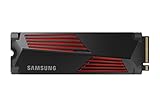


Top 3 picks at a glance
The Big Confusion: M.2 Is a Shape, NVMe Is a Language
M.2 describes the physical slot — that flat “gumstick” connector on your motherboard, usually in the 2280 size (22mm wide, 80mm long). It says nothing about speed. Inside that slot, a drive can speak one of two languages:
- SATA over M.2 — the same protocol a 2.5-inch SSD uses, capped around 550 MB/s. Buying one of these expecting NVMe speeds is the most common storage mistake builders make.
- NVMe over M.2 — a protocol designed for flash that talks directly over PCI Express lanes, with speeds from roughly 3,500 MB/s to over 14,000 MB/s depending on PCIe generation.
The connector keying tells you what’s supported: M-key slots take NVMe drives, B-key is typically SATA-only, and B+M keyed drives work in either but are usually SATA. One more gotcha worth checking your manual for: on many budget boards the second M.2 slot is SATA-only or shares lanes with your GPU slot or SATA ports, so installing a drive there can disable ports or cut your graphics card to x8 bandwidth.
Speed Tiers in Real Numbers
Here’s how the four relevant tiers actually compare, including real game load behavior rather than just spec-sheet sequential reads:
| Drive type | Interface | Sequential read | Random 4K IOPS | Typical open-world game load | Price per TB |
|---|---|---|---|---|---|
| 3.5″ HDD (7200rpm) | SATA | 160–260 MB/s | ~100–200 | 45–70 seconds | ~$15–20 |
| 2.5″ SATA SSD | SATA | ~550 MB/s | ~90,000 | 20–28 seconds | ~$55–75 |
| Gen3 NVMe SSD | PCIe 3.0 x4 | ~3,500 MB/s | ~500,000 | 16–22 seconds | ~$45–65 |
| Gen4 NVMe SSD | PCIe 4.0 x4 | ~7,400 MB/s | ~1,000,000 | 13–18 seconds | ~$55–85 |
| Gen5 NVMe SSD | PCIe 5.0 x4 | ~14,500 MB/s | ~1,500,000+ | 12–17 seconds | ~$95–140 |
Those load numbers are approximate and vary by title, but the pattern holds across games: the jump from HDD to any SSD is massive, while each NVMe generation shaves off only a few more seconds.
Why the Speed Caps Exist (The Bandwidth Math)
You can predict each tier’s ceiling from the interface alone. SATA III runs at 6 Gbps — that’s 750 MB/s theoretical, but 8b/10b encoding overhead drops the usable ceiling to ~600 MB/s, which is why every SATA SSD clusters around 550 MB/s regardless of price. PCIe 4.0 carries 16 GT/s per lane, so a four-lane M.2 slot moves 64 Gbps; with the far more efficient 128b/130b encoding that works out to roughly 7.88 GB/s usable, which is why Gen4 drives like the Samsung 990 Pro and WD Black SN850X all top out near 7,400 MB/s. Double it for PCIe 5.0: 128 Gbps, ~15.75 GB/s usable, and real drives like the Samsung 9100 Pro and Crucial T705 landing around 14,000–14,500 MB/s.
Why Faster Specs Don’t Mean Proportionally Faster Loads
If a Gen4 drive is 13x faster on paper than a SATA SSD, why isn’t the load time 13x shorter? Two reasons. First, loading a level isn’t just reading — the CPU has to decompress assets and compile shaders, and that work doesn’t scale with drive speed. Second, game loading is dominated by random reads of thousands of small files, which is where the IOPS column above matters. A mechanical HDD manages ~150 random operations per second because a physical arm has to move; even a cheap NVMe drive does over half a million. That’s why open-world games stutter and hitch on HDDs during asset streaming — it’s a latency problem, not a bandwidth problem.
A practical illustration — copying a 150GB game install between drives:
- HDD as the slow end of the transfer (~180 MB/s sustained): about 14 minutes
- SATA SSD as the bottleneck (~500 MB/s sustained write): about 5 minutes
- Gen4 NVMe to Gen4 NVMe: roughly 35–45 seconds
The rule that saves you money: a transfer is always limited by the slowest device in the chain. A 14,500 MB/s Gen5 drive copying from an HDD still runs at HDD speed.
2.5-Inch SSD vs 3.5-Inch HDD: The Physical Side
This pairing comes up constantly because they’re the two drives that share traditional drive bays. A 3.5-inch HDD (like a Seagate BarraCuda or WD Blue) needs a desktop bay plus a SATA power cable — it physically won’t fit in a laptop. A 2.5-inch SSD (like the Crucial MX500 or Samsung 870 EVO) fits laptop bays, mounts anywhere in a desktop, and draws less power while producing zero noise or vibration.
Performance-wise there’s no contest: the 2.5-inch SSD loads games roughly 2–3x faster and eliminates the micro-stutter HDDs cause in streaming-heavy titles. Where the 3.5-inch HDD still wins is pure economics — at around $15–20 per TB versus $55–75, it’s the only sane way to store a multi-terabyte video library, backups, or a Steam library of older and indie titles where load times matter less.
Which One for Your Situation
| Your situation | Best choice | Why |
|---|---|---|
| Gaming PC with a free M.2 slot | 1–2TB Gen4 NVMe (Samsung 990 Pro, WD Black SN850X, or budget Kingston NV3) | Near-top real-world speed at the best price-per-GB sweet spot |
| Laptop with only a 2.5″ bay | 2.5″ SATA SSD (Crucial MX500, Samsung 870 EVO) | Only option that fits — still transforms any HDD laptop |
| Desktop with no M.2 slot | SATA SSD, or NVMe on a PCIe adapter card | A spare x4 slot plus a cheap adapter gets you full NVMe speeds |
| PS5 expansion | Gen4 NVMe rated 5,500 MB/s+, with heatsink | Sony’s stated requirement for expansion drives |
| Bulk storage: media, backups, old games | 3.5″ HDD, 4TB+ (Seagate BarraCuda, WD Blue) | ~$15–20 per TB; speed is irrelevant for this role |
| Content creation, huge file transfers | Gen5 NVMe (Samsung 9100 Pro, Crucial T705) | Where the extra bandwidth actually pays off — plus heatsink required |
For most gamers in 2026, a 2TB Gen4 NVMe in the $100–140 range is the correct answer — it’s fast enough that Gen5 buys you seconds at most in current titles, though games built around DirectStorage’s GPU decompression may widen that gap over the next few years.
FAQ
Is M.2 the same thing as NVMe?
No. M.2 is the slot’s physical shape; NVMe is the protocol the drive uses to communicate. An M.2 drive running SATA performs identically to a 2.5-inch SATA SSD — around 550 MB/s — despite looking like a “fast” drive.
Will any NVMe drive work in my M.2 slot?
Usually yes on modern boards, but check two things: whether the slot supports NVMe (some older ones are SATA-only) and whether it shares lanes — installing a drive can disable SATA ports or drop your GPU to x8. Your motherboard manual’s storage section lists this explicitly.
Is PCIe 5.0 worth it for gaming?
Mostly no, yet. Real load-time gains over a good Gen4 drive are typically 1–3 seconds, Gen5 drives run hot enough to need substantial heatsinks, and they cost roughly double per TB. Buy one for heavy productivity workloads or as DirectStorage insurance — not for today’s games.
What does 2280 mean?
The drive’s dimensions: 22mm wide, 80mm long. It’s the standard size virtually every desktop M.2 slot supports. Some thin laptops and handhelds need shorter 2242 or 2230 drives, so verify the length before buying for those.
Can I still game on an HDD?
Games will run, but expect 45–70 second loads where an SSD takes 15–20, plus visible stutter in open-world titles that stream assets continuously. It’s acceptable for older and indie games; painful for anything released in the last few years.


