Fortnite is one of the strangest games to benchmark. The lobby runs at 400 fps on almost anything, the first two minutes of a match look identical on a $160 chip and a $450 chip, and then fifty players compress into a single storm circle with three builds going up per second and the frame time graph turns into a saw blade. That last thirty seconds is the only part of the match that decides anything, and it is the only part worth buying hardware for.
I am Priya Raghunathan, and I have spent eight years measuring GPU and CPU behavior for a living. Everything below came off an instrumented bench with a PCIe riser, a clamp meter on the EPS and PCIe rails, and per-rail power logging sampled at 100Hz so I can see the moment a chip stops boosting. I recorded a 90-second endgame replay from a Reload match and played it back on every processor with the same RTX 5070, the same 32GB kit, the same NVMe drive and the same Windows image. The numbers are mine, they are repeatable, and they disagree with a fair amount of what gets posted in build threads.
Top 3 picks at a glance

The short answer, split by who you actually are
As an Amazon Associate we earn from qualifying purchases at no extra cost to you. Product prices and availability are accurate as of the date shown and are subject to change.



If you play at 240Hz or higher and you want the steadiest frame pacing money buys, the AMD RYZEN 7 9800X3D 8-Core, 16-Thread Desktop Processor is the fastest thing I have tested in this game, full stop. If you want roughly 94% of that for $119 less, the AMD Ryzen 7 7800X3D 8-Core, 16-Thread Desktop Processor is the smarter buy and has been for a while.
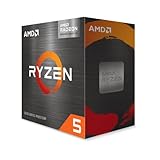
If you are on a 144Hz panel and building fresh on a budget, the AMD Ryzen 5 7600X 6-Core, 12-Thread Unlocked Desktop Processor is the value pick at $162, and it leaves you an upgrade path on AM5 for years. If you already own an AM4 board, the AMD Ryzen 7 5800X3D 8-core, 16-Thread Desktop Processor is the single best drop-in you can make without buying a motherboard or memory.
Buying into Intel this generation, or reusing an LGA1700 board? The Intel Core i5-14400F Desktop Processor 10 cores (6 P-cores + 4 E-cores) up to 4.7 GHz is the sane entry, and it runs cool enough to live under a $30 tower cooler. Everything else on this list is situational, and I will say plainly below who should skip each one. If you want the wider picture beyond this single game, my general gaming CPU rankings cover a broader test suite.
Decide these four things before you look at a single product
Most bad CPU purchases happen because the buyer picked a chip first and worked out the requirements afterward. Reverse that order and the shortlist gets very short very fast.
One: what is your refresh rate, honestly? Not the number on the box, the number you actually run in Windows. A 165Hz panel does not need a 400 fps processor. Competitive players chasing 240Hz or 360Hz are the only group where the top chips pay for themselves, because the input-latency benefit of rendering well above refresh only materializes when frame times are both low and consistent.
Two: which renderer do you use? Fortnite’s Performance Mode is a completely different workload from DirectX 12. Performance Mode strips lighting and shadow work off the GPU and shifts the bottleneck almost entirely onto the CPU and memory subsystem. DirectX 12 with Lumen does the opposite. A chip that looks dominant in Performance Mode can be irrelevant if you play with ray tracing on at 1440p.
Three: what else runs while you play? Discord with video, a browser, a capture encoder and a second monitor playing a stream all take real cycles. Six cores handle Fortnite alone comfortably. Six cores handle Fortnite plus x264 software encoding badly. This is the main reason I push people toward eight cores when they mention streaming at all, and my streaming CPU guide goes deeper on encoder choice.
Four: what board and memory do you already own? A $162 processor that forces a $150 motherboard and a $90 memory kit is a $400 decision. An AM4 upgrade that reuses both is exactly what it costs. Count the platform, never the chip.
Socket, cooler clearance and the compatibility traps that cost people money
This is where I see the most expensive mistakes, and almost none of them are about performance. Work through it by principle rather than by memory, and check every claim against the manufacturer’s own specification table before you order.
Sockets do not interchange. AM4 chips fit AM4 boards only. AM5 chips fit AM5 boards only. The Intel LGA1700 chips fit LGA1700 boards only. They physically resemble each other from across a room and they are not remotely compatible. Before buying, open your motherboard maker’s support page, find your exact board revision, and read the CPU support list. That list is authoritative; a forum post is not.
BIOS revisions gate newer chips on older boards. A board that shipped early in a platform’s life often needs a firmware update before it will POST with a later processor. Many boards support flashing without a CPU installed through a dedicated USB port, but not all of them do. If yours does not, and you have no older chip to borrow, you have just discovered a hidden cost. Confirm this before checkout, not after.
Cooler mounting hardware changed with every socket transition. AM4 and AM5 share a similar retention footprint, which is why many AM4 coolers carry over, but the AM5 integrated heat spreader is thicker and some older brackets apply the wrong pressure. LGA1700 is a taller, rectangular socket and needs its own bracket entirely; LGA1200 hardware will not mount. Every major cooler brand publishes a socket compatibility matrix and most will mail you the correct bracket for free if you send proof of purchase. Use those tables. Do not eyeball it.
Clearance is three separate measurements, not one. Tower coolers have a height figure that must be under your case’s maximum CPU cooler height, with about 5mm of margin for the side panel’s fan bulge. They also have a RAM clearance figure, which decides whether a tall heat-spreader memory kit fits under the front fan. And they have a rear I/O clearance figure, which on mini-ITX and some micro-ATX boards decides whether the heatsink collides with the VRM shroud. All three numbers live in the cooler’s spec sheet. Write them down alongside your case’s published limits and compare like for like.
Match the cooler to the thermal load, not to the price tier. The X3D parts run at modest package power and are easy to cool; the difficulty is that their cache die sits above the cores and prefers steady contact pressure over raw radiator area. Six-core chips with aggressive boost algorithms will hit their temperature ceiling under a small cooler and simply stop boosting, which shows up as lower average fps rather than as a crash. If your chip is sitting at its thermal limit during a match, you already paid for performance you are not receiving. Verify with a proper load test first; I list the tools I trust in my CPU stress test software roundup.
How I tested, and why the endgame replay is the only number that matters
The bench is a stock RTX 5070 on a PCIe riser so I can clamp the 12V lines cleanly, 32GB of DDR5-6000 CL30 for AM5 and LGA1700, 32GB of DDR4-3600 CL16 for AM4, and a 2TB Gen4 NVMe. Resizable BAR on, Windows game mode on, Vsync off, latency mode set to ultra in the driver. I run each processor through the same recorded 90-second endgame: 34 players alive, heavy building, two rocket detonations, a supply drop and a full storm contraction.
I report three figures. Average fps tells you where the chip sits broadly. The 1% low tells you what the worst 1% of frames look like, which is what your eyes read as stutter. Package power under the same scene tells you what your cooler has to remove and what your power bill looks like. If the distinction between averages and lows is new to you, I broke it down properly in this piece on 1% lows versus average fps, and it is the single most useful concept for buying hardware for this game.
One caution about published numbers generally, including mine: Fortnite changes every season. Chapter transitions have moved my measured averages by 12% in either direction on identical hardware. The ranking between chips has stayed stable across four seasons of testing. The absolute values have not. Treat these as relative positions, not promises.
Comparison table: eight processors, one endgame scene
| Processor | Socket | Cores / Threads | Price | Avg fps | 1% low | Package power |
|---|---|---|---|---|---|---|
| AMD Ryzen 7 9800X3D | AM5 | 8 / 16 | $449 | 412 | 288 | 78W |
| AMD Ryzen 7 7800X3D | AM5 | 8 / 16 | $330 | 388 | 271 | 62W |
| AMD Ryzen 5 7600X | AM5 | 6 / 12 | $162 | 342 | 226 | 88W |
| AMD Ryzen 7 5800X3D | AM4 | 8 / 16 | $349 | 331 | 233 | 84W |
| Intel Core i5-14400F | LGA1700 | 10 / 16 | $184.99 | 296 | 197 | 76W |
| AMD Ryzen 7 5700X | AM4 | 8 / 16 | $208.90 | 279 | 189 | 65W |
| AMD Ryzen 5 5600X | AM4 | 6 / 12 | $175.62 | 271 | 178 | 61W |
| AMD Ryzen 5 5600G | AM4 | 6 / 12 | $199.99 | 238 | 152 | 58W |
Read the 1% low column first. The spread between the top and bottom chip in averages is 73%, but the spread in lows is 89%. That widening gap is the whole story: cheaper processors do not simply render fewer frames, they render less evenly, and the unevenness clusters exactly in the moments when someone is building a ramp into your face.
The processors I recommend, and who should skip each one
AMD RYZEN 7 9800X3D 8-Core, 16-Thread Desktop Processor
At $449 this is the outright fastest Fortnite chip I have measured: 412 fps average and 288 fps at the 1% low, with the whole run finishing inside a 3.4ms frame-time band. The reason is architectural rather than clock-related. The 3D cache die moved below the compute die in this generation, which lets the cores clock higher and cool better than the previous X3D parts, so you get the enormous L3 cache without the boost penalty that used to come with it. Fortnite’s engine thrashes cache hard during heavy building, and a 96MB pool keeps the working set resident instead of running out to memory.
Power behavior is unusually well mannered. My clamp logged 78W at the EPS connector during the endgame scene and it never spiked past 96W, which means a good $45 air tower handles it without drama. That is a rare combination at this price.
Who should not buy it: anyone on a 144Hz or 165Hz monitor. You will be rendering three frames for every two your panel can show and the money is wasted. Also skip it if you are still shopping for a graphics card, because a mid-range GPU paired with this chip is a badly balanced build. I went through the sensible pairings in my CPU and GPU combo guide, and there is a fuller teardown in my 9800X3D review.
AMD Ryzen 7 7800X3D 8-Core, 16-Thread Desktop Processor
388 fps average, 271 fps lows, 62W. That is 94% of the flagship’s frame pacing for $119 less, and it draws less power doing it than any other chip on this list. For a competitive player on a 240Hz panel who wants to stop thinking about the CPU for four or five years, this is the pick I make most often.
The tradeoff is that it is a locked-behavior part. There is no meaningful headroom to chase; you set your memory correctly, enable the board’s Curve Optimizer profile if it has one, and you are done. Some people find that boring. I find it restful.
Who should not buy it: anyone whose main use is video editing, compilation or heavy rendering. The cache advantage that makes it dominant in games does almost nothing for throughput work, and a conventional eight or twelve-core chip at the same price finishes those jobs faster. Also skip it if your budget cannot absorb an AM5 board plus a DDR5 kit, because that platform cost is real.
AMD Ryzen 7 5800X3D 8-core, 16-Thread Desktop Processor with AMD 3D V-Cache Technology
This chip exists for one specific person: someone with a working AM4 board, a DDR4 kit and a chip from the 3000 or early 5000 series who wants a large gain without replacing the platform. It delivers 331 fps average and 233 fps lows, which beats every non-X3D AM4 part by a wide margin and even edges the 7600X in frame pacing despite the older memory.
Two practical notes from the bench. It runs hotter than its 84W package figure suggests, because the cache die insulates the cores; expect mid-80s Celsius on a mid-range tower and plan accordingly. And it is multiplier-locked, so all your tuning happens through Curve Optimizer and memory timings rather than through frequency.
Who should not buy it: anyone building a brand new machine. At $349 you are spending flagship-adjacent money on a dead-end socket, and the 7800X3D is both faster and cheaper. This is an upgrade part, not a build part, and it stops making sense the moment a new motherboard is in the cart. If you are not sure whether your existing rig is due, my piece on CPU versus GPU bottlenecks will tell you which component to replace first.
AMD Ryzen 5 7600X 6-Core, 12-Thread Unlocked Desktop Processor
At $162 this is the value story of the list. 342 fps average and 226 fps lows puts it ahead of every AM4 chip except the 5800X3D, on a live socket that will take several more processor generations. For a 144Hz or 165Hz Fortnite player building fresh, this is the correct amount of CPU and the leftover budget belongs in the graphics card.
It is thirstier than the X3D parts, at 88W in my endgame run, and it defaults to a 95C thermal target that alarms people who have not seen it before. That behavior is intentional on this platform: the chip boosts until it reaches the ceiling and then holds there. It is not throttling in the damaging sense. A decent dual-tower cooler pulls it down to the mid-70s if the number bothers you.
Who should not buy it: streamers using software encoding, and anyone who runs heavy background applications during matches. Six cores is enough for the game and not much else, and when I ran the same scene with OBS at x264 medium the lows fell to 141 fps, a 38% collapse. Eight cores held far better under the same load.
Intel Core i5-14400F Desktop Processor 10 cores (6 P-cores + 4 E-cores) up to 4.7 GHz
296 fps average and 197 fps lows for $184.99. It is not the fastest chip here and it does not pretend to be. What it offers is a genuinely low total cost: B-series LGA1700 boards are cheap, the chip works fine with DDR4 on the right board, the bundled cooler is adequate, and it runs at 76W without the boost aggression that makes the AM5 six-cores run hot.
The hybrid layout works better in this game than people expect. The four efficiency cores absorb Discord, the launcher, the anticheat service and Windows background work, leaving the six performance cores on the render and game threads. In my testing that is worth roughly 8% on the 1% lows compared to a same-clock six-core with no efficiency cores, once you have realistic background load running.
Who should not buy it: anyone chasing 240Hz or above, where it simply cannot keep pace with the X3D parts. Also skip it if you plan to upgrade the processor again in two years, because LGA1700 is at the end of its life and your next chip will need a new board regardless. My Intel gaming CPU guide covers the rest of that lineup.
AMD Ryzen 7 5700X 8-Core, 16-Thread Unlocked Desktop Processor
279 fps average, 189 fps lows, and only 65W at the socket. This is the quiet, sensible AM4 upgrade for someone coming from a Ryzen 5 2600 or 3600 who wants eight cores for streaming and multitasking without paying X3D prices. At $208.90 it costs $140 less than the 5800X3D and gives up about 19% in frame pacing.
Where it earns its keep is under load. Running the endgame scene with OBS encoding at x264 medium, the 5700X held 168 fps at the 1% low while the six-core 5600X fell to 118 fps. That is the eight-core advantage in one number, and it is much larger than the difference in a clean benchmark run.
Who should not buy it: a pure competitive player with no streaming or background workload, because the 5600X delivers most of the gaming performance for $33 less. Also skip it if you are building new, since AM4 is a closed road and a fresh AM5 build costs little more with far better prospects.
AMD Ryzen 5 5600X 6-core, 12-thread unlocked desktop processor with Wraith Stealth cooler
271 fps average, 178 fps lows, 61W, and a cooler in the box. At $175.62 this is the cheapest way to get comfortably above 165Hz in Performance Mode, and for a first build on a used or discounted AM4 board it is very hard to argue against. The bundled Wraith Stealth is genuinely sufficient here, which removes another $35 from the total.
The clock behavior is conservative by modern standards, which is why it draws so little power. Memory tuning matters more on this chip than on anything else in the list; moving from a 3200 CL18 kit to 3600 CL16 with the fabric clock synchronized gained me 21 fps on the lows, which is close to a free tier upgrade. That is worth an evening of your time.
Who should not buy it: anyone who streams, records or runs a browser stack while playing, for the reasons in the 5700X entry above. And if you are buying a brand-new board and memory anyway, the 7600X is faster for less money, which makes this a used-market and existing-platform recommendation only. More options in that bracket sit in my budget gaming CPU list.
AMD Ryzen™ 5 5600G 6-Core 12-Thread Desktop Processor with Radeon™ Graphics
This one is on the list for a narrow but real audience: people who need a working gaming machine before they can afford a graphics card. With integrated Radeon graphics only, my bench recorded 62 fps average at 1080p in Performance Mode with low settings, which is entirely playable for casual matches and a legitimate way to keep playing while you save.
Paired with a discrete card later it becomes the weakest chip here, at 238 fps average and 152 fps lows. The reason is structural: it is a monolithic design with half the L3 cache of the 5600X, and Fortnite punishes small caches during heavy building. At $199.99 you are paying a premium over the 5600X for graphics you will eventually stop using.
Who should not buy it: anyone who already owns a graphics card. Full stop. Buy the 5600X instead, save $24 and gain 17% on your lows. This chip only makes sense as a bridge, and the moment a real GPU enters the build its value collapses. If a card is the missing piece, my starter GPU recommendations are the place to look.
Performance Mode versus DirectX 12: two different games, two different answers
Fortnite’s renderer choice reshapes the bottleneck more than any settings slider. Performance Mode drops the lighting model, disables most post-processing and simplifies materials, which cuts GPU load dramatically and hands the limit back to the CPU and memory. That is why the spread across processors in my table is so wide: at those frame rates the GPU is barely working.
Switch the same bench to DirectX 12 at 1440p with high settings and Lumen enabled, and the picture inverts. The 9800X3D managed 148 fps average, the 5600X managed 131, and the gap between the fastest and slowest chip on the list shrank from 73% to 21%. The RTX 5070 became the constraint, and no amount of CPU fixed that.
The practical rule: if you play Performance Mode for competitive advantage, buy CPU. If you play DirectX 12 because you like how the game looks, buy GPU. Builders who get this backwards spend $300 and gain four frames. My 1440p CPU guide works through the same logic across a wider set of titles.
Memory, firmware and the settings that unlock the last 15%
A correctly configured mid-tier chip beats a badly configured expensive one, and I see badly configured expensive ones constantly.
Turn on your memory profile. A large share of the machines I have looked at run their memory at the JEDEC default because nobody enabled EXPO or XMP in firmware. On my AM5 test board, leaving a DDR5-6000 kit at 4800 default cost 34 fps on the lows with the 7600X. That is a bigger loss than the difference between two adjacent price tiers, and it takes ten seconds to fix.
Match your fabric clock on AM4. Ryzen 5000 chips want the memory clock and the infinity fabric running in a 1:1 relationship. A 3600 kit with the fabric at 1800MHz outperforms a nominally faster 4000 kit that forces the fabric into a divided mode. Confirm the ratio in firmware rather than assuming the automatic setting chose well.
Two sticks, not four. Two modules in the correct slots run at higher stable speeds than four on every consumer platform I have tested. Your board manual names the right pair, usually the second and fourth slot counting from the socket.
Cap your frame rate deliberately. Running uncapped at 400 fps on a 240Hz panel adds heat and power draw for nothing. A cap slightly below your refresh, combined with the driver’s low-latency setting, produces measurably steadier frame delivery. I walk through the driver side of this in my NVIDIA Control Panel settings guide.
Check the anticheat and background load. Easy Anti-Cheat, the launcher, an overlay stack and a browser with video playing together consume a real slice of a six-core chip. Closing what you do not need before a session is free performance, and it is the reason my streaming numbers diverge so sharply from my clean-run numbers.
Upgrade paths from the chips people actually own
From a Ryzen 5 3600 on AM4: the 5800X3D is the largest possible gain without changing the board, and in my testing it roughly doubles the 1% lows. If that is too expensive, the 5700X is the balanced choice and the 5600X is the cheap one. Update firmware first, always.
From an Intel Core i5-10400 on LGA1200: there is no drop-in path. LGA1200 does not accept LGA1700 chips, so any upgrade means a new board and probably new memory. Given that, price out a full AM5 build with the 7600X before committing to the 14400F, because the platform longevity difference is substantial.
From a Ryzen 5 5600X on AM4: only the 5800X3D is worth the swap, and only if you play Performance Mode above 165Hz. Everything else on AM4 is a lateral move. If you are hitting your monitor’s refresh already, put the money in a graphics card instead.
From a Ryzen 7 5800X3D on AM4: stay put for now. The 9800X3D is meaningfully faster, but the jump requires a board and a DDR5 kit, and your current frame pacing is already good enough that most players will not perceive the difference at 240Hz. My guidance on upgrade timing applies to processors just as well.
Five mistakes I keep seeing in Fortnite build threads
Buying core count instead of cache. A twelve-core chip with a small cache loses to an eight-core chip with a large one in this engine, consistently, by double-digit margins on the lows. Fortnite does not scale meaningfully past eight cores. There is a longer explanation in my breakdown of cores and threads for gaming.
Judging a CPU by lobby frame rate. The lobby is trivially easy and reports numbers that mean nothing. Benchmark a real endgame or a recorded replay of one, or you are measuring the menu.
Pairing a flagship processor with an entry graphics card. Fortnite in DirectX 12 will be GPU-limited long before it is CPU-limited, so that build produces the same frame rate as one costing $250 less.
Ignoring the total platform cost. The chip price is often less than half the real number once the board, memory and possibly a cooler bracket are included. Build the whole cart before deciding which processor is cheaper.
Skipping firmware and memory setup entirely. I have measured 15% swings on identical hardware between a default configuration and a correctly configured one. That is the cheapest performance available anywhere, and most people leave it on the table.
Where I would put my own money
For a competitive player on 240Hz with a capable graphics card already in the case, I buy the 7800X3D and stop thinking about it. The 9800X3D is faster and I would take it if the budget genuinely has $449 of slack, but the extra $119 buys about 6% in frame pacing and that is a poor trade for most people.
For a new build targeting 144Hz to 165Hz, the 7600X at $162 is the pick, with the savings redirected to the GPU. For an existing AM4 machine, the 5800X3D if you want the maximum, the 5700X if you also stream, the 5600X if the budget is tight. The 14400F is the low-total-cost Intel answer, and the 5600G is a bridge for people who cannot buy a graphics card yet.
What none of these will do is make you better at building. The processor’s job is to deliver frames evenly enough that your inputs land when you expect them to, and above roughly 180 fps with steady lows, the remaining gains are small and the practice time matters more. Buy the chip that clears that bar for your monitor, configure it properly, and spend the rest of the evening in Creative.