Our Short List of 3

- Capacity: 4TB
- Model: WD40EFPX
- Recording technology: CMR
- Rotational speed: 5400 RPM
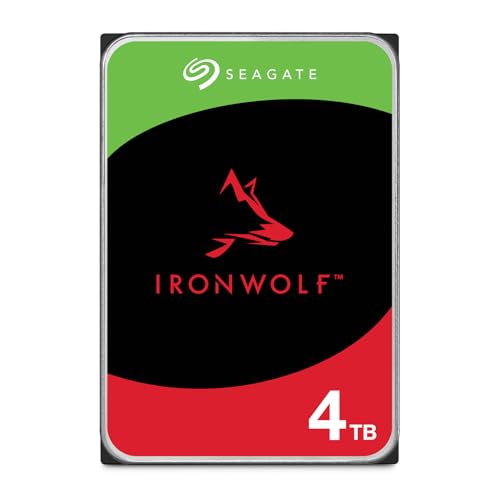
- Capacity: 4TB
- Model: ST4000VN006
- Recording technology: CMR
- Rotational speed: 5400 RPM

- Capacity: 8TB
- Model: WD8005FFBX
- Recording technology: CMR
- Rotational speed: 7200 RPM
All 3 Picks at a Glance
| Product | Specs | Action |
|---|---|---|
| 1. Western Digital WD Red Plus 4TB (WD40EFPX) — Best Overall |
| Check price on Amazon |
| 2. Seagate IronWolf 4TB (ST4000VN006) — Best for Health Monitoring |
| Check price on Amazon |
| 4. Western Digital WD Red Pro 8TB (WD8005FFBX) — Best for Heavier Workloads |
| Check price on Amazon |
RAID 1 is the simplest form of redundant storage: two hard drives hold exactly the same data, so if one drive fails, the other keeps working and your files stay available while you replace the dead drive and rebuild the mirror. It is a popular choice for a two-bay NAS, a home server, a small office file share, and the bulk-storage volume inside a gaming PC that also stores photos, video projects, and backups.
The best hard drives for RAID 1 are NAS-rated drives that use conventional magnetic recording (CMR), are rated for continuous 24/7 operation, include time-limited error recovery — called TLER by Western Digital and ERC or CCTL by other makers — and are sold in capacities you can buy as a matched pair.
This guide explains those criteria first, then recommends four CMR, NAS-rated hard drives that suit a mirrored pair, from a compact 4TB starting point to faster and larger 8TB options. Every drive here is a 3.5-inch SATA hard disk drive, so you are comparing like with like.
As an Amazon Associate we earn from qualifying purchases.
Our Top Picks
Top 3 picks at a glance
Quick Picks
- Best overall for most mirrors: Western Digital WD Red Plus 4TB (WD40EFPX) — CMR, quiet 5400 RPM operation, NAS firmware, and a workload rating suited to always-on home and small-office use.
- Best with health monitoring and recovery services: Seagate IronWolf 4TB (ST4000VN006) — CMR, AgileArray firmware, rotational vibration sensors, IronWolf Health Management on supported NAS systems, and Rescue data recovery services.
- Best larger mirror: Western Digital WD Red Plus 8TB (WD80EFPX) — doubles usable mirrored capacity to 8TB while keeping the same Red Plus CMR design and NAS tuning.
- Best for heavier workloads: Western Digital WD Red Pro 8TB (WD8005FFBX) — 7200 RPM, a much higher workload rating, and support for larger multi-bay systems, for busy small-business NAS use.
Whichever model you choose, buy two of exactly the same model and capacity, ideally at the same time. A RAID 1 pair should match.
What Makes a Hard Drive Good for RAID 1?
Buy a matched pair of identical drives
RAID 1 mirrors data block for block, so the array can only use the capacity of the smaller drive. Pairing a 4TB drive with an 8TB drive gives you 4TB of usable space and wastes the rest.
CMR, not SMR
CMR drives write tracks side by side without overlapping them, so sustained writes and RAID rebuilds stay consistent. SMR drives overlap tracks and must rewrite neighboring data during some writes, which can cause long pauses. In a desktop that pause is an annoyance; in a RAID rebuild, which is essentially one very long sustained write, it can stretch rebuild time and stress the surviving drive. Every drive in this guide is listed by its maker as CMR. Avoid base desktop lines and the non-Plus WD Red models where SMR has been used, and check the exact model number before ordering.
Rated for 24/7 operation and real NAS workloads
A mirrored NAS rarely sleeps. NAS-rated drives are validated for continuous operation, higher operating temperatures inside multi-bay enclosures, and annual workload ratings well above desktop drives. Look for a stated workload rate, a mean time between failures rating, and firmware designed for multi-drive environments rather than a single drive in a desktop case.
TLER / ERC error recovery
When a desktop drive hits a difficult sector, it may keep retrying for a long time. A RAID controller waiting on that drive can time out and mark the whole drive failed, degrading your array unnecessarily. NAS and RAID drives limit that retry window — TLER in WD terminology, Error Recovery Control in Seagate terminology — so the drive reports the problem quickly and the controller handles it using the mirrored copy. This single feature is a major reason to buy NAS-rated drives for RAID 1 instead of reusing spare desktop drives.
The Best Hard Drives for RAID 1
1. Western Digital WD Red Plus 4TB (WD40EFPX) — Best Overall
- Capacity: 4TB
- Model: WD40EFPX
- Recording technology: CMR
- Rotational speed: 5400 RPM
The WD Red Plus 4TB is the natural starting point for a home or small-office RAID 1 mirror. A pair gives you 4TB of usable, mirrored storage, which is enough for documents, photo libraries, backups of several PCs, and a modest media collection, in a drive designed specifically for NAS systems with up to eight bays.
Western Digital lists this model as CMR, with a 5400 RPM rotational speed, SATA 6 Gb/s interface, 256MB cache on the current listing, and NASware firmware that tunes the drive for always-on, multi-drive use, including error recovery behavior suited to RAID. The Red Plus line carries a 180TB per year workload rating and a three-year limited warranty, both clear steps above desktop-drive expectations. The slower spindle speed is a benefit in a small NAS: less heat, less noise, and lower power draw while the enclosure runs around the clock.
For RAID 1 specifically, the combination that matters is CMR recording for predictable rebuilds, NAS firmware with time-limited error recovery so the controller is not left waiting, and validation for 24/7 operation. The Red Plus checks each box without pushing you into enterprise pricing or enterprise noise levels.
Specifications
Pros
Cons
Check the WD Red Plus 4TB on Amazon
2. Seagate IronWolf 4TB (ST4000VN006) — Best for Health Monitoring
- Capacity: 4TB
- Model: ST4000VN006
- Recording technology: CMR
- Rotational speed: 5400 RPM
Seagate’s IronWolf line is the direct rival to Red Plus, and the 4TB IronWolf makes a strong RAID 1 pair for buyers whose NAS supports IronWolf Health Management. That system goes beyond basic S.M.A.R.T. reporting on compatible Synology, QNAP, and other NAS platforms, giving more detailed drive-health guidance, which is valuable when your whole redundancy plan rests on two drives.
The drive itself is an all-CMR design with a 5400 RPM spindle, SATA 6 Gb/s interface, and AgileArray firmware, Seagate’s package of RAID-appropriate features that includes error recovery control, rotational vibration sensors for multi-bay enclosures, and power management for always-on systems. Seagate rates IronWolf drives for workloads up to 180TB per year, for use in enclosures up to eight bays, and backs the drive with a three-year limited warranty plus three years of Rescue data recovery services. Rescue services are not a substitute for backup, but they add a layer of recourse if the worst happens.
In a mirror, the IronWolf behaves the way a RAID drive should: consistent CMR writes during rebuilds, quick error reporting to the controller, and monitoring that can warn you before a drive becomes a problem. Buy two identical ST4000VN006 units so firmware and behavior match across the pair.
Specifications
Pros
Cons
Check the Seagate IronWolf 4TB on Amazon
3. Western Digital WD Red Plus 8TB (WD80EFPX) — Best Larger Mirror
If 4TB of mirrored space is not enough — for a growing media archive, camera footage, or backups for a whole household — the WD Red Plus 8TB builds the same recipe at double the capacity. A matched pair gives you 8TB usable, which delays the day you need a larger enclosure or a capacity upgrade that forces a full rebuild.
This model stays with the Red Plus formula: CMR recording, SATA 6 Gb/s, 256MB cache, NASware firmware, support for systems up to eight bays, a 180TB per year workload rating, and a three-year limited warranty. The Amazon listing describes it at 5640 RPM, and as RAID-optimized for NAS systems. Performance is strong for a bulk-storage mirror, with sequential transfers that comfortably exceed what a gigabit network connection can carry, so in most home NAS setups the network, not the drive, is the limit.
The RAID 1 reasoning is identical to the 4TB model, with one addition: rebuild time. Rebuilding an 8TB mirror takes longer than rebuilding a 4TB mirror, which is another reason CMR matters. An SMR drive can turn an already long rebuild into a much longer one; this CMR drive keeps the process steady while your data sits on a single surviving copy.
Specifications
- Capacity: 8TB
- Model: WD80EFPX
- Recording technology: CMR
- Rotational speed: 5640 RPM (per Amazon listing)
- Interface: SATA 6 Gb/s, 3.5-inch
- Cache: 256MB
- Workload rating: 180TB per year
- Intended use: NAS systems up to 8 bays, 24/7 operation
- Warranty: 3-year limited warranty
Pros
- 8TB of usable mirrored capacity from a matched pair
- Same CMR, NAS-rated Red Plus design as the 4TB model
- Well suited to media libraries and whole-home backups
- Sequential performance beyond typical gigabit NAS needs
Cons
- Longer rebuild times than smaller capacities after a failure
- Generates more heat and noise than the 4TB model in compact enclosures
- Buying a matched pair is a bigger single purchase
Check the WD Red Plus 8TB on Amazon
4. Western Digital WD Red Pro 8TB (WD8005FFBX) — Best for Heavier Workloads
- Capacity: 8TB
- Model: WD8005FFBX
- Recording technology: CMR
- Rotational speed: 7200 RPM
The WD Red Pro 8TB steps up to a 7200 RPM spindle, 256MB cache, and a workload rating of 550TB per year, aimed at medium and larger business NAS systems with up to 24 bays. For a RAID 1 pair in a busy small office — many simultaneous users, virtual machine storage, or constant backup jobs landing through the day — that headroom and the faster spindle make a practical difference.
Like the Red Plus drives above, the Red Pro is CMR, SATA 6 Gb/s, and tuned for 24/7 multi-user environments, with NASware firmware and error recovery behavior designed for RAID controllers. Western Digital positions Red Pro for higher-intensity workloads, and the line carries a longer five-year limited warranty, which suits a mirror you expect to run continuously for years. The trade-offs are noise, heat, and power: a pair of 7200 RPM drives is noticeably more audible in a quiet room, and a small enclosure needs decent airflow.
Choose the Red Pro pair if your mirror works hard all day or lives in a larger enclosure where its vibration handling and workload rating earn their keep. Choose Red Plus if the NAS sits near your desk and mostly serves files and backups.
Specifications
Pros
Cons
Check the WD Red Pro 8TB on Amazon
How to Choose Hard Drives for RAID 1
Start with capacity, remembering you get half. Two 4TB drives in RAID 1 give 4TB usable, not 8TB. Estimate your current data, add expected growth for a few years, and buy the pair that covers it, because expanding a mirror later means replacing both drives, one at a time, with a rebuild after each swap.
Match the model exactly. Same maker, same model number, same capacity, same firmware family where possible. Do not mirror a Red Plus with an IronWolf, or a 5400 RPM drive with a 7200 RPM drive, even at the same capacity. Mixed pairs can work in some software RAID setups, but matched hardware pairs are the reliable, predictable choice this guide recommends.
Confirm CMR for the exact model number. Recording technology is a per-model specification, not a brand promise. Check the manufacturer’s datasheet for the precise model — WD40EFPX, ST4000VN006, WD80EFPX, WD8005FFBX — before ordering, and be wary of listings that do not name the model at all.
Check workload rating and warranty. A 180TB per year rating covers most home and small-office mirrors. If the array handles constant multi-user writes or backup traffic for many machines, the Red Pro’s higher rating and longer warranty are worth considering. Keep receipts and serial numbers for both drives.
Plan for failure, not just setup. RAID 1 is not a backup. It protects against a single drive failure and keeps you running during a rebuild, but it does not protect against deletion, ransomware, fire, or theft, because both copies change together. Keep a separate backup, ideally off-site or in cloud storage. Enable your NAS drive-health alerts and scheduled S.M.A.R.T. tests, and replace a degrading drive promptly — during a rebuild, your mirror has no redundancy left.
FAQs
Can I use regular desktop hard drives for RAID 1?
You can, but it is not recommended. Desktop drives may use SMR recording that slows rebuilds, often lack time-limited error recovery, which can cause a controller to drop a drive that is only struggling with one sector, and are not rated for continuous 24/7 operation or multi-drive vibration. NAS-rated CMR drives cost a little more and remove all three problems.
Do both drives in RAID 1 need to be identical?
They need to be the same capacity for full use of the space, and identical models are strongly recommended. Matched drives share rotational speed, firmware behavior, and error recovery timing, which keeps the array predictable. If one drive is smaller, the mirror is limited to that smaller size.
How much usable space does RAID 1 give me?
Exactly the capacity of one drive. Two 4TB drives give 4TB usable; two 8TB drives give 8TB usable. The second drive is a live mirror, not additional storage.
Is RAID 1 a backup?
No. RAID 1 protects against a single drive failure and downtime, but deletions, corruption, and ransomware are mirrored instantly to both drives. Keep a separate backup on a different device or service.
How long does a RAID 1 rebuild take?
It depends on capacity, drive speed, and how busy the system is. A multi-terabyte rebuild commonly takes many hours. This is when CMR matters most: sustained, consistent write performance keeps rebuild time predictable while the array has no redundancy.
Should I buy a spare drive at the same time?
If the data is important, yes. An identical cold spare lets you start a rebuild immediately after a failure instead of waiting for shipping while running on a single drive. At minimum, know the exact model number so you can order a correct replacement quickly.
Conclusion
The best hard drives for RAID 1 are not the cheapest desktop drives or the fastest gaming drives; they are NAS-rated, CMR hard drives bought as an identical pair, rated for 24/7 use, with error recovery designed for RAID controllers. For most people, a pair of WD Red Plus 4TB drives is the balanced default, and the Seagate IronWolf 4TB is an equally sound alternative with health monitoring and recovery services. Step up to the WD Red Plus 8TB when you need a larger mirror, or to the WD Red Pro 8TB when the workload is heavy and continuous. Pick the capacity honestly, match the pair exactly, set up health alerts, and keep a separate backup — that combination is what makes a simple mirror genuinely dependable.
Related guides
More from Amazon
Programs that pair well with the guide above. Offers and eligibility are set by Amazon and may change.
A free business account with business pricing and bulk-buying tools for work, shop or home office.
Create a business accountFree shipping on eligible items, Prime Video and more. Eligible new members can start with a free trial.
Start a Prime free trialAudiobooks and podcasts to listen to on the go. Eligible new members can start with a free trial.
Try Audible freeAd-free music streaming. Eligible new subscribers can start with a free trial.
Try Music Unlimited freeAs an Amazon Associate we earn from qualifying purchases.