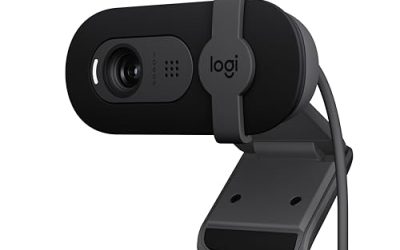
The best 2K (4MP) security camera for most homes is a Wi-Fi or PoE model with a 1/2.7-inch-class sensor, a lens around 2.8 mm, real infrared or color night vision, and local microSD or NVR storage. A 4MP camera records 2560×1440 pixels, which is about 78 percent more detail than 1080p while using far less bandwidth and storage than 4K. For outdoor driveways and doorways, 4MP is the sweet spot where faces and license plates become usable without overloading your network.
Quick comparison: 2K 4MP camera types worth buying
| Pick | Best for | Key specs | Price range |
|---|---|---|---|
| PoE bullet camera (Reolink RLC-410/510 class, Amcrest IP4M class) | Best overall for reliability | 4MP, PoE, IR to 100 ft, IP66, H.264/H.265 | Usually $50-$90 |
| Wi-Fi pan-tilt indoor camera (TP-Link Tapo C210/C220 class) | Best budget indoor | 3-4MP, 2.4 GHz Wi-Fi, microSD slot, pan 360 degrees | Usually $25-$45 |
| Wireless battery camera (Reolink Argus class, Eufy class) | Best for renters | 2K, rechargeable battery, PIR motion, spotlight | Usually $60-$120 |
| Color night vision PoE camera (ColorX / Starlight class) | Best for night detail | 4MP, f/1.0-1.6 lens, built-in white light | Usually $70-$130 |
| 2K floodlight camera | Best for driveways | 4MP, 2000+ lumen light, siren, two-way audio | Usually $80-$160 |
Why 4MP (2K) is the practical resolution
Resolution is only useful if the sensor and lens can resolve detail at the distance you care about. A 4MP image is 2560 x 1440 = 3,686,400 pixels. A 1080p image is 2,073,600 pixels. A 4K (8MP) image is 8,294,400 pixels. Going from 1080p to 2K nearly doubles the pixel count; going to 4K more than doubles it again, but the bitrate and storage needs climb with it, and many 4K budget cameras use a small sensor that gives noisy night footage anyway.
For most front doors, garages and backyards, the extra detail of 2K is visible in the places that matter: faces at 15-25 feet, delivery labels, and vehicle colors. The larger sensor class found on many 4MP models (often 1/1.8 or 1/2.7 inch) can matter more than the megapixel count itself, because a bigger sensor collects more light per pixel after dark.
Best overall: a PoE 4MP bullet camera
A Power over Ethernet bullet camera is the best overall choice because a single cable delivers both power and data. You avoid Wi-Fi dropouts, you avoid battery swaps, and you can record continuously to a small NVR or a network share. Camera lines in the Reolink RLC and Amcrest IP4M families follow this design, and most support ONVIF so they can work with third-party recorders.
Who it suits: homeowners willing to pull one Ethernet cable per camera, or those with an existing PoE switch. Main trade-off: installation effort. You need a PoE switch (a 4-8 port switch usually costs $30-$70) or an NVR with built-in PoE ports, and you must drill for cables.
Best budget indoor: a Wi-Fi pan-tilt camera
For a nursery, living room or pet corner, a Wi-Fi pan-tilt camera in the 3-4MP class is the cheapest way to get 2K video with a microSD slot. Models in the TP-Link Tapo C210/C220 line are common examples. They track motion, support two-way audio, and record locally to microSD, so you can skip subscriptions.
Main trade-off: 2.4 GHz Wi-Fi only on many budget units, and weaker night vision than outdoor PoE models. Keep these away from windows, because infrared night vision reflects off glass and washes out the image.
Best for renters: a wireless battery camera
If you cannot drill or run cables, a rechargeable 2K battery camera mounts with a screw bracket or magnet and connects to Wi-Fi. They sleep until a PIR sensor detects motion, then wake and record. Most spend 1-3 months per charge depending on how many events they capture; a busy street can cut that to a few weeks. A solar panel accessory extends life considerably.
Main trade-off: they record motion clips rather than 24/7 video, and wake-up lag can miss the first second of an event. Some require a cloud plan for clip history, so check what is free before you buy.
Best for night detail: color night vision models
Infrared night vision produces black-and-white footage that makes clothing colors impossible to identify. Starlight-class sensors with a bright f/1.0-1.6 lens, or a built-in warm light, record color in dim conditions. That helps identify a vehicle or a jacket color for a police report. Expect a slightly higher price and, if the white light turns on, a visible warning to intruders (which is often the point).
Best for driveways: a 2K floodlight camera
A floodlight camera combines 4MP video, a 2000-3000 lumen LED, a siren, and two-way audio. It is wired to your existing floodlight circuit or a dedicated outlet. Because the light activates on motion, the camera captures color footage and deters people at the same time. Main trade-off: wiring to mains power should be done by a licensed electrician if you are not comfortable with it.
Worked example: storage and bandwidth for four 4MP cameras
Many shoppers underestimate storage. A 4MP camera using H.265 at a typical 2-3 Mbps bitrate produces about 0.9-1.4 GB per hour when recording continuously. Using 2.5 Mbps as the working figure:
- 2.5 Mbps = 0.3125 MB per second = about 1.1 GB per hour per camera.
- Four cameras = about 4.5 GB per hour = about 108 GB per day.
- A 4 TB surveillance drive (about 3,700 GB usable) therefore holds roughly 34 days of continuous recording.
- If you use motion-only recording and the scene is active 20 percent of the day, that stretches to roughly 5 months.
Network load: four cameras at 2.5 Mbps add 10 Mbps of traffic, which a PoE switch handles easily and which is well within a 100 Mbps Ethernet link. On Wi-Fi, the same 10 Mbps of uplink traffic can strain a congested 2.4 GHz channel, which is why wired cameras remain the more dependable choice for a four-camera setup.
Decision matrix: match your situation to a camera
| Your situation | Choose | Why |
|---|---|---|
| Own your home, can run cable | PoE bullet + NVR | 24/7 recording, no battery or Wi-Fi issues |
| Rent an apartment | Battery 2K camera | No drilling, takes with you |
| Dark street, no lighting | Starlight or color night vision | Color detail after dark |
| Want no monthly fee | microSD or NVR storage | Local recording, no cloud plan needed |
| Indoor pet/baby monitoring | Wi-Fi pan-tilt | Cheap, covers a whole room |
| Large yard 60+ ft deep | Varifocal or 4MP with 4 mm lens | Narrower field of view gives more pixels on target |
How to choose: the numbers that matter
Lens focal length and field of view
A 2.8 mm lens gives roughly a 100-110 degree horizontal field of view, good for doorways and small yards. A 4 mm lens narrows to about 80-90 degrees and puts more pixels on distant subjects. A rule of thumb used by installers is about 40 pixels per foot for general identification of a person; with 2560 horizontal pixels, that means a scene width of about 64 feet at the limit, and a more comfortable 30-40 feet for reliable face detail.
Night vision range
Manufacturers list IR range as 60-100 feet, but usable detail typically drops well before that figure. Treat half the advertised distance as the practical identification range.
Weather and power
Outdoor cameras should be IP66 or IP67 certified per the manufacturer’s spec sheet. Verify an operating temperature range that fits your climate; some units are listed only to -10 degrees C.
Codec and storage
H.265 cuts storage by roughly 30-50 percent compared with H.264 at similar quality. Check that your recorder or app supports it.
Privacy and security
Choose a brand that supports regular firmware updates, two-factor sign-in, and local-only operation. Change default passwords and keep cameras on a separate network or VLAN if your router allows it.
Common mistakes to avoid
- Pointing a camera through a window: IR reflects off glass and blinds the sensor.
- Mounting too high: above 10 feet you see the top of heads rather than faces; 8-9 feet at a slight downward angle is better.
- Ignoring backlight: aim away from direct sun or enable WDR/HDR so faces do not go dark.
- Skipping a microSD card or NVR and relying on a cloud plan that may change its pricing.
Frequently Asked Questions
Is 2K 4MP the same as 1440p?
Yes, for security cameras 4MP almost always means 2560×1440, also called 1440p or 2K QHD. It sits between 1080p and 4K and is a common mainstream resolution for home cameras.
Is a 4MP camera better than 4K for home security?
Not always. A good 4MP camera with a larger sensor can look cleaner at night than a cheap 8MP camera with a tiny sensor, and it uses roughly half the storage. 4K helps most for wide scenes where you need to zoom in on distant detail.
Do I need a subscription for 2K cameras?
No. Many PoE and microSD cameras record locally without any fee. Subscriptions are mostly tied to cloud clips, AI person/package alerts, and extended history on battery or doorbell-style products.
How much storage do I need for 4MP recording?
Plan on about 1 GB per camera per hour at 2.5 Mbps with H.265. A 256 GB microSD card therefore holds roughly 10 days on one camera with continuous recording, and far longer with motion-only mode.
Can Wi-Fi cameras stream 2K reliably?
Yes, if the signal is strong. Aim for a received signal stronger than about -65 dBm at the camera location, and consider a mesh node or a wired PoE camera if you are farther than two walls from the router.
Related guides
More from Amazon
Programs that pair well with the guide above. Offers and eligibility are set by Amazon and may change.
A free business account with business pricing and bulk-buying tools for work, shop or home office.
Create a business accountFree shipping on eligible items, Prime Video and more. Eligible new members can start with a free trial.
Start a Prime free trialAudiobooks and podcasts to listen to on the go. Eligible new members can start with a free trial.
Try Audible freeAd-free music streaming. Eligible new subscribers can start with a free trial.
Try Music Unlimited freeAs an Amazon Associate we earn from qualifying purchases.