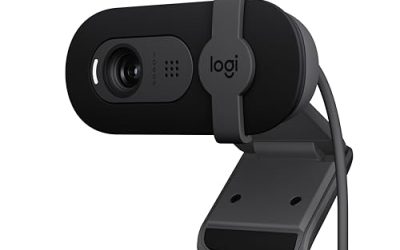
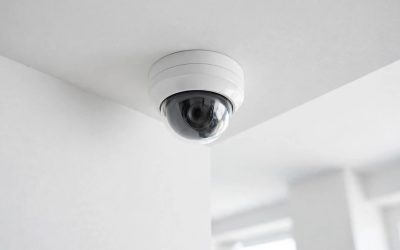
The best 3-megapixel cameras in 2026 are 3 MP (2048 x 1536) IP security cameras that give a clean 4:3 view with modest bandwidth needs, such as models in the TP-Link Tapo C-series, Reolink and Amcrest 3 MP classes. A 3 MP camera records about twice the pixels of 1080p-era 2 MP models while using far less storage than 4K, so it is a sweet spot for home and small-shop monitoring.
If you instead meant a vintage digital camera or a webcam, the buying logic below (sensor size, lens, low-light behavior) still applies, but this guide is written for security and surveillance use, where 3 MP is a common spec. It includes a storage and bandwidth calculation and a matrix mapping coverage distance to the camera class you need.
Quick comparison of the picks
| Pick | Best for | Key specs | Price range |
|---|---|---|---|
| TP-Link Tapo C210 class | Best overall indoor | 3 MP, pan/tilt, night vision, microSD slot, two-way audio | $25-$40 |
| Amcrest 3 MP IP bullet class | Wired outdoor with PoE | 2304 x 1296 or 2048 x 1536, IP67, PoE, ONVIF support | $40-$80 |
| Reolink 3 MP / 4 MP PoE class | NVR-based home systems | PoE power, local recording, person/vehicle detection | $45-$90 |
| Dahua / Hikvision 3 MP bullet or dome class | Small business, DIY DVR/NVR | Wide dynamic range, IR 30-40 m, IP66-67 | $40-$90 |
| Wireless battery 3 MP class | Locations with no power outlet | Rechargeable battery, solar option, Wi-Fi, motion-triggered recording | $60-$120 |
Specs follow manufacturers’ published sheets and vary by model revision. Prices are general market ranges.
Best overall indoor: Tapo C210 class
A pan-and-tilt 3 MP camera with local microSD recording and two-way audio covers a whole room and keeps running costs at zero if you skip cloud storage. It is a good choice for entryways, nurseries and pet monitoring. The trade-offs are Wi-Fi dependence, a lens that does not match the detail of a bigger sensor, and the need to set up privacy and account security yourself.
Best wired outdoor: Amcrest 3 MP PoE bullet class
PoE (power over Ethernet) cameras need one cable for both power and data, which gives the most stable video. A 3 MP bullet with IR night vision and ONVIF support works with most network video recorders. The trade-off is that you must run cable, which takes effort in an existing house.
Best for NVR systems: Reolink PoE class
Reolink-type PoE cameras focus on local recording and on-camera person and vehicle detection, which reduces false alerts from leaves and shadows. The trade-off is a smaller ecosystem than the biggest smart-home brands and less advanced integrations.
Best for small businesses: Dahua or Hikvision class
These professional-grade cameras offer true wide dynamic range, longer IR distance and flexible lens options. Check local regulations and your own security policy; some government and enterprise users restrict certain brands. Make sure firmware is current and cameras are never exposed directly to the internet.
Best wireless: battery 3 MP class
Battery cameras let you cover a shed, driveway or gate without wiring. Battery life depends heavily on how often motion triggers recording; busy locations may need a recharge every few weeks. Solar panels help, but expect shorter live-view sessions than wired cameras.
Worked example: storage and bandwidth for 3 MP
A 3 MP camera using H.265 at 15 frames per second typically needs about 1.5-2.5 Mbps; H.264 needs closer to 2.5-4 Mbps. Taking 2 Mbps as an example:
| Cameras | Total bitrate | Storage per day (continuous) | Days on a 2 TB drive |
|---|---|---|---|
| 1 | 2 Mbps | about 21.6 GB | about 92 days |
| 4 | 8 Mbps | about 86.4 GB | about 23 days |
| 8 | 16 Mbps | about 172.8 GB | about 11 days |
The math: 2 Mbps is 0.25 MB/s, which is 21.6 GB over 86,400 seconds. Motion-only recording reduces this by 50-80 percent depending on activity. A 4K (8 MP) camera at the same codec needs roughly 4-6 Mbps, so 3 MP stretches storage by about two to three times.
For Wi-Fi cameras, plan for about 2-4 Mbps of upstream bandwidth per camera if you use cloud viewing. Four cameras streaming continuously need 8-16 Mbps of upload, which can exceed many home plans.
How far can a 3 MP camera see usefully?
Identification needs about 250 pixels per meter (the common standard for recognizing a face), detection needs about 25 pixels per meter. With a 2048-pixel-wide image, a view covering 8 m wide gives 256 pixels per meter, suitable for identification. A 16 m wide view drops to 128 pixels per meter, enough to recognize a known person but not identify a stranger. Plan camera placement with this width rule: narrow the view for entry points and widen it for general monitoring.
How to choose: decision matrix
| Your situation | Choose | Reason |
|---|---|---|
| Single indoor room, low cost | Wi-Fi pan/tilt 3 MP | Easy setup, microSD storage |
| Front door, driveway, permanent | PoE 3 MP bullet | Reliable power and data |
| Four or more cameras | PoE cameras plus NVR | Local storage, no monthly fees |
| No wiring possible | Battery or solar 3 MP | Flexible placement |
| Face recognition at an entry | Narrow lens, 8 m view or less | Meets about 250 px/m |
Features worth paying for
- H.265 compression: cuts storage and bandwidth roughly 30-50 percent compared with H.264.
- Wide dynamic range (WDR): helps with backlit doorways and bright windows.
- Local recording options: microSD card or NVR avoids subscriptions.
- ONVIF support: lets cameras work with third-party recorders and software.
- Person and vehicle detection: reduces false motion alerts.
- Weather rating: IP65 or higher for outdoor use.
Security basics
Change the default password, update the firmware, disable remote access features you do not need and place cameras on a separate network segment or guest VLAN if your router supports it. Aim cameras only at your own property and follow local laws on recording audio and video.
Placement tips that matter more than megapixels
Mount outdoor cameras about 2.5-3 m high, angled down roughly 15-30 degrees, so faces are visible and the lens is out of casual reach. Avoid pointing a camera directly at a bright sky or a window, because even good WDR struggles with extreme contrast. Keep infrared night vision away from glass and white walls close to the lens, since reflected IR causes a washed-out glare. Use a narrow field of view at doors and gates, and a wide view only for overview shots. Test the night view after dark before you finalize the mount, and make sure the cable run has a drip loop so water cannot follow the wire into the camera or connector.
Frequently Asked Questions
Is 3 MP enough for a security camera?
Yes, for most homes. It captures more detail than 1080p and uses much less storage than 4K. If you need to read license plates at a distance, a narrower lens or a higher-resolution camera may be better.
Is 3 MP better than 1080p?
It has about 50 percent more pixels than 1080p, which is 2 MP. The difference is visible when zooming into recorded footage, though lens quality and low-light performance matter as much as resolution.
Do I need a subscription?
Not necessarily. Cameras with microSD cards or an NVR store video locally at no recurring cost. Cloud plans add convenience and off-site backup but cost monthly fees.
Should I choose Wi-Fi or PoE?
PoE is more reliable and avoids battery or power adapters, but needs cable. Wi-Fi is easier to install and fine for indoor use if your signal is strong.
How much storage do I need?
Plan about 20 GB per camera per day for continuous 3 MP recording with H.265 at roughly 2 Mbps. Motion-only recording can cut this by half or more.
Related guides
More from Amazon
Programs that pair well with the guide above. Offers and eligibility are set by Amazon and may change.
A free business account with business pricing and bulk-buying tools for work, shop or home office.
Create a business accountFree shipping on eligible items, Prime Video and more. Eligible new members can start with a free trial.
Start a Prime free trialAudiobooks and podcasts to listen to on the go. Eligible new members can start with a free trial.
Try Audible freeAd-free music streaming. Eligible new subscribers can start with a free trial.
Try Music Unlimited freeAs an Amazon Associate we earn from qualifying purchases.