The best all-around headset in 2026 is a wireless model with a 2.4 GHz dongle for games, Bluetooth for your phone, a detachable or retractable mic, and a tuning that doesn’t fall apart on music. The SteelSeries Arctis Nova 7 Wireless family is the safest single pick for most people. If you want more from music and calls, step up to a premium gaming headset with active noise cancelling, or pair a good Bluetooth headphone with a boom mic.
“All-around” means the headset handles three jobs: low-latency game audio, clear voice chat, and everyday listening such as music, video and phone calls. Most headsets are strong at one. The criteria below are what separate a headset that does all three from one that only does one well.
Quick comparison of the picks
| Pick | Best for | Key specs (per manufacturer) | Price tier |
|---|---|---|---|
| SteelSeries Arctis Nova 7 Wireless | Best overall | 2.4 GHz plus Bluetooth, retractable mic, USB-C charging, multi-platform versions | Mid-range |
| SteelSeries Arctis Nova Pro Wireless | Best premium, PC plus console | Base station, hot-swappable batteries, active noise cancelling, 2.4 GHz plus Bluetooth | Premium |
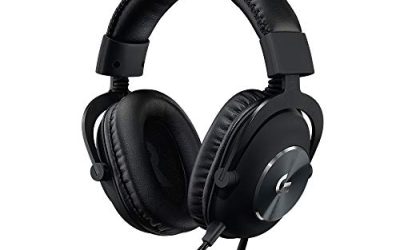
| Logitech G Pro X 2 Lightspeed | Best for competitive PC play | 50 mm graphene drivers, 2.4 GHz, Bluetooth, USB-C, detachable boom mic | Mid-range to premium |
| HyperX Cloud III (wired) | Best budget | 53 mm drivers, 3.5 mm plus USB-A/USB-C adapter, detachable mic, no battery | Budget |
| HyperX Cloud III Wireless | Best for long sessions | 2.4 GHz wireless, long rated battery life, detachable mic, light build | Mid-range |
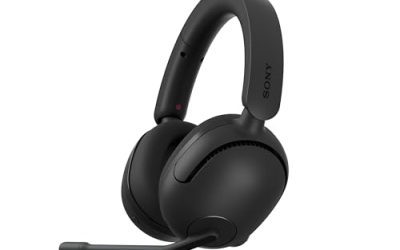
| Sony WH-1000XM6 | Best for music and travel first | Bluetooth, strong ANC, built-in call mics, no 2.4 GHz gaming mode | Premium |
Best overall: SteelSeries Arctis Nova 7 Wireless
This is the headset to default to if you play on PC, switch to a console at weekends, and want to take calls on your phone without changing anything. It connects over a 2.4 GHz USB dongle for games and over Bluetooth at the same time, so you can hear a phone call or music while in a match. The retractable mic disappears when you aren’t talking, which matters if you wear it outside the house. The tuning is fairly neutral for a gaming headset, so music sounds acceptable without an EQ.
Trade-off: there are separate PlayStation, Xbox and PC/Switch variants, so buying the wrong one is the main mistake. It also has no active noise cancelling, so it won’t match a dedicated travel headphone on a train.
Best premium: SteelSeries Arctis Nova Pro Wireless
The Nova Pro Wireless adds active noise cancelling, a base station with a display, and a second hot-swappable battery, so you effectively never run out of charge. It’s the pick if you share a desk with a noisy room or want one headset that covers a PC, a console and a phone. It also supports more detailed EQ than the cheaper models.
Trade-off: it’s expensive and bulky for something that lives on a desk. The base station is a nuisance if you want to carry the headset between rooms.
Best for competitive PC play: Logitech G Pro X 2 Lightspeed
This is the choice when footsteps and positional accuracy matter more than music tuning. It has large graphene drivers, a proper detachable boom mic, and Logitech’s Lightspeed 2.4 GHz link plus Bluetooth for secondary devices. Logitech’s G Hub software provides EQ presets and mic processing. It does music better than most esports-oriented headsets, though the sound signature leans toward detail over bass.
Trade-off: clamp force and weight can feel firm during long sessions, especially with glasses. The best mic quality depends on using the software, so Windows users get more out of it than console players.
Best budget: HyperX Cloud III (wired)
A wired headset sidesteps battery and latency problems entirely. The Cloud III has big drivers, a comfortable memory-foam fit and a detachable mic, and it works over 3.5 mm on controllers, phones and laptops. For a first headset, or a second one for a console, it’s the value pick. It also doubles as a competent music headset because the tuning isn’t aggressively boosted.
Trade-off: no wireless and no noise cancelling, and the cable is a nuisance if you move around. Check the in-box accessories for the USB adapter, which is needed on some PCs for the mic to work at full quality.
Best for long sessions: HyperX Cloud III Wireless
If comfort across a five-hour session is the priority, the Cloud III Wireless is a light, plush headset with a long rated battery life. It covers PC and PlayStation over the 2.4 GHz dongle, and the sound is warm and easy to listen to. It suits people who prefer a simple headset over a feature-heavy one.
Trade-off: Bluetooth support and software features differ from the SteelSeries and Logitech options, so check the spec sheet for the exact regional model before buying if you need a phone connection.
Best for music and travel first: Sony WH-1000XM6
This isn’t a gaming headset, but it is the best answer if gaming is only part of your day and you spend more time on trains, flights or calls. Its noise cancelling and sound quality are well ahead of any gaming headset, and the built-in mics handle calls well. Pair it with a cheap clip-on or USB mic for party chat, and use a Bluetooth transmitter or a wired connection for games where timing matters.
Trade-off: standard Bluetooth adds delay, so fast shooters feel off. Voice chat through built-in mics is fine for calls but weaker in a noisy room than a boom mic.
How to choose: the criteria that matter
1. Connection type and latency
A frame at 60 fps lasts about 16.7 ms, and at 144 fps about 6.9 ms. Typical 2.4 GHz gaming links add roughly 15–40 ms of audio delay, which is about 1–2 frames at 60 fps and unnoticeable in most games. Standard Bluetooth often adds 150–250 ms, or about 9–15 frames at 60 fps. That is enough to make gunshots and footsteps feel late, though it’s fine for video and music, which players usually compensate for. Treat these as typical ranges, since the exact figure depends on the codec, the device and the headset.
2. Battery math
Rated battery life is measured at moderate volume with lighting off. A worked example: a headset rated for 40 hours, used 6 hours a day on weekdays and 10 hours at weekends. Real-world use runs at roughly 75–85% of the rating at higher volumes, which gives about 30–34 hours. Weekly use is 5 × 6 + 2 × 10 = 50 hours, so you’d charge about every 4 days (34 ÷ 50 × 7 ≈ 4.8 days at best, 30 ÷ 50 × 7 ≈ 4.2 days at worst). A headset with a hot-swappable battery or fast top-up charge avoids the problem entirely.
3. Mic design
A boom mic sits 2–3 cm from your mouth and rejects room noise better than built-in beamforming mics on headphones. A retractable mic is more convenient, and a detachable mic is more flexible. If you spend a lot of time on calls, go for a headset with a good mic over one with a better driver.
4. Comfort numbers
Weight matters most over long sessions. Headsets under roughly 300 g are comfortable for most people for 4+ hours, while those near 350 g or more can cause fatigue at the crown. Larger earcups help if you wear glasses, because thin pads press the arms against your temples.
Decision matrix: match your situation to a pick
| Your situation | Choose | Why |
|---|---|---|
| PC plus one console, plus a phone | Arctis Nova 7 Wireless (correct platform version) | 2.4 GHz for games, Bluetooth for calls at the same time |
| Noisy room or shared desk | Arctis Nova Pro Wireless | Active noise cancelling and swappable batteries |
| Ranked FPS on PC | Logitech G Pro X 2 Lightspeed | Positional detail and a proper boom mic |
| Tight budget, any device with a 3.5 mm jack | HyperX Cloud III (wired) | No battery, no latency, simple |
| Long sessions, glasses wearer | HyperX Cloud III Wireless | Light and plush, low clamp |
| Commuting plus occasional gaming | Sony WH-1000XM6 plus a clip-on mic | Best ANC and music, with a mic added for chat |
| Xbox Series X|S | An Xbox-licensed variant, or a wired model | Xbox uses its own wireless protocol, so a generic dongle won’t work |
Compatibility mistakes to avoid
- Xbox: wireless headsets need an Xbox-licensed variant. A PC or PlayStation dongle won’t work on the console.
- PlayStation 5: most 2.4 GHz dongles work over USB, but the headset’s own EQ app may not be available, so set EQ on the PC first.
- Nintendo Switch: use the USB dongle in handheld/docked mode or Bluetooth audio, which the console supports in current system software.
- Surround sound: virtual 7.1 is a software effect, not a hardware feature. Try it in your main game and turn it off if voices sound hollow.
Frequently Asked Questions
What is the best all-around headset for gaming and music?
A wireless headset with a neutral tuning and a 2.4 GHz plus Bluetooth connection, such as the SteelSeries Arctis Nova 7 Wireless, covers both well. If music quality is the higher priority, a dedicated Bluetooth headphone like the Sony WH-1000XM6 with a separate mic is better, at the cost of higher game latency.
Is Bluetooth good enough for gaming?
For slow-paced games, video and calls, yes. For competitive shooters it usually isn’t, because typical Bluetooth delay of roughly 150–250 ms is noticeable. Use the 2.4 GHz dongle for games and keep Bluetooth for your phone.
Are wired headsets still worth buying?
Yes. They have no battery to charge, no wireless interference and the lowest latency. A wired model also costs less for the same driver and mic quality, so it’s the sensible choice if you don’t need to move around.
Do I need a separate mic?
Only if your headset’s mic is weak or your headphones have none. A boom mic that sits near your mouth gives clearer voice than most built-in mics, and a clip-on mic is a cheap way to turn a good music headphone into a chat headset.
How long should a gaming headset battery last?
Aim for a rated life of at least 30 hours, since real-world use is usually lower than the figure in the manufacturer’s spec sheet. If you play most days, a hot-swappable battery or quick-charge feature saves the most hassle.
Will a PC headset work on my console?
Wired 3.5 mm headsets work on almost everything. Wireless ones depend on the dongle: PlayStation usually works with a USB dongle, while Xbox requires a licensed model. Always check the platform listed on the specific model’s spec sheet before you buy.
Related guides
More from Amazon
Programs that pair well with the guide above. Offers and eligibility are set by Amazon and may change.
A free business account with business pricing and bulk-buying tools for work, shop or home office.
Create a business accountFree shipping on eligible items, Prime Video and more. Eligible new members can start with a free trial.
Start a Prime free trialAudiobooks and podcasts to listen to on the go. Eligible new members can start with a free trial.
Try Audible freeAd-free music streaming. Eligible new subscribers can start with a free trial.
Try Music Unlimited freeAs an Amazon Associate we earn from qualifying purchases.