
An SSD is the better drive for anything you actually interact with—your OS, your games, your laptop—while an HDD is still the better buy for cheap bulk storage and backups. Asking “which is better, SSD or HDD?” without a use case attached is like asking whether a truck or a sports car is better: it depends on the job. Here’s the verdict for each one, with the numbers to back it up.
As an Amazon Associate we earn from qualifying purchases at no extra cost to you.

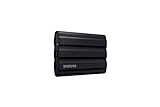


Top 3 picks at a glance
The 60-second verdict
| Job | Winner | Why |
|---|---|---|
| OS / boot drive | NVMe SSD | Boot in seconds; apps launch instantly |
| Main game library | NVMe or SATA SSD | 3–5× faster loads; many 2026 AAA titles effectively require one |
| Backlog of rarely played games | HDD acceptable | Cheap capacity if you tolerate longer loads |
| Media archive (photos, video) | HDD | Roughly 4× cheaper per TB at 8TB+ |
| Backup drive | HDD (external) | High capacity, low cost, no speed needed |
| Laptop | SSD | Lower power draw, survives bumps and drops |
How much faster is an SSD than an HDD?
SSD wins on every speed metric, and it isn’t close. The gap matters most in two places:
- Sequential throughput: a 7200rpm HDD sustains roughly 150–250 MB/s. A SATA SSD hits ~550 MB/s (the limit of the SATA interface). A Gen4 NVMe drive like the Samsung 990 Pro or WD Black SN850X is rated around 7,000+ MB/s.
- Random access: an HDD’s read head physically moves, costing 8–12 ms per seek—around 100–200 random IOPS. Even a cheap SATA SSD answers in under 0.1 ms, good for tens of thousands of IOPS. This is why an SSD makes Windows feel snappy: booting and launching apps is thousands of tiny random reads, not one big sequential file.
Real-world load-time math. A modern open-world game streams roughly 12 GB of assets to reach a playable state after you hit “Continue”:
- HDD at ~200 MB/s (with realistic seek overhead): ~60–90 seconds
- SATA SSD at ~550 MB/s: ~22–30 seconds
- Gen4 NVMe at ~5,000 MB/s: theoretically ~3 seconds, but decompression and CPU limits mean ~8–15 seconds in practice
The takeaway: the HDD-to-any-SSD jump is the transformative one (~3–4× faster loads). SATA-to-NVMe is a real but smaller gain, typically 1.5–2× in actual games rather than the 10× the spec sheet implies.
Best drive for each job
OS drive: SSD, no contest
Running Windows 11 from an HDD in 2026 means multi-minute boots, laggy updates, and an antivirus scan grinding the whole PC to a halt. A 500GB–1TB NVMe boot drive is the single highest-impact upgrade in any build—budget options like the WD Blue SN5000 class handle it fine; you don’t need a flagship.
Game library: SSD for what you’re playing now
Is an SSD or HDD better for gaming? SSD—and increasingly it’s mandatory rather than nice-to-have. Engines built around fast asset streaming (DirectStorage on PC, plus ports of PS5/Series X titles) now list an SSD in minimum specs, and playing them from an HDD means texture pop-in, stuttering during traversal, or simply failing to run properly. Keep your active games on a 2TB–4TB SSD. Older titles, indie games, and your deep backlog can live on an HDD—Steam lets you move installs between drives freely—if you accept 60–90 second loads.
Media archive and long-term storage: HDD
Here’s where the answer flips. Is an SSD or HDD better for long-term storage? For a powered-off archive, the HDD wins on two counts. First, cost: ~4× cheaper per TB at high capacities. Second, cold retention: a heavily used consumer SSD left unpowered in a warm closet can start losing data within roughly a year (JEDEC specs rate ~12 months at 30°C at end-of-life; newer drives fare better, but it’s a real risk). An HDD’s magnetic platters hold data for years unpowered. For a large photo/video archive, an 8TB–20TB HDD—or two, since no single drive is a backup—is the sensible pick. NAS-rated models like the Seagate IronWolf or WD Red Plus add firmware tuned for 24/7 duty if the drive lives in an always-on box.
Backup: HDD (with one rule)
Backup jobs are sequential writes you run overnight—speed is irrelevant, capacity is everything. An external HDD of 8TB+ is the workhorse. The non-negotiable rule: follow 3-2-1. Three copies of important data, on two different device types, one off-site (cloud or a drive stored elsewhere). A single external HDD is not a backup; it’s one copy that will eventually fail—HDDs typically last 3–5 years of regular use before failure rates climb.
Laptop: SSD, always
Two reasons beyond speed. First, battery math: a 2.5″ HDD idles around 1W and pulls 4–5W while seeking, versus an NVMe drive at ~0.05W idle and ~2–3W average under load. Saving ~1.8W on a 60Wh laptop drawing a typical 13W takes runtime from about 4.6 to 5.4 hours—roughly 45 extra minutes. Second, physics: a spinning platter with a floating read head does not survive being bumped mid-write. An SSD has no moving parts, so drops that would kill an HDD are a non-event.
The cost math
This is the entire argument for HDDs still existing in gaming PCs:
| Drive type | Typical price (2026) | Cost per TB |
|---|---|---|
| 8TB HDD (BarraCuda / WD Blue class) | $130–$160 | ~$16–$20 |
| 20TB HDD (NAS/high-capacity) | $300–$350 | ~$15–$17 |
| 2TB SATA SSD (Crucial MX500 class) | $110–$140 | ~$55–$70 |
| 2TB Gen4 NVMe SSD | $110–$150 | ~$55–$75 |
| 4TB Gen4 NVMe SSD | $220–$280 | ~$55–$70 |
A sensible 2026 build: a 2TB Gen4 NVMe (~$120–$150) for OS and active games, plus an 8TB HDD (~$140) for archives and backups—10TB of total capacity for roughly $260–$290. A single 8TB NVMe would run $450–$550 and leave you with less usable space and no separate backup volume.
Quick decision matrix
| Your situation | Buy |
|---|---|
| One drive in the whole PC, under $150 | 2TB NVMe SSD—capacity beats an HDD+SSD split at this budget |
| Competitive/large modern games only | 2TB–4TB Gen4 NVMe |
| Massive Steam backlog, patient with loads | SSD for current games + HDD for the rest |
| 4K video projects / huge photo library | SSD for active projects + 8TB+ HDD for cold files |
| Family PC storing everything forever | 1TB–2TB SSD + external HDD backing it up |
| Laptop, any budget | NVMe SSD, always |
FAQ
Is an SSD better than an HDD overall?
Yes, on speed, durability, power draw, and noise. The only categories where an HDD still wins are cost per TB and unpowered long-term retention—which is why HDDs persist in archives and backup roles rather than as primary drives.
Will an SSD wear out from gaming?
Not realistically. A 1TB TLC drive is typically rated around 600TB written; at 100GB of writes per day—far more than gaming produces—that’s ~16 years of endurance. HDDs have no write-wear limit but fail mechanically instead.
Do HDDs still make sense in a gaming PC?
Yes—as secondary storage for media, backups, and games you rarely launch. As the only drive, no: Windows and modern games are miserable on one.
Can I add an HDD to a PC that already has an SSD?
That’s the ideal setup. Keep Windows and games on the SSD, point the HDD at downloads, recordings, and backups. Any modern board handles SATA HDDs alongside NVMe drives with no configuration beyond assigning a drive letter.


