
Short answer: in 2026, the “hard drive” a gaming PC actually needs is an SSD — the real question is whether that SSD should plug into a SATA port or an M.2 slot, and whether an old mechanical HDD still earns a spot next to it for cheap bulk storage. Below is how to figure out what you already have, what your board can accept, and which upgrade makes sense for your situation.
As an Amazon Associate we earn from qualifying purchases at no extra cost to you.


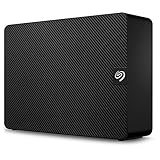

Top 3 picks at a glance
First, untangle the term “hard drive”
People use “hard drive” to mean any storage, which is why the question “which is better, hard drive or SSD” is really two questions. There are two drive technologies:
- HDD (hard disk drive): spinning magnetic platters and a moving read head. Cheap per terabyte, slow, fragile, audible.
- SSD (solid-state drive): flash memory, no moving parts. Comes in two physical shapes — a 2.5-inch box that connects via SATA, and a gumstick-sized module that plugs into an M.2 slot.
The trap: M.2 is a connector, not a speed guarantee. M.2 slots accept both SATA-protocol sticks (slow, ~550 MB/s) and NVMe sticks (fast, thousands of MB/s). So “what is better, SSD or hard drive” has a clean answer — SSD, for anything the OS or a game touches — but “which SSD” depends on which slots your motherboard offers.
Step 1: Find out what your PC already uses
- Quickest check: open Task Manager → Performance → Disk. Windows labels each drive “SSD” or “HDD” and shows capacity. Do this first because it takes ten seconds.
- If the label is unclear: run PowerShell and enter
Get-PhysicalDisk. The MediaType column reports HDD/SSD and the BusType column shows SATA vs NVMe — which tells you the protocol, not just the shape. - Physical confirmation: a 3.5-inch or 2.5-inch drive with two cables (data + power) is SATA. A bare circuit-board stick screwed down flat against the motherboard, often under a heatsink, is M.2.
Knowing the bus type matters because it reveals your ceiling: a SATA SSD is already at the interface’s limit, while an NVMe drive on an old PCIe 3.0 slot still has headroom.
Step 2: Check which slots your motherboard actually has
- Identify the board: press Win+R, type
msinfo32, note the “BaseBoard Product.” Search that model’s spec page. - Count M.2 slots and their PCIe generation: a Gen4 slot runs a Gen4 drive at full speed (~7,000 MB/s class); putting the same drive in a Gen3 slot roughly halves sequential throughput. A Gen5 slot only pays off with a Gen5 drive like a Samsung 9100 Pro or Crucial T705 — and real game loads barely move anyway.
- Check for shared lanes: many boards disable one or two SATA ports when a specific M.2 slot is populated, and some mid-board M.2 slots borrow lanes from the second PCIe x16 slot. The spec sheet’s footnotes list this — read them before buying, not after.
- SATA path: a 2.5-inch SSD needs a free SATA port, a spare PSU SATA power connector, and a 2.5-inch mounting spot. Cheaper, but three things to verify instead of one slot.
Decision matrix: your situation → the right drive
| Your situation | Best choice | Why |
|---|---|---|
| Free M.2 Gen4/Gen5 slot, want one drive for OS + games | NVMe Gen4 SSD (WD Black SN850X, Samsung 990 Pro class) | Full speed, zero cables, price per TB near SATA now |
| No free M.2, or only a Gen3 slot | 2.5″ SATA SSD (Crucial MX500, Samsung 870 EVO class) | SATA already caps at ~550 MB/s; Gen3 NVMe gains little in game loads |
| Boot drive is fine, need 4–8 TB for a big library | 3.5″ HDD (Seagate BarraCuda / WD Blue class) as secondary | ~$15–20 per TB vs ~$60+ per TB for SSD |
| Laptop with a single 2.5″ bay | 2.5″ SATA SSD | Only option that fits; still transformative vs HDD |
| External drive carried daily | Portable SSD (Samsung T7/T9, Crucial X9 class) | Survives drops; 5–8× faster transfers |
| External drive parked on a shelf for backups | Desktop/portable HDD | Capacity per dollar wins when speed doesn’t matter |
What the numbers actually look like
| Drive type | Sequential read | Random 4K read | Typical cost per TB |
|---|---|---|---|
| 3.5″ HDD, 7,200 rpm | ~150–250 MB/s | ~1–2 MB/s | ~$15–20 (large capacities) |
| 2.5″ SATA SSD | ~500–560 MB/s | ~80–95 MB/s | ~$55–75 |
| NVMe Gen4 | ~5,000–7,450 MB/s | ~80–120 MB/s | ~$55–80 |
| NVMe Gen5 | ~12,000–14,800 MB/s | ~120–160 MB/s | ~$90–130 |
Two calculations worth doing yourself:
- The SATA ceiling: SATA III is 6 Gbps. Divide by 8 for bytes, then subtract 8b/10b encoding overhead: 6,000 ÷ 8 × 0.8 = ~600 MB/s theoretical, ~550 MB/s real. Any “SATA SSD faster than 550 MB/s” claim is marketing. That’s still ~3× a hard drive sequentially — and roughly 50× faster on the small random reads that dominate boot and level loads.
- A real load-time estimate: a 20 GB load payload takes ~125 s at an HDD’s real-world ~160 MB/s (plus seek delays), ~36 s at SATA’s ~550 MB/s floor, and under 4 s at Gen4’s ~6 GB/s — if the game were pure file copy. It isn’t: decompression and CPU work flatten the curve, so real-world results land closer to 40–60 s (HDD) vs 8–15 s (any SSD), with Gen4 vs Gen5 separated by a second or two. Pay for Gen4’s value point, not Gen5’s spec sheet.
SSD or HDD for gaming: where the line actually is
Is SSD or HDD better for gaming? SSD, and it isn’t close anymore — but the reason is often misunderstood. An HDD doesn’t lower your average FPS in most titles; it causes texture pop-in, hitching during asset streaming in open-world games, and painfully long loads. Games built around DirectStorage-class streaming now assume SSD speeds and can visibly stutter on a platter drive. The HDD’s legitimate 2026 role: a secondary drive for your cold backlog, captures, and media — anything sequential-write-friendly where load times don’t matter. The practical setup for most builds is a 1–2 TB NVMe for Windows and active games plus a 4 TB+ HDD for everything else.
External drive: SSD or HDD?
For an external hard disk, HDD or SSD is a durability-and-speed vs capacity-per-dollar trade:
- Choose an external SSD if the drive travels, holds a portable game library, or gets written to often. No moving parts means a backpack drop won’t kill it.
- Choose an external HDD if it lives on a desk doing backups. A 5 TB portable HDD usually runs ~$100–130; matching that capacity in SSD form costs three to four times more.
One check before paying for SSD speed: your USB port is the bottleneck. USB 3.2 Gen 2 is 10 Gbps ≈ ~1,050 MB/s ceiling, and 20 Gbps Gen 2×2 ports are still rare on PC motherboards — so a blazing NVMe-based portable drive wastes its potential on most systems. The math on a 200 GB capture folder: ~28 minutes at a portable HDD’s ~120 MB/s vs ~4 minutes at ~900 MB/s on a mid-range portable SSD. Which is better, SSD or HDD external hard drive? For anything you carry, SSD; for anything you shelve, HDD.
FAQ
Can I run an SSD and HDD together?
Yes — it’s the recommended 2026 layout. OS and current games on the SSD, archives and older titles on the HDD.
Will an SSD wear out from gaming?
Practically no. Modern drives are rated for hundreds of terabytes written; game installs and updates won’t dent that for a decade or more.
Is a hard drive or SSD better if I’m on a tight budget?
Even the cheapest SATA SSD beats the best HDD for a boot drive. If money is truly tight, a small 500 GB SSD for Windows plus a cheap large HDD beats one big HDD alone — boot and load times are where you feel a PC’s speed daily.


