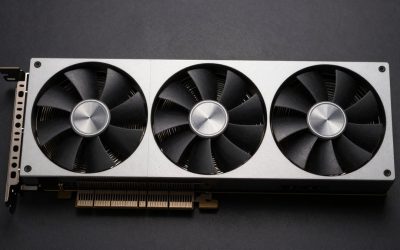
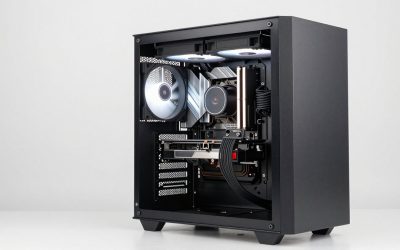
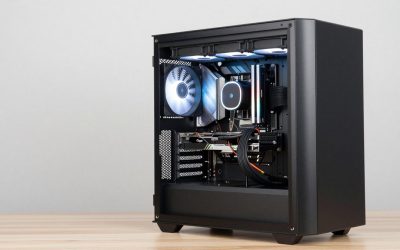
The RX 7900 GRE is the stronger gaming card, typically around 30-50% faster at 1440p with twice the VRAM, so it is the better pick for 1440p and anyone keeping a GPU for years; the RTX 5060 Ti 8GB only makes sense for 1080p builds on a tighter budget that value DLSS 4, Multi Frame Generation and an efficient 180 W rating. Its 8 GB of memory is the deciding weakness, because it already forces lower texture settings in some new games even at 1080p.
As an Amazon Associate we earn from qualifying purchases at no extra cost to you.



Our Top Picks
 ASUS Prime Radeon™ RX 9070 GRE EVO OCRX9070GRE|OC|12GB|EVO12 x 5 x 0.1 inches2.4 poundsCheck on Amazon


Top 3 picks at a glance
Previous-Gen Muscle Versus Current-Gen Features
The RX 7900 GRE launched on 27 July 2023 at $549. It is a cut-down RDNA 3 Navi 31 chip with 5,120 stream processors, 16 GB of GDDR6 on a 256-bit bus, 64 MB of Infinity Cache and a 260 W TDP. The RTX 5060 Ti 8GB launched on 16 April 2025 at $379 on NVIDIA’s Blackwell architecture, with 4,608 CUDA cores, 8 GB of GDDR7 on a 128-bit bus, 32 MB of L2 cache and a 180 W TDP.
The GRE belongs to a larger performance class, while the 5060 Ti 8GB is a current entry-to-mid-range card that leans on its software features. That gap in class shows up clearly in the numbers.
Spec Comparison
| Spec | RX 7900 GRE | RTX 5060 Ti 8GB |
|---|---|---|
| Architecture | RDNA 3.0 | Blackwell 2.0 |
| Release date | 27 July 2023 | 16 April 2025 |
| Launch MSRP | $549 | $379 |
| Shaders | 5,120 stream processors | 4,608 CUDA cores |
| Boost clock | 2,245 MHz | 2,572 MHz |
| Process | 5 nm | 5 nm |
| TDP | 260 W | 180 W |
| Memory | 16 GB GDDR6 | 8 GB GDDR7 |
| Bus / bandwidth | 256-bit / 576.0 GB/s | 128-bit / 448.0 GB/s |
| Cache | 6 MB L2 + 64 MB L3 | 32 MB L2 |
| Interface | PCIe 4.0 x16 | PCIe 5.0 x8 |
| Power connectors | 2x 8-pin | 1x 8-pin |
| Length / width | 276 mm / 2-slot | 241 mm / 2-slot |
| Outputs | 1x HDMI 2.1a, 2x DP 2.1, 1x USB-C | 1x HDMI 2.1b, 3x DP 2.1b |
Raster Performance
TechPowerUp’s review data places the RX 7900 GRE close to the RTX 4070 Super tier, while its RX 9060 XT reviews put the RTX 5060 Ti 8GB level with the RX 9060 XT 16GB at 1440p, a clear step below. Comparison sites report a wide range for the GRE’s lead over the 5060 Ti 8GB: from around 13% in suites that include lighter, CPU-bound games, to 70% or more at 1440p and 4K in heavier titles where the 8 GB card runs out of memory. A reasonable summary of GPU-bound review data is that the 7900 GRE is roughly 30-50% faster at 1440p and around 20-35% faster at 1080p.
As an approximate guide that varies with settings, CPU and patch: in demanding current games at 1440p high settings, the 7900 GRE often sits around 85-120 fps where the 5060 Ti 8GB lands around 55-80 fps, and the 8 GB card can drop further or stutter in titles that exceed its memory.
Ray Tracing
NVIDIA’s RT hardware is more efficient per unit, so the gap narrows with ray tracing. In 3DMark Speed Way, a ray tracing benchmark, the GRE leads by only single digits, and in path-traced or very RT-heavy games the 5060 Ti can match or beat it. In lighter RT workloads the GRE’s larger chip still tends to come out ahead. The 8 GB buffer is again a limiting factor, since ray tracing increases memory use, so high RT settings at 1440p are often impractical on the 5060 Ti 8GB.
Upscaling and Frame Generation
This is the 5060 Ti’s strongest category. It supports DLSS 4 Super Resolution with the transformer model, DLSS Ray Reconstruction, DLSS Frame Generation and Multi Frame Generation, which can add up to three generated frames per rendered frame in supported games. DLSS upscaling at 1080p and 1440p generally produces cleaner images than FSR 3.1.
The 7900 GRE supports FSR 3.1 upscaling and frame generation plus AMD Fluid Motion Frames 2 at the driver level. FSR 4 is officially limited to RDNA 4 cards such as the RX 9060 XT and RX 9070 series, so GRE owners should not count on it. Frame generation also consumes VRAM, which can push the 5060 Ti 8GB over its limit at higher settings.
Why 8 GB Is the Sticking Point
A simple VRAM-per-resolution guide for 2026 games:
- 1080p: 8 GB is the minimum. Several recent releases need medium textures to avoid stutter on 8 GB cards.
- 1440p: 12 GB is the comfortable target for high settings; 8 GB often requires compromises.
- 4K: 16 GB is the realistic floor for high textures.
Platform matters too. The 5060 Ti uses a PCIe 5.0 x8 link. On PCIe 4.0 and 5.0 boards that is fine, but on a PCIe 3.0 motherboard the reduced link bandwidth makes memory overflow even more painful, as reviewers such as Hardware Unboxed have highlighted with 8 GB cards. The GRE’s x16 link and 16 GB avoid this issue. If the budget points toward a 5060 Ti, the 16 GB version is the safer choice.
Power, PSU and Case Fit
A PSU sizing calculation with a typical 125 W gaming CPU and about 150 W of headroom:
- RX 7900 GRE: 260 + 125 + 150 = 535 W, so a quality 650 W unit.
- RTX 5060 Ti 8GB: 180 + 125 + 150 = 455 W, so a quality 550 W unit.
The GRE needs two 8-pin connectors; the 5060 Ti needs just one. Reference lengths are 276 mm for the GRE and 241 mm for the 5060 Ti, both two slots wide, though partner GRE cards are often larger. In small form factor cases, the 5060 Ti is easier to fit and cool.
Value Math
Using launch MSRPs and 1440p relative performance, set the 5060 Ti 8GB at 100 points and the GRE at about 140 points:
- RX 7900 GRE: $549 / 140 = about $3.90 per point.
- RTX 5060 Ti 8GB: $379 / 100 = about $3.80 per point.
Cost per frame at launch was almost identical, so the GRE effectively offered more performance and memory for proportionally more money. The GRE has largely been replaced by RDNA 4 in new stock, and used units usually sell for around $380-$470. At the top of that range, a new RX 9070 or RTX 5070 becomes worth comparing.
Which One Fits Your Build?
| Scenario | Pick | Reason |
|---|---|---|
| 1440p high settings | RX 7900 GRE | 30-50% faster and 16 GB of VRAM |
| 1080p, budget around $380 | RTX 5060 Ti 8GB | Lower cost, DLSS 4 and MFG |
| Long-term ownership | RX 7900 GRE | 8 GB will age quickly |
| PCIe 3.0 motherboard | RX 7900 GRE | Avoids the x8 link plus 8 GB penalty |
| Small case, 550 W PSU | RTX 5060 Ti 8GB | 180 W and single 8-pin |
| Path tracing priority | Neither ideal; consider RTX 5070 | Both are limited in heavy RT |
Efficiency, Noise and Extras
The 5060 Ti’s 80 W lower rating translates into less heat, quieter fans and easier cooling in small cases. If a PC runs four hours a day, an 80 W difference works out to roughly 115 kWh per year, a modest but real saving in high-cost regions. The GRE responds well to undervolting through AMD’s Adrenalin software, which can recover part of that gap without large performance losses.
For streaming and creative work, the 5060 Ti benefits from NVIDIA’s NVENC encoder with AV1 support and broad CUDA support in applications such as Blender. The GRE also supports AV1 encoding, so streamers are covered on both cards, but NVIDIA’s encoder and software ecosystem remain more widely supported in creator tools.
Frequently Asked Questions
Is the RX 7900 GRE faster than the RTX 5060 Ti 8GB?
Yes. In GPU-bound games it is typically around 30-50% faster at 1440p and about 20-35% faster at 1080p. The gap can widen further in games that exceed the 5060 Ti’s 8 GB of memory.
Is 8 GB of VRAM enough in 2026?
It is workable at 1080p with sensible texture settings, but some new games already require compromises. For 1440p, 12-16 GB is a much safer amount.
Does the RX 7900 GRE support FSR 4?
FSR 4 officially requires RDNA 4 hardware, so the RDNA 3-based GRE relies on FSR 3.1 and AMD Fluid Motion Frames. The RTX 5060 Ti supports DLSS 4 including Multi Frame Generation.
What power supply do I need for the RX 7900 GRE?
A quality 650 W unit is a comfortable fit with a typical gaming CPU. The card uses two 8-pin connectors.
Does the RTX 5060 Ti 8GB lose performance on PCIe 3.0?
It can. The card uses a PCIe 5.0 x8 link, so on PCIe 3.0 the bandwidth is reduced, and the penalty becomes noticeable when games exceed 8 GB of VRAM. On PCIe 4.0 or newer boards the impact is minimal.
Related guides
More from Amazon
Programs that pair well with the guide above. Offers and eligibility are set by Amazon and may change.
A free business account with business pricing and bulk-buying tools for work, shop or home office.
Create a business accountFree shipping on eligible items, Prime Video and more. Eligible new members can start with a free trial.
Start a Prime free trialAudiobooks and podcasts to listen to on the go. Eligible new members can start with a free trial.
Try Audible freeAd-free music streaming. Eligible new subscribers can start with a free trial.
Try Music Unlimited freeAs an Amazon Associate we earn from qualifying purchases.