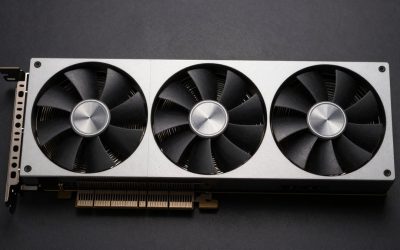
The RX 6900 XT is still the faster card in traditional rasterized games, roughly 10–20% ahead of the RTX 5060 Ti at 1440p and further ahead at 4K. That makes a used 6900 XT the better pick if you want the most raw frames per dollar and have a strong power supply. The RTX 5060 Ti 16GB is the better pick if you care about ray tracing, DLSS 4, low power draw, a compact build or a new-card warranty. Skip the RTX 5060 Ti 8GB for this matchup. It matches the 16GB card’s GPU but gives up the VRAM advantage the 6900 XT has.
The two cards come from very different places. The RX 6900 XT was AMD’s $999 flagship in late 2020 and now mostly sells second-hand. The RTX 5060 Ti is a current midrange Blackwell card that costs less than half that at launch. Below is where each one wins and where it falls short.
As an Amazon Associate we earn from qualifying purchases at no extra cost to you.


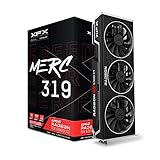
Our Top Picks


Top 3 picks at a glance
Three Cards, One Comparison Table
The RTX 5060 Ti comes in two memory configurations with identical GPUs, so both are listed.
| Specification | Radeon RX 6900 XT | RTX 5060 Ti 8GB | RTX 5060 Ti 16GB |
|---|---|---|---|
| Architecture | RDNA 2.0 | Blackwell 2.0 | Blackwell 2.0 |
| Release date | 28 Oct 2020 | 16 Apr 2025 | 16 Apr 2025 |
| Launch MSRP | $999 | $379 | $429 |
| Shaders / CUDA cores | 5120 | 4608 | 4608 |
| Boost clock | 2250 MHz | 2572 MHz | 2572 MHz |
| Process | 7 nm | 5 nm | 5 nm |
| TDP | 300 W | 180 W | 180 W |
| Memory | 16 GB GDDR6 | 8 GB GDDR7 | 16 GB GDDR7 |
| Bus / bandwidth | 256-bit / 512.0 GB/s | 128-bit / 448.0 GB/s | 128-bit / 448.0 GB/s |
| Cache | 4 MB L2 + 128 MB Infinity Cache | 32 MB L2 | 32 MB L2 |
| Interface | PCIe 4.0 x16 | PCIe 5.0 x8 | PCIe 5.0 x8 |
| Power connectors | 2x 8-pin | 1x 8-pin | 1x 8-pin |
| Length / width | 267 mm, 3-slot | 241 mm, 2-slot | 241 mm, 2-slot |
| Outputs | 1x HDMI 2.1, 2x DP 1.4a, 1x USB-C | 1x HDMI 2.1b, 3x DP 2.1b | 1x HDMI 2.1b, 3x DP 2.1b |
Raster Performance: The Old Flagship Holds On
TechPowerUp’s RTX 5060 Ti 16GB review placed the card slightly ahead of the RX 7700 XT and about 11% behind the RX 7800 XT at 1440p. In most published charts the RX 6900 XT sits at or slightly above the RX 7800 XT. Combining those positions, the 6900 XT leads the 5060 Ti by about 10–20% in rasterized games at 1440p. Gamers Nexus noted the 5060 Ti tends to land in the RTX 3070 Ti / RX 7700 XT neighborhood, which fits that estimate.
At 4K the gap usually grows. The 6900 XT has a wider 256-bit bus, 128 MB of Infinity Cache and more shaders, and those help most at high resolutions. TechPowerUp also observed that the 5060 Ti scales better from 1440p to 4K than its predecessor did. Even so, its 128-bit bus limits how far it can go. At 1080p the cards move closer together, since CPU limits flatten out the 6900 XT’s advantage in many titles.
Indicative frame-rate bands, which vary with settings, CPU and game version:
- 1440p high, demanding raster games: RX 6900 XT about 70–100 FPS; RTX 5060 Ti about 60–85 FPS.
- 4K high: RX 6900 XT about 40–60 FPS; RTX 5060 Ti about 30–50 FPS, usually with DLSS needed.
Ray Tracing Flips the Result
RDNA 2 was AMD’s first ray-tracing architecture, and it handles heavy RT poorly. In games with several RT effects, such as global illumination, reflections and shadows together, the RX 6900 XT’s large raster lead disappears. The RTX 5060 Ti usually matches it or pulls ahead, and the 5060 Ti’s lead is largest in titles that make heavy use of ray tracing. Path-traced modes are realistically playable only on the NVIDIA card, and even then only with DLSS upscaling and frame generation.
Upscaling and Frame Generation: A Clear Generational Divide
The RTX 5060 Ti supports the full DLSS 4 feature set: transformer-based Super Resolution, Ray Reconstruction and RTX 50-exclusive Multi Frame Generation. DLSS is supported in a very large number of games, and it lets the 5060 Ti run at 4K output when needed.
The RX 6900 XT is currently limited to FSR 3.1 upscaling and FSR frame generation. FSR 3.1 is functional, but its image quality falls short of DLSS 4, especially in Performance mode. AMD has announced that its ML-based FSR 4.1 upscaler will reach RDNA 2 cards, but the target is early 2027. RDNA 3 owners got it in July 2026, and TechPowerUp measured a noticeable speed cost compared with FSR 3.1 on that hardware. A similar or larger cost on RDNA 2 is likely once support arrives. For now the image-quality advantage is clearly NVIDIA’s.
VRAM: Why the 16GB 5060 Ti Is the Only Fair Opponent
The RX 6900 XT’s 16 GB means it never runs short of memory at 1440p and rarely does at 4K. The RTX 5060 Ti 16GB matches that, while the 8 GB model does not. Testing by Hardware Unboxed and others across 8 GB and 16 GB versions of current cards showed large losses in average and 1% low frame rates in memory-heavy games when the smaller buffer overflows. The 8 GB model is also more exposed on older motherboards, because its x8 PCIe link is what carries the overflow traffic.
In practice, someone choosing the 5060 Ti 8GB over a used 6900 XT would give up both raster speed and memory headroom to save on power and gain DLSS. That’s hard to justify for anyone gaming above 1080p.
Power, Heat and Running Costs
This is the 5060 Ti’s clearest advantage. The 6900 XT is rated at 300 W, needs two 8-pin connectors and uses a three-slot cooler. The 5060 Ti is rated at 180 W, uses one 8-pin connector and fits in two slots.
PSU sizing using GPU TDP + CPU + about 150 W headroom, with a 125 W gaming CPU:
- RX 6900 XT: 300 + 125 + 150 = 575 W, so 650 W minimum, 750 W preferred because RDNA 2 flagships can produce sharp transient spikes.
- RTX 5060 Ti: 180 + 125 + 150 = 455 W, so a quality 550 W unit is enough.
The power difference also shows up on your electricity bill. A 120 W difference over three hours of gaming a day comes to about 130 kWh a year. At $0.17 per kWh that’s roughly $22 a year, which adds up to $65–$90 over a three-to-four-year ownership period. That isn’t enough on its own to decide the matchup, but it does cut into the 6900 XT’s used-price advantage.
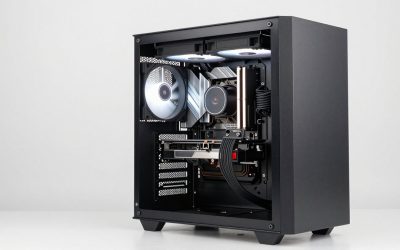
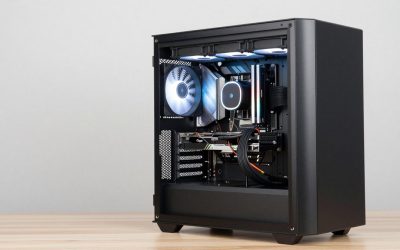
For case fit, the 6900 XT’s 267 mm length and three-slot thickness rule out many small cases. The 5060 Ti’s 241 mm reference length and two-slot width fit almost anywhere. Partner-card sizes vary, so measure your case before buying either.
Cost per Frame: Used Flagship vs New Midrange
Comparing $999 and $429 launch prices makes little sense in 2026. The useful comparison is a used 6900 XT, usually $300–$400, against a new 5060 Ti 16GB at its $429 MSRP. Set the 5060 Ti at 100 raster points and the 6900 XT at 115, the midpoint of the 10–20% lead.
- Used RX 6900 XT at $350: $350 / 115 = about $3.04 per point.
- New RTX 5060 Ti 16GB at $429: about $4.29 per point.
On raster frames per dollar, the used flagship wins easily. Once you add a possible PSU upgrade, higher running costs, no warranty, weaker RT and lower-quality upscaling, the gap shrinks. How much it shrinks depends on what you play.
Used RX 6900 XT Buying Tips
Many 6900 XT cards spent time mining or running at high load for years. Ask about usage history, check the hotspot temperature under load (a large gap between edge and hotspot can mean the thermal paste is pumping out), listen for coil whine and fan bearing noise, and confirm that both 8-pin connectors are undamaged. Reference cards and premium partner models usually hold up better than budget designs.
Pick X If, Pick Y If
| Priority | Choose |
|---|---|
| Highest raster FPS at 1440p/4K for the least money | Used RX 6900 XT |
| Ray tracing or path tracing | RTX 5060 Ti 16GB |
| Best upscaling image quality right now | RTX 5060 Ti 16GB (DLSS 4) |
| 500–550 W power supply, no plans to replace it | RTX 5060 Ti 16GB |
| Small form factor or quiet build | RTX 5060 Ti 16GB |
| Linux gaming with open-source drivers | RX 6900 XT |
| Tight budget and only 1080p | RTX 5060 Ti 8GB is acceptable, though a used 6900 XT is faster |
Frequently Asked Questions
Is the RX 6900 XT faster than the RTX 5060 Ti?
In rasterized games, yes. Based on where both cards land in TechPowerUp’s and other reviewers’ charts, the 6900 XT is roughly 10–20% faster at 1440p, with a larger lead at 4K. In ray-traced games the RTX 5060 Ti usually matches or beats it.
Will the RX 6900 XT get FSR 4?
AMD has announced FSR 4.1 upscaling support for RDNA 2 cards with a target of early 2027. Until then the 6900 XT uses FSR 3.1. When FSR 4.1 arrives, expect better image quality but a larger performance cost than on RDNA 4 cards.
What PSU do I need for an RX 6900 XT?
A quality 750 W unit is the comfortable choice. The card is rated at 300 W and needs two 8-pin connectors, and RDNA 2 flagships can spike above their rated power for brief moments, so a 650 W unit is the practical minimum.
Should I get the 8GB or 16GB RTX 5060 Ti?
Get the 16 GB model if you play at 1440p or want the card to last. The GPU is identical, but 8 GB increasingly limits texture settings and causes stutter in new games, especially on older PCIe 3.0 systems.
Is a used RX 6900 XT still a good buy?
It can be, if your power supply and case can handle it and you mainly play rasterized games. Expect to pay roughly $300–$400 used, inspect the card carefully, and keep in mind that driver focus and new features now go to newer Radeon generations first.
Related guides
More from Amazon
Programs that pair well with the guide above. Offers and eligibility are set by Amazon and may change.
A free business account with business pricing and bulk-buying tools for work, shop or home office.
Create a business accountFree shipping on eligible items, Prime Video and more. Eligible new members can start with a free trial.
Start a Prime free trialAudiobooks and podcasts to listen to on the go. Eligible new members can start with a free trial.
Try Audible freeAd-free music streaming. Eligible new subscribers can start with a free trial.
Try Music Unlimited freeAs an Amazon Associate we earn from qualifying purchases.