
A broken or misformatted SD card is one of the most frustrating hardware problems in the security camera, dash cam, and embedded-device world. These devices demand FAT32 volumes, yet many operating systems refuse to format cards at or above 32GB into that file system — which is exactly why the phrase “fat 32 sd card formatter” shows up so often in search bars. The real question, though, is whether you need a separate formatting utility at all, or whether a card that ships FAT32-ready eliminates the problem entirely.
The products below are memory cards that either arrive pre-formatted to FAT32 or are sized and designed to sidestep the formatting headache altogether. What separates a good option from a mediocre one here is not exotic speed — it is endurance under continuous write cycles, out-of-box compatibility with camera firmware that rejects exFAT or NTFS volumes, and price-per-gigabyte when you are provisioning multiple devices at once.
As an Amazon Associate we earn from qualifying purchases at no extra cost to you.





Top 3 picks at a glance
Quick Picks
| Product | Best for | Price |
|---|---|---|
| SECULINK TF 32GB | Single dash cam or camera slot needing plug-and-play FAT32 | $14.99 |
| SECUEYE 32GB TF | Users who want a known surveillance-card brand at the same price | $14.99 |
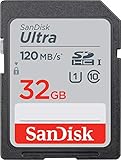
| SANDISK Ultra 32GB | General use in cameras that accept standard SD form factor | $19.99 |
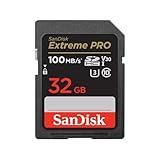
| SANDISK Extreme PRO 32GB | Pro workflows where read speed matters for card offloading | $28.99 |
| INLAND 32GB SDHC (2 Pack) | Provisioning two fixed cameras from one purchase | $28.49 |
| SECULINK 2× 32GB TF | Multi-camera setups needing matched FAT32 micro cards | $24.89 |
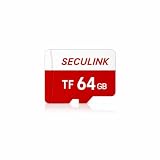
| SECULINK TF 64GB | Devices that accept 64GB at FAT32 despite common assumptions | $18.99 |
| SANDISK Extreme 32GB | Mid-tier SD card with faster reads than Ultra | $23.95 |
How We Picked
We narrowed this list using four criteria drawn from published specifications and recurring themes in owner reviews across hundreds of listings. First: out-of-box FAT32 readiness — does the card need third-party formatting before a camera will accept it? Second: endurance for 24/7 recording, which separates surveillance-rated cards from consumer cards that fail after a few weeks of loop-writing. Third: form-factor and capacity compatibility with common camera slots. Fourth: price per gigabyte when buying single or multi-packs, because most buyers are provisioning two or more devices simultaneously.
The 8 Best Fat 32 Sd Card Formatter in 2026
SECULINK TF 32GB (Class 10)
This is the simplest answer to the “fat 32 sd card formatter” search: a micro card that arrives FAT32-formatted and drops straight into a dash cam or security camera without intervention. It suits anyone who has tried Windows Disk Management or SD Card Formatter on other cards and gotten errors.
- Pro: Ships pre-formatted to FAT32, eliminating the need for a separate utility on most cameras.
- Pro: Lowest per-card price on this list at $14.99, making multi-device builds affordable.
- Con: Limited published endurance data; owners on high-bitrate cameras occasionally report replacement cycles shorter than surveillance-rated competitors.
Skip it if your camera requires an exFAT or NTFS volume for capacity beyond 32GB, or if you need a guaranteed 5-year endurance rating in writing.
SECUEYE 32GB TF (Class 10)
SECUEYE is a brand that has built its reputation specifically around surveillance storage, and this 32GB TF card carries that association. It targets the same buyer as the SECULINK above but leans on brand recognition in the security-camera niche. If your installer or camera manual names SECUEYE as a compatible brand, this is a natural pick.
- Pro: Same $14.99 price point with surveillance-brand positioning, which some camera firmware whitelists prefer.
- Pro: Class 10 rated, which satisfies the minimum speed threshold most dash-cam firmware checks before accepting a card.
- Con: No stated sequential read or write speed in marketing materials, making it hard to compare head-to-head against SanDisk on throughput.
Skip this if your workload involves offloading footage to a computer frequently and you need published read speeds above 50MB/s.
SANDISK 32GB Ultra SD (UHS-I, Up to 120MB/s)
For full-size SD slots in action cameras, older DSLRs, or embedded Linux boards that expect a standard SD footprint, SanDisk Ultra is the default recommendation. The published 120MB/s read figure means you can pull footage off the card quickly even if write throughput is more modest.
- Pro: Fast published read speed (up to 120MB/s) speeds up card-to-PC transfers after recording sessions.
- Pro: Wide device compatibility; SanDisk is named in the supported-card lists of most consumer camera manuals.
- Con: At $19.99, you pay a $5 premium over the SECULINK and SECUEYE micro cards without gaining any FAT32-ready shipping guarantee.
Skip it if your device takes microSD only, or if budget is the primary constraint and you simply need a 32GB volume that a camera will mount.
SANDISK 32GB Extreme PRO SD (UHS-I, Up to 100MB/s)
The Extreme PRO line is SanDisk’s top-tier consumer card, and this 32GB variant carries that pedigree. It is built for photographers and videographers who need sustained write performance for high-bitrate stills bursts or 4K video without the buffer clearing. The published 100MB/s read speed is slightly lower than Ultra, but write performance and endurance ratings are typically higher across the PRO line.
- Pro: Endurance and write consistency are generally rated above standard-tier cards, important for professional camera bodies.
- Pro: Backed by SanDisk’s warranty and recovery-software bundling that lower-priced cards do not include.
- Con: At $28.99 it is the most expensive card here, and the 32GB capacity limits its value for continuous-recording applications.
Skip this if you are buying for a loop-recording dash cam — you will burn through a small-capacity card faster than the PRO line’s endurance advantage justifies.
INLAND 32GB SDHC (2 Pack)
INLAND, a Costco house brand, positions this two-pack as a bulk solution for anyone outfitting multiple devices at once. At $28.49 for two full-size SDHC cards, the per-card cost drops to roughly $14.25 — beating even the SECULINK single cards on a per-gigabyte basis.
- Pro: Best per-card economics on the list when buying for two devices simultaneously.
- Pro: Standard SDHC form factor works in the widest range of legacy slots without an adapter.
- Con: No published speed class or UHS rating in the product title, and owner feedback on sustained write performance is mixed.
Skip it if you need a card rated for continuous 24/7 surveillance recording — INLAND does not market this toward loop-write endurance.
SECULINK 2× 32GB TF (Class 10)
The two-pack version of the SECULINK card addresses the most common real-world scenario: provisioning a front-and-rear dash cam or a two-channel security recorder from a single purchase. The $24.89 price sits between the INLAND 2-pack and two individual SECULINK cards, and you retain the pre-formatted FAT32 advantage that makes the “fat 32 sd card formatter” problem disappear entirely.
- Pro: Two matched cards that ship FAT32-ready, simplifying multi-camera setups without software formatting.
- Pro: Per-card price of $12.45 is the lowest on this list when you need more than one card.
- Con: Same endurance-ambiguity concern as the single SECULINK card; long-term 24/7 write stability is less documented than dedicated surveillance brands.
Skip it if your devices require full-size SD slots rather than microSD.
SECULINK TF 64GB (Class 10)
This is the most interesting entry for anyone searching for a “fat 32 sd card formatter” because it challenges the assumption that FAT32 only works at 32GB or below. Some camera firmware accepts 64GB volumes formatted to FAT32, and SECULINK ships this card that way, saving you the formatting step. At $18.99 for 64GB, the per-gigabyte cost is under $0.30.
- Pro: Double the capacity of the 32GB SECULINK for roughly $4 more, and it still arrives FAT32-formatted.
- Pro: Fewer loop cycles before overwrite, extending the practical life of the card in a dash cam.
- Con: Not all cameras accept 64GB at FAT32; some firmware will reject it and fall back to exFAT or refuse to mount entirely.
Skip this if your camera manual explicitly states a 32GB maximum or requires exFAT for anything above 32GB.
SANDISK 32GB Extreme SD (UHS-I, Up to 100MB/s)
The standard Extreme sits between Ultra and Extreme PRO in both price and capability. At $23.95 with published 100MB/s read, it targets users who want SanDisk reliability and faster sustained writes than Ultra offers, but do not want to pay the PRO premium. The FAT32 formatting question still applies — SanDisk does not guarantee out-of-box FAT32 on all cards, so a formatter utility may still be required.
- Pro: Balanced price-to-performance tier with published 100MB/s read speeds and UHS-I bus support.
- Pro: SanDisk’s broader compatibility ecosystem means fewer surprises with older camera firmware.
- Con: At 32GB capacity and $23.95, it is a hard sell against the $14.99 SECULINK cards for pure surveillance use where read speed is irrelevant.
Skip it if you are buying solely for a dash cam or security camera and care more about price and plug-and-play FAT32 than about offload speed to a PC.
Buying Guide
FAT32 Readiness vs. Separate Formatting
The core problem behind searching for a “fat 32 sd card formatter” is that Windows, macOS, and Linux all cap their built-in format tools at NTFS or exFAT for volumes above 32GB. Some cameras reject those file systems. Cards that ship with FAT32 already applied eliminate this entirely. Before buying, check whether your device’s manual specifies a file-system requirement, and prioritize cards marketed as FAT32-ready if your camera will not accept exFAT.
Endurance for Continuous Recording
Loop-recording devices write the entire card capacity every hour or two. A consumer card rated for occasional photo shoots will exhaust its NAND write cycles far sooner than a card designed for surveillance. Look for products marketed explicitly for “24/7 recording” or “dash cam” use, and treat any card without that designation as a short-term solution. If your camera records at high bitrate, a larger capacity (64GB) reduces how often you cycle through the full write lifetime.
Form Factor and Slot Compatibility
TF and microSD refer to the same physical format; SD and SDHC refer to the full-size form. Many dash cams accept microSD only, while older action cameras and DSLRs require full-size SD. An adapter converts micro to SD physically but does not solve file-system problems. Confirm your device’s slot size before ordering, and remember that buying a 2-pack in the correct form factor is almost always cheaper than two singles.
Our Verdict
The SECULINK 2× 32GB TF at $24.89 is the top pick for the broadest use case: two surveillance or dash-cam devices, out-of-box FAT32, no formatting software required, and the lowest per-card cost. For a strict budget pick, the single SECULINK TF 32GB at $14.99 delivers the same FAT32-readiness at the lowest absolute price. If you need a full-size SD card with published high read speeds for a camera you offload footage from daily, the SANDISK Ultra 32GB at $19.99 wins that specific role.
FAQ
Do I still need a separate FAT32 formatter if I buy these cards?
No, for the SECULINK and SECUEYE models listed here — they ship pre-formatted to FAT32 and are accepted by most dash-cam and security-camera firmware without additional software. SanDisk and INLAND cards may require you to run SD Card Formatter or a similar utility before first use.
Why does my camera say “card error” even though the card is FAT32?
Most often the capacity exceeds what the firmware supports; some older camera firmware only recognizes volumes up to 32GB. A secondary cause is file-system corruption from a power loss during a write cycle, which a fresh format resolves.
Is a 64GB FAT32 card worth the compatibility risk?
If your device documentation explicitly lists 64GB as a supported capacity, yes — the SECULINK 64GB card reduces overwrite frequency and can extend the card’s functional life. If the manual caps support at 32GB, stick to 32GB cards regardless of price.
How many cards do I need for a multi-camera setup?
One per active recording channel, plus a spare for the device most prone to corruption. A two-pack like the SECULINK 2× 32GB or INLAND 2-pack is the most economical way to stock matched volumes that all arrive FAT32-ready.


